UNITED STATES SECURITIES AND EXCHANGE COMMISSION
Washington, D.C. 20549
FORM
For the fiscal year ended
For the transition period from _______ to ______
Commission File No.

(Exact name of registrant as specified in its charter)
|
|
(State or other jurisdiction of incorporation or organization)
(Address of principal executive offices) | (I.R.S. Employer Identification Number)
(Zip Code) |
Registrant’s telephone number, including Area Code: (
Securities Registered pursuant to Section 12(b) of the Act:
|
|
|
Title of each class | Trading Symbol | Name of each exchange on which registered |
Securities registered pursuant to Section 12(g) of the Act: None
Indicate by check mark if the registrant is a well-known seasoned issuer, as defined in Rule 405 of the Securities Act. Yes ¨
Indicate by check mark if the registrant is not required to file reports pursuant to Section 13 or 15(d) of the Securities Exchange Act of 1934. Yes ¨
Indicate by check mark whether registrant (1) has filed all reports required to be filed by Section 13 or 15(d) of the Exchange Act of 1934 during the preceding 12 months (or for shorter period than the Registrant was required to file such reports), and (2) has been subject to such filing requirements for the past 90 days.
Indicate by check mark whether the registrant has submitted electronically every Interactive Data File required to be submitted and posted pursuant to Rule 405 of Regulation S-T (§ 232.405 of this chapter) during the preceding 12 months (or for such shorter period that the registrant was required to submit post such files).
Indicate by check mark whether the registrant is a large accelerated filer, an accelerated filer, a non-accelerated filer, smaller reporting company, or an emerging growth company. See the definitions of “large accelerated filer,” “accelerated filer,” “smaller reporting company,” and “emerging growth company” in Rule 12b-2 of the Exchange Act.
Large Accelerated Filer ¨ Accelerated Filer ¨
If an emerging growth company, indicate by check mark if the registrant has elected not to use the extended transition period for complying with any new or revised financial accounting standards provided pursuant to Section 13(a) of the Exchange Act.
Indicate by check mark whether the registrant has filed a report on and attestation to its management’s assessment of the effectiveness of its internal control over financial reporting under Section 404(b) of the Sarbanes-Oxley Act (15 U.S.C. 7262(b)) by the registered public accounting firm that prepared or issued its audit report.
If securities are registered pursuant to Section 12(b) of the Act, indicate by check mark whether the financial statements of the registrant included in the filing reflect the correction of an error to previously issued financial statements.
Indicate by check mark whether any of those error corrections are restatements that required a recovery analysis of incentive-based compensation received by any of the registrant’s executive officers during the relevant recovery period pursuant to §240.10D-1(b).
Indicate by check mark whether the registrant is a shell company (as defined in Rule 12b-2 of the Exchange Act). Yes ¨ No
As of June 30, 2025 (the last business day of the registrant’s most recently completed second fiscal quarter), the aggregate market value of the registrant's voting and non-voting common equity held by non-affiliates based on the closing price on that date as reported by the Nasdaq Stock Market was $

READING INTERNATIONAL, INC.
ANNUAL REPORT ON FORM 10-K
YEAR ENDED DECEMBER 31, 2025
INDEX
The information in this Annual Report on Form 10-K for the year ended December 31, 2025 ("2025 Form 10-K" or “2025 Annual Report”) contains certain forward-looking statements, including statements related to trends in the Company's business. The Company's actual results may differ materially from the results discussed in the “Cautionary Statement Regarding Forward-Looking Statements”. Factors that might cause such a difference include those discussed in "Item 1 – Our Business," "Item 1A – Risk Factors," and "Item 7 – Management's Discussion and Analysis of Financial Condition and Results of Operations" as well as those discussed elsewhere in this 2025 Form 10-K. |
PART I
Item 1 – Our Business
GENERAL
Reading International, Inc. (“RDI” and collectively with our consolidated subsidiaries and corporate predecessors, our “Company,” “Reading,” “we,” “us,” or “our”) was incorporated in 1999 incident to our reincorporation in the State of Nevada. Our class A non-voting common stock (“Class A Stock”) and class B voting common stock (“Class B Stock”) are listed for trading on the Nasdaq Capital Market (Nasdaq-CM) under the symbols RDI and RDIB, respectively. Our Corporate Headquarters is at 189 Second Avenue, Suite 2S, New York, New York, 10003.
Our corporate website address is www.ReadingRDI.com. We provide, free of charge on our website, our annual report on Form 10-K, quarterly reports on Form 10-Q, current reports on Form 8-K, and amendments to those reports filed or furnished pursuant to Sections 13(a) or 15(d) of the Exchange Act as soon as reasonably practicable after we have electronically filed such material with, or furnished it to, the Securities and Exchange Commission (the “SEC”) (www.sec.gov). The contents of our Company website are not incorporated into this report. Our corporate governance charters for our Audit and Conflicts Committee and Compensation and Stock Options Committee are available on our website.
BUSINESS DESCRIPTION
Synergistic Diversification and Branding
We are an internationally diversified company focused on the development, ownership and operation of entertainment and real property assets in three jurisdictions: (i) United States (“U.S.”), (ii) Australia, and (iii) New Zealand. We group our businesses into two operating segments, which are owned and operated through various operating subsidiaries:
Theatrical Motion Picture Exhibition (“Cinema Exhibition”), through as of the date of this 2025 Annual Report, our 58 cinemas.
Real Estate, including real estate development and the rental or licensing of retail, commercial and live theatre assets comprised, as of the date of this 2025 Annual Report, of approximately 9,114,000 square feet of land and approximately 429,000 square feet of net rentable area.
Market and External Impacts on our Cinema Exhibition Business and Our Company’s Responses
We believe that, although the global cinema industry box office was relatively flat for 2025 as compared to 2024, our industry has over the past year demonstrated its resilience and its continuing ability to attract customers looking for an outside the home entertainment experience. The success of releases such as A Minecraft Movie, Lilo & Stitch, Superman, Jurassic World: Rebirth, Zootopia 2, Wicked: For Good, Sinners, and Avatar: Fire and Ash, together with what we believe is a strong film slate through the end of 2026, make us optimistic about the future of our cinema business.
While the COVID 19 pandemic is substantially behind us, its lasting effects on both the global economy and the cinema industry remain evident. The pandemic had a profound impact on our Company’s operations and significantly strained our liquidity. Beginning in March 2020, government mandates required the temporary closure of all our cinemas and live theatres across the United States, Australia, and New Zealand, resulting in an immediate interruption of cinema revenues and heightened consumer caution towards public entertainment venues. After the start of the pandemic, we were able to negotiate occupancy relief with our cinema landlords. Unfortunately, the recovery from the pandemic was then interrupted by the screen actors and writers strikes of 2023, which materially impacted the movie release schedule. Also, even though we are a micro-cap public company, the U.S. federal government prohibited public companies from receiving any financial support.
Following the worldwide pandemic and the screen actors and writers strikes, our global cinema operations have faced elevated cost pressures, including legislated increases in labor expenses and higher costs for goods, utilities, and insurance. Our cinemas use a significant amount of electricity and U.S. operations are concentrated in Hawaii and California which have the highest electricity costs in the United States. Labor related changes across have expanded beyond wage rates to include additional leave requirements, revised overtime calculations, and increased compliance and administrative obligations. The Company has partially offset these higher costs through measured adjustments to ticket and food and beverage pricing, while remaining mindful of price sensitivity and demand.
To address liquidity pressures, the Company undertook a range of actions focused on strengthening its financial position, including monetizing certain of our real estate holdings, working with lenders to extend loan terms and obtain covenant relief, exiting unprofitable cinema locations, negotiating rent abatements and deferrals with landlords, and cutting back anticipated capital expenditures.
We have taken meaningful steps to run our theatres more efficiently while strengthening cinema level profitability, and this progress was evident when we last year achieved record food and beverage spend per guest across our circuit. Alcohol is now available at all of our domestic U.S. locations and at most theatres in Australia and New Zealand. The continued growth of mobile ticketing and mobile concession ordering has made purchasing easier for guests, increased concession sales, and allowed us to operate with leaner staffing levels without diminishing the overall moviegoing experience.
Since 2020, we have wound up our business at eight (8) cinemas. All had negative cash flow during the year of closing. All but one had negative cash flow since the onset of the Pandemic.
Following a slow first quarter of 2025 at the box office, we began to observe improved box office trends in April 2025, supported by releases such as A Minecraft Movie ($961 million) and Sinners ($370 million). Performance remained relatively consistent throughout the year with the release of several higher-grossing titles, including Lilo & Stitch ($1.0 billion), Superman ($618 million), Jurassic World: Rebirth ($869 million), and The Fantastic Four: First Steps ($522 million). And, while the industry delivered certain strong movies in the fourth quarter 2025, such as Wicked: For Good ($526 million), Zootopia 2 ($1.9 billion), and Avatar: Fire and Ash ($1.5 billion), the quarterly result could not match the strength of the film slate delivered in the fourth quarter 2024. Looking ahead, audiences are expected to return for a robust slate of highly anticipated upcoming releases in 2026, including The Super Mario Galaxy Movie, The Devil Wears Prada 2, Toy Story 5, Supergirl, Minions 3, Moana, The Odyssey, Spider Man: Brand New Day, The Cat in the Hat, Avengers: Doomsday, and Dune: Part Three, further supporting the continued recovery and long term strength of the cinema industry.
Development and Operation of our Real Estate Business and Selective Monetization Strategies
Our real estate assets continue to perform, and while we have monetized a number of our fee interests to meet recent economic challenges, we continue to regard our real estate operations as key to the development of long term stockholder value. We have been strategic in our monetization decisions principally selling either non-income producing assets previously held for development or assets which had reached their maximum value, absent the investment of significant additional capital. We have not engaged in fire sale dispositions or turned over any properties to lenders.
Between 2021 and 2025, our real estate monetizations have generated $197.5 million in net cash, which enabled us to reduce debt by $99.9 million, invest $32.4 million in capital improvements, and continue to support operations, retain key employees and stabilize our workforce. In early 2024, as our need for administrative space declined, we sold our administrative building in Culver City, California for $10.0 million, generating approximately $1.3 million in net cash (after paying off our mortgage, brokerage commissions and transactional fees). We are currently reviewing our need for replacement of office space, focusing on leasing opportunities. Looking ahead, we expect additional cash will be required through 2026 as the global film release schedule continues to stabilize following the lasting impacts of the pandemic and the 2023 Hollywood strikes and as deferred rent obligations are to be repaid and debt is to be reduced. In addition to working with existing lenders, we believe certain real estate assets can provide an additional source of liquidity. While the amounts that may be generated from future dispositions cannot be predicted with certainty, management believes that, based on independent valuations and past successful asset sales, sufficient funds can be raised to meet expected liquidity needs.
At our 44 Union Square property in New York, Petco Animal Supplies Stores. Inc (“Petco”) continues to occupy the cellar, ground, and second floors under a long-term lease on a full rent-paying basis, while we actively market the remaining space through our newly appointed leasing agent, Newmark. We are seeing improving demand within the Union Square submarket. Regarding Australia and New Zealand, we completed two significant asset monetization’s during the first half of 2025. On January 31, 2025, we sold our Wellington, New Zealand properties for $21.5 million (NZ$38.0 million) and entered into an ATL for the cinema component of that upgraded Courtenay Central building. On May 21, 2025, we sold our Cannon Park properties in Townsville, Queensland for $20.7 million (AU$32.0 million), while retaining the cinema leasehold. Proceeds from these transactions were used, in part, to pay approximately $32.1 million of debt. In our Australia and New Zealand real estate assets, our third party, non-cinema rental space is approximately 98% leased, with tenants paying full rent.
OUR COMMERCIAL BRANDS
Set forth below is a brief description of the various brands under which we organize our business operations: We are the sole owner worldwide of the “ANGELIKA” trademark and trade dress for motion picture and entertainment purposes.
|
|
|
|
| ||||
Business Segment / Unit | Our Commercial Brands | Country | Description | Website Link | ||||
Cinema Exhibition / All Countries
|
| United States Australia New Zealand
| Our Reading Cinemas tradename is derived from our over 186-year history as the “Reading Railroad” featured on the Monopoly® game board. Under this brand, we deliver beyond-the-home entertainment (principally mainstream movies and alternative content and food and beverage) across our three operating jurisdictions.
With respect to our global cinema circuit trading under three brands, (i) all such cinemas are equipped with digital projection, (ii) 27 cinemas feature at least one TITAN LUXE, TITAN XC or IMAX premium auditorium, and (ii) 202 screens feature luxury recliner seating as of December 31, 2025.
|
Reading Cinemas US Reading Cinemas AU Reading Cinemas NZ | ||||
| United States | Founded in 1917, our Consolidated Theatres circuit in the state of Hawaii is the oldest and largest circuit in Hawaii with six cinemas on the island of Oahu.
Each of our Consolidated Theatres offers luxury recliner seats. In addition, three of our six theaters feature one (or, in the case of the theater at Ward Village, two) TITAN LUXE premium screens.
|
Consolidated Theatres | |||||
| ||||||||
| United States Australia | Several of our cinemas are arthouses or specialty theaters operating under our Angelika brand. These cinemas feature specialty films, such as independent films, international films, and documentaries.
Since its opening in 1989, our New York City Angelika Film Center has been and consistently continues to be one of the most popular and influential arthouse cinemas in the U.S., featuring principally independent and foreign films.
To date, the following cinemas operate under the Angelika brand:
(i)The Angelika Film Center & Cafés in San Diego, CA; Dallas, TX; and Fairfax, VA;
(ii) The Angelika Pop-Up in Washington DC;
(iii) The Tower Theater in Sacramento, CA;
(iv) The Village East and Cinemas 123 in New York City;
(v)Angelika Cinemas at South City Square in Brisbane; and
(vi)The iconic State Cinema in Hobart, Tasmania,
Each of our Angelika Film Centers also offers a curated food and beverage experience.
We continue to look to expand our specialty theater portfolio by looking for more specialty theater sites in the U.S., Australia, and New Zealand. | Angelika Film Center State Cinema | |||||
|
|
|
| |||||
|
|
|
| |||||
|
|
|
| |||||
|
|
|
|
| ||||
|
|
|
|
| ||||
|
|
|
|
| ||||
|
|
|
|
| ||||
|
|
|
|
| ||||
Business Segment / Unit | Our Commercial Brands | Country | Description | Website Link | ||||
|
|
|
|
| ||||
Real Estate / Leasing |
| United States | Historically known as Tammany Hall, this approximately 73,000 square foot building overlooking Manhattan’s Union Square, features an award winning retail space occupied by Petco who occupies most of the ground floor, the cellar and the second floor, on a full rent paying basis.
Hailed as a dramatic pièce de résistance with its first in the city, over 800-piece, glass dome, this multi-award winning building brings the future to New York’s fabled past.
44 Union Square remains of the few locations in Manhattan that offer potential tenant(s) with a “brandable” site.
| 44 Union Square | ||||
|
| Australia | Located on 219,228 square feet of land in suburban Brisbane, Newmarket Village is currently comprised of approximately 144,430 square feet of net rentable area, including a Coles Supermarket, a Reading Cinema and 46 other third-party tenants, offering F&B, retail, and professional services.
Adjacent to our Newmarket Village, we own a three-level, 21,582 square foot office building. Taken together with the retail components, the center is 98% leased as of December 31, 2025.
| Newmarket Village | ||||
|
|
|
|
| ||||
|
| Australia | Anchored by our 10-screen Reading Cinemas and six F&B or third-party tenants, The Belmont Common is in Perth, Australia, and is currently comprised of 103,204 square feet of land and 60,117 square feet of net rentable area.
As of December 31, 2025, this property was 100% leased. | The Belmont Common | ||||
| ||||||||
|
|
|
|
|
Business Segment / Unit | Our Commercial Brands | Country | Description | Website Link |
|
|
|
|
|
Live Theatre |
| United States | We operate two off-Broadway live theatres in Manhattan under the Liberty Theatres tradename.
Since 2018, the Minetta Lane Theatre has been operated pursuant to a license agreement with Audible, a subsidiary of Amazon. Audible extended its license agreement with us through March 15, 2027. During 2025, shows such as “Creditors”, “Sexual Misconduct of the Middle Classes”, and “Mexodus” along with many others were presented at the Minetta Lane.
Following STOMP’s almost 30-year historical run at the Orpheum, we have licensed a variety of new shows. We believe that there is ongoing substantial demand for off-Broadway venues like our Orpheum and Minetta Lane.
| Liberty Theatres |
Our strategy has remained to integrate cinema entertainment with real estate in a way that creates long-term value for our stockholders. Historically, the reliable cash flows generated by our cinema operations, prior to the pandemic and the 2023 Hollywood strikes, support a proactive approach to acquiring and holding long-term real estate assets, including land held for future development. Although we believe cinema performance is improving, uncertainty surrounding short term U.S. cinema cash flows has led us to take a more measured approach to investment and activity within both our cinema and real estate operations.
Historically, our real estate portfolio has provided a strong foundation, helping us navigate periods of unexpected disruption while enhancing our financial flexibility by serving as a collateral base to support longer term and relatively stable real estate borrowing. Over the past four years, including the aftermath of the COVID 19 pandemic, the 2023 Hollywood strikes, and rising interest rates, our real estate assets have played a critical role in sustaining key operations and preserving long term value. In the post-pandemic period, we have monetized nine properties, generating $197.5 million net cash used to reduce debt, support operations, pay interest, and meet capital commitments. Looking ahead, we expect that the selective monetization of real estate assets will continue to provide liquidity, to the extent needed, as the cinema industry stabilizes and as we repay deferred rents and further reduce interest bearing debt.
Our hybrid, multi-country approach is focused on diversification and the development of long-term hard asset value. This approach has supported the business through the COVID-19 pandemic, the 2023 Hollywood strikes, and a period of elevated interest rates, as conditions continue to stabilize.
Our Principal Tangible Assets
As of December 31, 2025, our principal tangible assets included:
interests in 58 cinemas comprising of 469 screens;
our 44 Union Square property in Manhattan. The cellar, ground floor, and second floor of the building are fully leased to Petco, which is in occupancy of its premises on a full rent paying basis;
two Entertainment Themed Centers (“ETCs”) known as Newmarket Village (in a suburb of Brisbane) and The Belmont Common (in a suburb of Perth);
our administrative office building in South Melbourne, Australia;
the fee interests in two commercial properties in Manhattan improved with live theatres comprised of a single stage in each location;
the fee interest in and improvements constituting our Cinemas 1,2,3 located in Manhattan;
an approximately 23.9-acre rail access industrial property in Williamsport, Pennsylvania, which is currently being held for sale;
approximately 201-acres located principally in Pennsylvania from our legacy railroad business, including the Reading Viaduct, comprising over 6.0 acres in downtown Philadelphia; and
cash and cash equivalents, aggregating $10.5 million.
For a breakdown of our real estate assets, please refer to Part I, Item 2 – Properties.
We now present an overview of our business segments.
CINEMA EXHIBITION
Overall
We are committed to delivering exceptional cinematic experiences for our guests, combining hospitality-driven comfort and service with state-of-the-art cinematic presentations. Our offerings include uniquely designed venues, carefully curated film and event programming, and thoughtfully crafted food and beverage selections. As previously mentioned, we operate our global cinema exhibition business under three primary distinguished brands: Reading Cinemas, Consolidated Theatres and Angelika Film Centers.
Shown in the following table are the number of locations and screens in our theater circuit in each country, by state/territory/region, our cinema brands, and our interest in the underlying asset as of December 31, 2025:
|
|
|
|
|
|
|
|
|
|
|
|
|
|
|
|
|
|
|
|
|
|
|
|
|
|
|
| State / Territory / |
| Location |
| Screen |
| Interest in Asset |
|
| ||
Country |
| Region |
| Count |
| Count |
| Leased |
| Owned |
| Operating Brands |
United States |
| Hawaii |
| 6 |
| 74 |
| 6 |
|
|
| Consolidated Theatres |
|
| California |
| 5 |
| 58 |
| 5 |
|
|
| Reading Cinemas, Angelika Film Center |
|
| New York |
| 3 |
| 16 |
| 2 |
| 1 |
| Angelika Film Center |
|
| Texas |
| 1 |
| 8 |
| 1 |
|
|
| Angelika Film Center |
|
| New Jersey |
| 1 |
| 12 |
| 1 |
|
|
| Reading Cinemas |
|
| Virginia |
| 1 |
| 8 |
| 1 |
|
|
| Angelika Film Center |
|
| Washington DC |
| 1 |
| 3 |
| 1 |
|
|
| Angelika Film Center |
|
| U.S. Total |
| 18 |
| 179 |
| 17 |
| 1 |
|
|
Australia |
| Victoria |
| 9 |
| 62 |
| 9 |
|
|
| Reading Cinemas |
|
| New South Wales |
| 6 |
| 44 |
| 6 |
|
|
| Reading Cinemas |
|
| Queensland |
| 7 |
| 64 |
| 5 |
| 2 |
| Reading Cinemas, Angelika Cinemas, Event Cinemas(1) |
|
| Western Australia |
| 4 |
| 27 |
| 3 |
| 1 |
| Reading Cinemas |
|
| South Australia |
| 2 |
| 15 |
| 2 |
|
|
| Reading Cinemas |
|
| Tasmania |
| 2 |
| 14 |
| 2 |
|
|
| Reading Cinemas, State Cinema by Angelika |
|
| Australia Total |
| 30 |
| 226 |
| 27 |
| 3 |
|
|
New Zealand |
| Wellington |
| 2 |
| 15 |
| 2 |
| 0 |
| Reading Cinemas |
|
| Otago |
| 2 |
| 12 |
| 1 |
| 1 |
| Reading Cinemas, Rialto Cinemas(2) |
|
| Auckland |
| 2 |
| 15 |
| 2 |
|
|
| Reading Cinemas, Rialto Cinemas(2) |
|
| Canterbury |
| 1 |
| 8 |
| 1 |
|
|
| Reading Cinemas |
|
| Southland |
| 1 |
| 5 |
| 1 |
|
|
| Reading Cinemas |
|
| Bay of Plenty |
| 1 |
| 5 |
|
|
| 1 |
| Reading Cinemas |
|
| Hawke's Bay |
| 1 |
| 4 |
|
|
| 1 |
| Reading Cinemas |
|
| New Zealand Total |
| 10 |
| 64 |
| 7 |
| 3 |
|
|
GRAND TOTAL |
|
|
| 58 |
| 469 |
| 51 |
| 7 |
|
|
(1)Our Company has a 33.3% unincorporated joint venture interest in a 16-screen cinema located in Mt. Gravatt, Queensland managed by Event Cinemas.
(2)Our Company is a 50% joint venture partner in two New Zealand Rialto cinemas totaling 13 screens. We are responsible for the booking of these cinemas and our joint venture partner, Event Cinemas, manages their day-to-day operations.
Taking into account current cash flow constraints, we remain focused, to the extent practicable, on enhancing our existing cinema facilities, and securing liquor licenses in Australia and New Zealand to offer our customers premium experiences. These include luxury recliner seating, advanced presentation technologies such as superior sound systems, lounges, cafés, bar services, and additional amenities. At December 31, 2025, 202 of our auditoriums are equipped with recliner seating (excluding screens held in joint ventures), while 34 auditoriums feature large-format screens, including TITAN XC, TITAN LUXE, or IMAX. While our circuit did transition to digital projection and sound systems; we retained the capability to showcase films in both 35MM and 70MM formats in select cinemas, catering to the preferences of certain directors and cinephiles.
Although we operate cinemas in three countries, the general nature of our operations and operating strategies do not vary materially from jurisdiction to jurisdiction. In each jurisdiction, our gross receipts are primarily from box office receipts, food and beverage sales, gift card purchases, online ticketing fees, and screen advertising. Our ancillary revenue is created principally from theater rentals (for example, for film festivals and special events), and ancillary programming (such as concerts and sporting events).
Approximately 58% of our 2025 cinema revenue is from total box office receipts. Ticket prices vary by location, with reduced rates available for senior citizens, children and, in certain markets, military personnel and students. In addition, across our U.S. based cinemas, we offer value ticket days, including Half Priced Tuesday and Mahalo Tuesdays (in our Hawaii locations) and, now, in Australia and New Zealand, we offer our rewards members access to Terrific Tuesdays, which is a discounted ticket day.
Showtimes and features are advertised across our websites, various internet platforms, and, in some markets, in select local newspapers. We are continuously expanding our presence through social media, websites, email campaigns, and other online platforms. Additionally, film distributors may promote certain feature films through various print, radio, television, and internet channels, with distributors typically covering these advertising costs.
Food and beverage (F&B) sales accounted for approximately 34% of our total 2025 cinema revenue. While nearly all of our global cinemas are licensed for the sale and on-site consumption of alcoholic beverages, our traditional F&B offerings have predominantly consisted of popcorn, candy, and soda. This is evolving, as more of our theaters are expanding their F&B selections. One of our key strategic priorities is to enhance our existing cinemas with a broader range of F&B options that align with emerging trends and customer preferences. We measure our performance in this area using spend per patron (SPP), comparing it both to our competitors and as an indicator of the effectiveness of our F&B operations. While the profitability of our F&B operations is influenced by various factors, including labor costs and the cost of goods sold, we believe this metric provides valuable insight into our top-line performance.
Screen advertising and other revenue contributed approximately 9% to our total 2025 cinema revenue. Except for certain rights that we have retained to sell screen advertising to local advertisers, we are not in the screen advertising business and nationally recognized screen-advertising companies’ contract with us for the right to show such advertising on our screens.
Management of Cinemas
Apart from three unconsolidated cinemas, our operations are overseen by management teams based in Los Angeles and Manhattan in the United States, Melbourne, Australia, and Wellington, New Zealand. Two of our New Zealand Rialto cinemas are held through a joint venture in which Reading New Zealand owns a 50% interest, with our joint venture partner responsible for day-to-day operations while we provide film booking support. In addition, we hold a passive one third interest in a 16-screen cinema in Brisbane, which is also operated by the same third-party partner.
Licensing and Pricing
Our cinemas license films from a diverse mix of content suppliers that include both large international studios and independent distributors. While the global market for wide release, mainstream films is largely controlled by major studios, distribution structures vary by region. Regarding Australia and New Zealand, certain studio titles may be handled through independent local distributors rather than directly by the studios themselves. In the United States, specialty and alternative content is typically released through studio affiliated specialty labels as well as through established independent distributors focused on curated theatrical releases. Film licensing arrangements are generally structured around revenue sharing, with rental terms tied to a negotiated percentage of box office performance that can differ by title, venue, and market conditions.
Competition
Film availability is determined by distributor allocation decisions that increasingly involve competition between theatrical exhibitors and streaming platforms, which can limit access to certain titles. While our cinemas in Australia and New Zealand generally maintain broad access to available releases, industry dynamics have shifted in recent years, particularly following the COVID-19 pandemic.
Streaming services have expanded the scale and quality of their content, while some distributors now prioritize streaming and on-demand releases over traditional theatrical windows for some films. At the same time, video content has become a dominant medium across digital channels, serving as a primary method for audience engagement through social media, websites, email campaigns, and other online platforms.
The continued dominance of streaming subscription services such as Netflix, Amazon Prime Video, Disney/Hulu, and Apple continues to create competition for the traditional theatrical experience offered by cinemas. Netflix has increasingly engaged with theatrical exhibition through select cinema releases, including KPop Demon Hunters, Frankenstein, A House of Dynamite, and Stranger Things: The Finale, reflecting a broader effort to participate in the traditional cinema ecosystem. Amazon Prime has contributed to this competitive landscape through streaming exclusive releases such as The Naked Gun and Playdate, while also hosting major Warner Bros. titles including A Minecraft Movie and Sinners following their theatrical runs. Disney/Hulu has also demonstrated the ability to drive viewership through streaming-first releases, including The Toxic Avenger, A Complete Unknown, Twinless, and Predator: Killer of Killers. Apple made the star-studded F1 The Movie available on its platform following its theatrical release and premiered streaming-exclusive films such as Highest 2 Lowest and Fountain of Youth. Meanwhile, Universal Pictures maintained a traditional release strategy in 2025, with all of its films debuting in movie theaters before becoming available on its Peacock platform. YouTube’s Paid Video on Demand program’s vast offerings, including free content, could potentially shift audiences away from mainstream media of the type historically presented by cinemas.
The ability to obtain high performing films may be affected by the level of competition within certain markets and by our relative size and screen count. In North America, a significant portion of theatrical exhibitions are controlled by large exhibitors such as AMC, Regal, and Cinemark, which together account for approximately 50% of available screens and can offer distributors broader access to major markets than we are able to provide. In addition, these exhibitors operate in a number of markets with limited direct competition, which may influence distributor allocation decisions. As a result, distributors may prioritize these larger operators when licensing high demand films. Conditions differ in Australia and New Zealand, where multiplex exhibitors generally have access to films in distribution, although competition remains strong from boutique operators that are able to secure limited engagements for popular commercial titles.
Audience preferences are increasingly shaped by the quality of the cinema experience, including the availability of advanced projection and sound technology, luxury recliner seating, and expanded food and beverage offerings. In recent years, a number of competing cinemas have opened or completed renovations that incorporate these premium features, including alcohol service and seat food delivery, which compete directly with our offerings. Certain competitors also benefit from greater financial capacity, in some cases due to prior restructurings or capital raising activities, enabling them to invest more aggressively in upgrades and enhancements that may place competitive pressure on our cinemas.
Following substantial investments in our cinema portfolio since 2015, we believe our circuit is well-positioned for a strong recovery in the post-COVID-19 and post-Hollywood strike environment. Key metrics, as of the date of this Report, include:
Luxury Recliner Seating:
o67% of our U.S. screens are equipped with luxury recliner seating.
o33% of our Australian and New Zealand (AU/NZ) screens feature luxury recliner seating.
Premium Large Format (PLF) Auditoriums:
o44% of our U.S. theaters feature at least one PLF auditorium (IMAX, TITAN LUXE, or TITAN XC).
o54% of our AU/NZ theaters feature a PLF auditorium (TITAN XC or TITAN LUXE).
Enhanced Food and Beverage (F&B) Offerings:
o83% of our U.S. cinemas offer enhanced F&B menus, including alcoholic beverages.
o59% of our AU/NZ cinemas provide enhanced F&B menus.
o84% of our global cinemas serve alcoholic beverages.
The film exhibition markets in the United States, Australia, and New Zealand are influenced by a small number of major exhibition companies with significant financial resources, enabling them to compete more aggressively than we can. Based on information in filings with the SEC, as of December 31, 2025, the principal exhibitors in the United States are: AMC (with 7,072 screens in 544 cinemas); Regal (with 5,734 screens in 425 cinemas), owned by Cineworld Group, the U.K.’s largest cinema operator; and Cinemark (with 4,241 screens in 303 cinemas). As of December 31, 2025, we were the 14th largest exhibitor in the United States with 179 screens in 18 cinemas.
The principal exhibitors in Australia are Event Cinemas (a subsidiary of Event Hospitality and Entertainment, Limited) (“Event”), Hoyts Cinemas (“Hoyts”), and Village Cinemas (“Village”). The major exhibitors control approximately 67% of the total cinema box office: Event 28%, Hoyts 28%, and Village 11%. By comparison, our 210 screens (excluding our joint venture theaters) represent approximately 8% of the total box office making Reading the fourth largest exhibitor in Australia as of December 31, 2025.
The principal exhibitors in New Zealand are Event Cinemas with 127 screens and Hoyts with 76 screens, nationally. The major exhibitors in New Zealand control approximately 51% of the total box office: Event 31% and Hoyts 20%. We have 9% of the market
(Event and Reading market share figures exclude any joint venture theaters) and are the third largest exhibitor in New Zealand, operating 41 screens in 7 cinemas as of December 31, 2025.
In-Home, Streaming and Mobile Device Competition
Rapid advances in home based and mobile entertainment have reshaped how audiences’ access and consume content, with higher quality systems, lower costs, and broad distribution through internet, cable, and satellite platforms. The widespread adoption of streaming services and the growing volume of content developed specifically for at home viewing have increased competition for consumer attention and altered traditional release patterns, placing pressure on studios to compress or bypass conventional theatrical windows.
In response, we continue to differentiate the theatrical experience by investing in areas that cannot be easily replicated at home. These efforts include upgraded seating and amenities, enhanced service standards, reserved online ticketing, improved screen and sound technology, and a broader mix of alternative and event driven programming. Our objective is to reinforce the cinema as a premium, shared experience that delivers compelling value to guests, while remaining disciplined in our capital investments. These market dynamics impact all of our operating regions, and we are actively refining our programming, marketing, and operating models to reflect evolving consumer behavior. Over time, we expect to expand our cinema platform through targeted renovations and selective growth opportunities internationally.
To further strengthen guest engagement, we are also expanding our loyalty and membership ecosystem. In the fourth quarter of 2024, we officially transitioned from the Reel Club to Reading Rewards and Angelika Rewards, our new and improved loyalty program in Australia and New Zealand. This upgrade underscores our dedication to delivering a more flexible and rewarding experience for our valued customers. Customers earn points on every dollar spent on tickets, snacks, and drinks at Reading and Angelika Cinemas. These points can now be redeemed for a wide range of rewards, including free or discounted tickets, concessions items, and more, giving customers greater flexibility and choice. Additionally, members can upgrade to Reading and Angelika Rewards Boost with a fee, unlocking even more perks like discounted movie tickets, bonus points, and food & beverage savings. In December 2025, we transitioned from Cinema Extras in our U.S. Consolidated Theatres to a new free to join Consolidated rewards program and paid subscription premium membership to support our broader strategy to deepen customer relationships and drive repeat visitation. We also have been continuing to phase in free to join Reading reward membership and paid subscription premium membership in our U.S. Reading Cinemas. Our existing Angelika free membership program in the U.S. is continuing to grow and currently has over 182,000 memberships as of the date of this report, up over 22% from December 2024.
Further competitive issues are discussed under Item 1A – Risk Factors.
Seasonality
Film release schedules are commonly aligned with major holiday periods. In prior years, this pattern has contributed to a natural smoothing of revenue, as holiday calendars in the United States generally do not coincide with those in Australia and New Zealand, other than during the Christmas and New Year season. From time to time, distributors have elected to postpone releases in Australia and New Zealand in order to capitalize on local holiday periods that do not exist in the U.S. market. Increasingly, however, this practice has declined as global digital distribution and online access have reduced the relevance of region-specific holiday timing and encouraged more synchronized worldwide release strategies.
REAL ESTATE
Overall
We engage in the real estate business through the ownership and rental or licensing to third parties of retail, commercial and live theatre assets. Up until the COVID-19 pandemic, we were actively acquiring land and developing our properties. However, in recent periods we have monetized most of our undeveloped land, and certain assets which, in our view, had reached a stage where any material increase in value would have required substantial capital investment and risk. As of December 31, 2025, we own the fee interests in both of our live theatres, and in 9 of our cinemas (as presented in the preceding table within the “Cinema Exhibition” section). A full list of our principal tangible assets is set forth above under the caption Principal Tangible Assets. We believe that our real estate business creates long-term value for our stockholders through the continuous improvement and development of our investment and operating properties, including our two ETCs.
Our real estate activities have historically consisted principally of:
the ownership of fee or long-term leasehold interests in properties used in our cinema exhibition activities or which were acquired for the development of cinemas or cinema-based real estate development projects;
the acquisition and holding of fee interests in land for general real estate development;
the licensing to production companies of our live theatres; and
the redevelopment of our existing fee-owned cinema or live theatre sites to their highest and best use.
All our leasehold interests are cinema operating properties. We use office space at the Village East cinema building for our corporate headquarters and have an office building in Melbourne which is used for office purposes (the ground floor of which is leased to a third-party tenant).
Our properties are described in greater detail below.
United States
Live Theatres – Minetta Lane and Orpheum
Included amongst our real estate holdings are two Off-Broadway style live theatres, operated through our Liberty Theatres subsidiary. We license theatre auditoriums to the producers of Off-Broadway theatrical productions and provide various box office and concessions services. Except in the case of our license at the Minetta Lane, the terms of our licenses are, naturally, principally dependent upon the commercial success of our licensees. While we attempt to choose productions that we anticipate will be successful, we have no control over the productions themselves. At this time, we own the following two single-stage theatres in Manhattan:
the Minetta Lane (399 seats); and
the Orpheum (347 seats).
Liberty Theatres is primarily in the business of licensing theatre space. However, we may from time to time participate as an investor in a play, which can help facilitate the exhibition of the play at one of our theatres and do from time to time rent space on a basis that allows us to share in a production’s revenues or profits. Rental revenues, expenses, and profits are reported as part of the real estate segment of our business.
44 Union Square
At the end of 2019, just before the pandemic, we substantially completed the construction phase of our 44 Union Square redevelopment project, achieving approximately 73,000 square feet of net rentable area (calculated inclusive of anticipated BOMA adjustments) comprised of retail and office space. Leasing in the Pandemic and post-pandemic market has proven challenging, particularly given the abrupt increase in interest rates (over 500 basis points). We have, however, leased the first two floors and most of the cellar to Petco for a flagship, state-of-the-art pet-care facility.
44 Union Square/Tammany Hall, hailed as a dramatic pièce de résistance with its first in the city, over 800-piece, glass dome, brings the future to New York’s fabled past and in the last few years has been awarded the (i) The American Architecture Award for Restoration and Renovation, (ii) the ACEC NY Engineering Excellence Award, and (iii) the Building/Technology Systems Diamond Award. Please refer to Item 7 – Recent Developments.
Cinemas 1,2,3
We own 100% of the Cinemas 123, this property has historically been treated as an asset held for long-term development. However, considering a variety of factors, including recent market conditions in Manhattan for real estate assets (which we believe to have improved materially over the past couple of years), cost of capital and demands on our liquidity. Subsequent to balance sheet date, we have retained Nemark to market the property for sale.
Philadelphia Properties
We continue work to develop and realize the value of our real estate holdings in the City of Philadelphia. Our properties include the 0.7-mile-long Reading Viaduct – a raised railbed with bridges spanning the Callowhill and Poplar neighborhoods of Philadelphia and reaching Vine Street in the City’s Central Business District. The Reading Viaduct comprises over 6.0 acres of land, calculated inclusive of our contiguous properties and bridges arching over various public streets and sidewalks that connect our multiple parcels into one continuous land-holding, unimpaired by public thoroughfares.
Representatives of the City of Philadelphia and the City Center District have expressed interest in acquiring the Reading Viaduct for park purposes as an extension to the existing Rail Park. According to its website, the City Center District is “a private-sector organization dedicated to making Center City Philadelphia clean, safe, and attractive, is committed to maintaining Center City’s competitive edge as a regional employment center, a quality place to live, and a premier regional destination for dining, shopping, and cultural attractions.” For more information, go to www.CenterCityPhila.org.
In December 2023, the City adopted an ordinance enabling the condemnation of the Reading Viaduct, and the transfer of the property to the City Center District for use as a public park. Furthering these initiatives, since railroad property (such as the Reading Viaduct) is exempt from condemnation by state governments so long as such property is subject to the jurisdiction and oversight of the Federal Surface Transportation Board (the “STB”), the City has petitioned the STB for a determination that the Reading Viaduct is no longer
railroad property subject to STB jurisdiction and oversight (the “STB Proceeding”). On September 24, 2025 the STB ruled in the City’s favor, which determination we have appealed.
We continue to believe that the Reading Viaduct offers a substantial long-term opportunity for our Company through a potential sale, lease or joint venture of part or all of the property. Our properties adjoining our Reading Viaduct include various free-standing legal parcels that could be monetized separately and/or apart from the main body of our Reading Viaduct.
Australia
We own and operate two ETCs in Australia. Our revenues from these sites consist of rental income and other ancillary charges from our various tenants.
Newmarket Village and Newmarket Office
Located on 219,228 square feet of land in suburban Brisbane, Newmarket Village is currently comprised of approximately 144,430 square feet of net rentable area, including a Coles Supermarket and 46 other third-party tenants. We added a state-of-the-art eight-screen Reading Cinemas with TITAN LUXE in December 2017. In 2025, we also executed 18 new and renewed leases.
The Belmont Common
Anchored by our 10-screen Reading Cinemas with TITAN XC and six F&B or third-party tenants, The Belmont Common is located in Perth, Australia, and is currently comprised of 103,204 square feet of land and 60,117 square feet of net rentable area.
On January 31, 2025, we sold all of our properties in Wellington, New Zealand (including the Courtenay Central building) to Prime Property Group (“Prime”) for a purchase price of $21.5 million (NZ$38.0 million). We understand that Prime intends to redevelop the property. Prime is currently in the space completing the seismic upgrade works of the existing Courtenay Central building. As a part of that transaction we have entered into an ATL for the cinema component of that upgraded Courtenay Central building.
On May 21, 2025, we sold our Cannon Park ETC in Townsville, Queensland, Australia, which consisted of our Cannon Park City Center and Cannon Park Discount Center properties, comprising approximately 9.4-acres, for a purchase price of $20.7 million (AU$32.0 million). We have retained a long-term lease of the cinema component of that property.
Our real estate holdings are described in further detail in Item 2 – Properties. Recent activities with respect to our real estate developments are described in Item 7 – Recent Developments.
Competition
A summary discussion of our view as to the competitive aspects of the markets where we own real estate properties is as follows:
United States
We have been informed that there has been an increase in demand for office space in the Union Square submarket of Manhattan through the last year. We believe that our remaining space should be attractive to those interested in the Union Square submarket in that our building is not generic in nature, thanks to its architectural and historical significance, boutique size and overall “brandability.” The first two floors and most of the cellar of our 44 Union Square property are fully leased to Petco. We continue to explore a variety of possible office and non-office types of uses for the remainder of the building.
Australia and New Zealand
Historically, both countries have relatively stable economies with varying degrees of economic growth that are mostly influenced by global trends. While we have substantially reduced our real estate holdings in Australia and New Zealand (having monetized our Wellington Property assets (New Zealand), Auburn (Australia) and Townsville (Australia)), our principal remaining property (Newmarket Village in Brisbane) has enjoyed consistent growth in rentals and values. This is in part a product of the fact that our tenancies have focused on entertainment services (cinemas, food and beverage) and essentials (such as groceries and pharmacies), which has to some extent insulated us from internet competition. We have lesser exposure to the office market in Australia, as we have only two office properties, an office building (21,582 square feet) at Newmarket Village (which is 98% leased) and an office building (8,428 square feet) in South Melbourne (which is 100% leased) the upper floor of which serves as our corporate headquarters in Australia.
BUSINESS MIX AND FOREIGN CURRENCY IMPACT
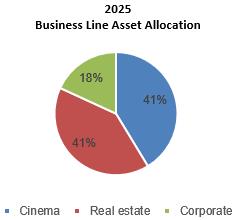
On December 31, 2025, the book value of our assets was $434.9 million, and our consolidated stockholders’ book equity was ($18.1) million. Calculated based on book value, $184.2 million, or 41% of our assets, relate to our cinema exhibition activities and $176.4 million, or 41%, of our assets, relate to our real estate activities.

For additional segment financial information, please see Part II, Item 8 – Financial Statements and Supplementary Data—Notes to Consolidated Financial Statements-- Note 4 –Segment Reporting.
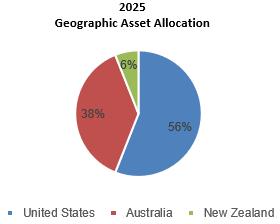
We have diversified our assets among three countries: the United States, Australia, and New Zealand. Based on book value, at December 31, 2025, we had approximately 56% of our assets in the United States, 38% in Australia and 6% in New Zealand
We have worked to maintain a balance between our cinema and real estate assets and our U.S. and our Australian and New Zealand assets. In order to support our liquidity while the global cinema industry stabilizes, in 2025, we have strategically monetized our real estate assets in Wellington, New Zealand for NZ$38.0 million, and our Cannon Park properties in Townsville, Queensland, Australia for AU$32.0 million.
At December 31, 2025, we had cash and cash equivalents of $10.5 million, which are treated as corporate assets. We had total worldwide non-current assets of $413.2 million, distributed as follows: $234.3 million in the United States, $155.9 million (AU$233.7 million) in Australia and $23.0 million (NZ$39.9 million) in New Zealand. We had no unrestricted unused capacity of available corporate credit facilities on December 31, 2025.
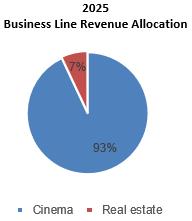
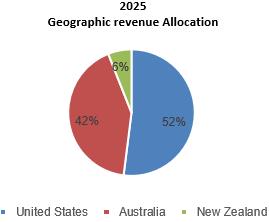
For 2025, our gross revenues in the United States, Australia, and New Zealand were $106.4 million (52%), $85.1 million (42%), and $11.6 million (6%), respectively, compared to $106.2 million (50%), $90.5 million (43%), and $13.9 million (7%) for 2024. Our total gross revenues decreased slightly in 2025 primarily because of an overall weaker film slate in 2025 compared to 2024 and the closing of loss-making theaters.

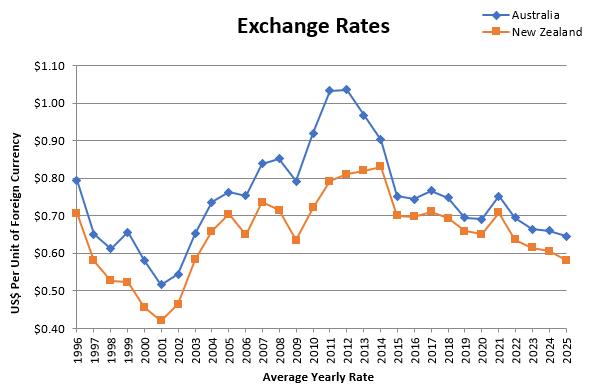
As shown in the chart set forth in the International Business Risks section, exchange rates for the currencies of these jurisdictions have varied, sometimes materially. These ratios, naturally, have an impact on our revenues and asset values, which are reported in USD. The U.S. dollar has been appreciating compared to the Australian and New Zealand dollar, which has the effect of reducing the value of our Australia and New Zealand earnings and cash flow from a U.S. point of view. Notwithstanding these fluctuations, we continue to believe that, over the long term, operating in Australia and New Zealand is a prudent diversification of risk. Over the years, U.S. News and World Report has consistently ranked Australia and New Zealand among the top countries in the world for quality of life. In our view, the economies of Australia and New Zealand are stable economies, and their lifestyles support our entertainment/lifestyle focus. In the first two months of 2026, the Australia and New Zealand dollars increased in value against the US Dollar by approximately 7% and 4% respectively.
HUMAN CAPITAL RESOURCES
Our Company is committed to diversity and does not discriminate on the basis of sex, race, gender, ethnicity, religious beliefs or practices or any other protected characteristics. We strive to recruit and retain a diverse group of employees.
Our cinemas typically employ persons from the communities that they serve and accordingly, we believe that they reasonably reflect the diversification of such communities. Many of our jobs are entry level positions and offer comparatively flexible hours attractive to students and others seeking part-time employment. We believe that we provide a starting point for younger people entering the job market for the first time, as well as an opportunity for individuals with other life commitments and interests and who are not seeking full-time employment. Finding and retaining cinema staff has been a challenge in the post-COVID period.
As of December 31, 2025, we had approximately (i) 89 executive/administrative and 8 real estate employees who were primarily full-time and (ii) 20 live theatre and 1,908 cinema employees worldwide who were predominantly part-time/casual employees. A small number of our cinema employees in New Zealand are union members. None of our Australian-based employees or other employees are subject to union contracts. We have a collective bargaining agreement in AU (referred to as an Enterprise Agreement) that covers all cinema wage earners. Overall, we are of the view that the existence of these collective bargaining agreements does not materially increase our costs of labor or our ability to compete.
We offer our employees what we believe to be a competitive benefits package. In the U.S., we offer a 401(k)-retirement savings plan (our “401(k) Plan”) that allows eligible U.S. employees to defer a portion of their compensation, within limits prescribed by the Internal Revenue Code, on a pre- and post-tax basis through contributions to the plan. We match contributions made by participants in our 401(k) Plan up to a specified percentage, and these matching contributions are fully vested as of the date on which the contributions are made. Currently, matching has been deferred as allowed by our 401(k)-plan due to COVID-19. For our employees in Australia and New Zealand, we offer superannuation plans in line with the requirements as they pertain to each country. We believe that providing a vehicle for retirement savings through our 401(k) Plan or superannuation plan, and making fully vested matching contributions in the U.S., in accordance with our compensation policies, adds to the overall desirability of our employee compensation package and further incentivizes our employees.
We have adopted a Code of Business Conduct and Ethics (the “Code of Conduct”) designed to help our Directors and employees resolve ethical issues. We have also adopted an Anti-Discrimination, Anti-Harassment and Anti-Bullying Policy (our “Anti-Discrimination Policy”). Our Code of Conduct and Anti-Discrimination Policy apply to all Directors and employees and are posted on our website. Our Board has established a means for employees to report a violation or suspected violation of the Code of Conduct and/or our anti-discrimination policy anonymously. In addition, we have adopted an “Amended and Restated Whistleblower Policy and Procedures,” which is also posted on our website, and establishes a process by which employees may anonymously disclose to our Principal Compliance Officer alleged fraud or violations of accounting, internal accounting controls or auditing matters. Each of these policies have also been adopted by each of our subsidiaries that has employees in the United States. Similar policies have been adopted by our overseas employer subsidiaries. We are firm supporters of equal rights and diversity.
Our Green Initiatives.
We strive to do our part in the fight against climate change.
United States
We provide recycling bins and eco-friendly popcorn bags and to go containers at all our theaters. And, while our capex and maintenance budgets have been limited during the post-pandemic periods, we have continued our energy enhancements programs, including the installation of (i) LED fixtures/bulbs to lower KWH usage and reduce our energy consumption across all the existing theatres (ii) budgeting and planning to continue modernizing our energy management systems, to efficiently control the current HVAC systems, and (iii) selective replacement HVAC package units, as warranted to improve our carbon footprint.
Australia and New Zealand
In our theaters in Australia and New Zealand, we have fully transitioned to (i) using commercially compostable bamboo takeaway cutlery nationally, (ii) using commercially compostable paper straws, and (iii) using commercially compostable soft drink cold cups, coffee cups, popcorn boxes, takeaway pizza boxes and takeaway clamshell hot food boxes. Our initiative to have our compostable range meet the Australia household compostable standard (AS 5810) has been granted by the Australasian Bioplastics Association. Additional environmental initiatives include (i) the ongoing transition of all lighting from halogen to LED, (ii) a paperless objective, creating editable forms stored securely in the cloud, and (iii) the purchase of laser projectors with significant operational energy savings and the removal of xenon bulb purchasing and disposal needs.
CAUTIONARY STATEMENT REGARDING FORWARD-LOOKING STATEMENTS
Our statements in this annual report, including the documents incorporated herein by reference, contain a variety of forward-looking statements as defined by the Securities Litigation Reform Act of 1995. Forward-looking statements can be identified by words such as: "may," "will," "expect," "believe," "intend," "future," and "anticipate" and similar references to future periods. Examples of forward-looking statements include, among others, our expectations regarding renovations and addition of cinemas; our beliefs regarding the certain external factors on the cinema business; our expected operating results, ; our expectations regarding the recovery and future of the cinema exhibition industry, including the strength of movies anticipated for release in the future; our expectations regarding people returning to our theatres and continuing to use discretionary funds on entertainment outside of the home; our beliefs regarding the impact of our cinema-anchored real estate developments; our beliefs regarding the success of our diversified business strategy; our expectations regarding our ability to enter into an extension agreement with Audible on terms acceptable to us; our expectations regarding the impact of streaming and mobile video services on the cinema exhibition industry; our expectations regarding the timing of the completions our renovation projects; our expectations regarding our ability to monetize our assets on terms acceptable to us; our expectations regarding credit facility covenant compliance and our ability to continue to obtain necessary covenant waivers; and our expectations of our liquidity and capital requirements and the allocation of funds.
Forward-looking statements are neither historical facts nor assurances of future performance. Instead, they are based only on our current beliefs, expectations and assumptions regarding the future of our business, future plans and strategies, projections, anticipated events and trends, the economy and other future conditions. Because forward-looking statements relate to the future, they are subject to inherent uncertainties, risks and changes in circumstances that are difficult to predict and many of which are outside of our control. Our actual results and financial condition may differ materially from those indicated in the forward-looking statements. Therefore, you should not rely on any of these forward-looking statements. Important factors that could cause our actual results and financial condition to differ materially from those indicated in the forward-looking statements include, among others, the following:
with respect to our cinema and live theatre operations:
reduced consumer demand due to inflationary and other negative economic pressures;
the adverse continuing impact of external past events such as the pandemic and Hollywood strikes, on our cinema operations, liquidity, cash flows, financial condition, and access to credit markets;
the decrease in attendance at our cinemas and theatres due to (i) increased ticket prices (ii) a change in consumer behavior in favor of alternative forms or mediums of entertainment, and (iii) limited availability of wide release content;
reduction in operating margins (or negative operating margins) due to (i) decreased attendance, (ii) limited availability of wide release content, and (iii) increased operating expenses;
increased absenteeism and use by employees of liberalized and expanded personal leave laws, and concomitant overtime costs.
competition from cinema operators who have successfully used debtor laws to reduce their debt and/or rent exposure;
the uncertainty as to the scope and extent of government responses to future outbreak of infectious diseases;
the disruptions or reductions in the utilization of entertainment, shopping, and hospitality venues, as well as in our operations, due to pandemics, epidemics, widespread health emergencies, or outbreaks of infectious diseases or to changing consumer tastes and habits;
the number and attractiveness to moviegoers of the films released in future periods, and potential changes in release dates for motion pictures;
the lack of availability of films in the short- or long-term as a result of (i) major film distributors releasing scheduled films on alternative channels, (ii) disruptions of film production, or (iii) rescheduling of movie releases into later periods, as most currently experienced due to the implications of the Hollywood strikes;
the amount of money allocated and spent by film distributors to promote their motion pictures;
the licensing fees and terms required by film distributors from motion picture exhibitors in order to exhibit their films;
the comparative attractiveness of motion pictures as a source of entertainment and willingness and/or ability of consumers (i) to spend their dollars on entertainment and (ii) to spend their entertainment dollars on movies in an outside-the-home environment;
the extent to which we encounter competition from other cinema exhibitors, from other sources of outside-the-home entertainment, and from inside-the-home entertainment options, such as “home cinemas” and competitive film product distribution technology, such as, streaming, cable, satellite broadcast, video on demand platforms, and Blu-ray/DVD rentals and sales;
our ability to continue to obtain, to the extent needed, waivers or other financial accommodations from our lenders and landlords;
the impact of major movies being released directly to one of the multitudes of streaming services available;
the impact of certain competitors’ subscription or advance pay programs;
the failure of our new initiatives to gain significant customer acceptance and use or to generate meaningful profits;
the cost and impact of improvements to our cinemas, such as improved seating, enhanced F&B offerings, and other improvements;
the ability to negotiate favorable rent abatement, deferral and repayment terms with our landlords (which may include lenders who have foreclosed on the collateral held by our prior landlords);
disruptions during cinema improvements;
in the U.S., the impact of the termination and phase-out of the so called “Paramount Decree;”
the risk of damage and/or disruption of cinema businesses from earthquakes or floods as certain of our operations are in geologically active or flood susceptible areas;
the impact of protests, demonstrations, and civil unrest on, among other things, government policy, consumer willingness to go to the movies;
the ability to fund necessary refurbishments, remodels and upgrades;
the impact of new laws related to internet privacy and/or marketing, and of private litigation to obtain interpretation and/or enforcement of the same;
labor shortages and increased labor costs related to such shortages and to increasing costly labor laws and regulations applicable to part time non-exempt workers; and
with respect to our real estate development and operation activities:
the increased costs of wages, supplies, services and other development expenses from inflation;
the impact on tenants from inflationary pressures;
uncertainty as to governmental responses to infectious diseases;
the rental rates and capitalization rates applicable to the markets in which we operate and the quality of properties that we own;
the ability to negotiate and execute lease agreements with material tenants;
the extent to which we can obtain on a timely basis the various land use approvals and entitlements needed to develop our properties;
the risks and uncertainties associated with real estate development;
the availability and cost of labor and materials;
the ability to obtain all permits to construct improvements;
the ability to finance improvements, including, but not limited to increased cost of borrowing and tightened lender credit policies;
the disruptions to our business from construction and/or renovations;
the possibility of construction delays, work stoppage, and material shortage;
competition for development sites and tenants;
environmental remediation issues;
the extent to which our cinemas can continue to serve as an anchor tenant that will, in turn, be influenced by the same factors as will influence generally the results of our cinema operations;
the increased depreciation and amortization expense as construction projects transition to leased real property;
the ability to negotiate and execute joint venture opportunities and relationships;
the risk of damage and/or disruption of real estate businesses from earthquakes as certain of our operations are in geologically active areas;
the disruptions or reductions in the utilization of entertainment, shopping and hospitality venues, as well as in our operations, due to pandemics, epidemics, widespread health emergencies, or outbreaks of infectious diseases, or to changing consumer tastes and habits; and
the impact of protests, demonstrations, and civil unrest on government policy, consumer willingness to visit shopping centers.
with respect to our operations generally as an international company involved in both the development and operation of cinemas and the development and operation of real estate and previously engaged for many years in the railroad business in the United States:
our ability to renew, extend, renegotiate or replace our loans that mature in 2026 and beyond, and the impact of increasing interest rates;
our ability to grow our Company and provide value to our stockholders;
our ongoing access to borrowed funds and capital and the interest that must be paid on that debt and the returns that must be paid on such capital, and our ability to borrow funds to help cover the cessation of cash flows that we experienced during or as a result of the COVID-19 pandemic;
our ability to reallocate funds among jurisdictions to meet short-term liquidity needs;
the relative values of the currency used in the countries in which we operate;
changes in government regulation, including by way of example, the costs resulting from the requirements of Sarbanes-Oxley and other increased regulatory requirements;
our labor relations and costs of labor (including future government requirements with respect to minimum wages, shift scheduling, the use of consultants, pension liabilities, disability insurance and health coverage, and vacations and leave);
our exposure from time to time to legal claims and to uninsurable risks, such as those related to our historic railroad operations, including potential environmental claims and health-related claims relating to alleged exposure to asbestos or other substances now or in the future recognized as being possible causes of cancer or other health related problems, and class actions and private attorney general wage and hour and/or safe workplace-based claims;
our exposure to cybersecurity risks, including misappropriation of customer information or other breaches of information security;
the impact of future major outbreaks of contagious diseases;
the availability of employees and/or their ability or willingness to conduct work under any revised work environment protocols;
the increased risks related to employee matters, including increased employment litigation and claims relating to terminations or furloughs caused by cinema and ETC closures;
our ability to generate significant cash flow from operations if our cinemas and/or ETCs continue to experience demand at levels significantly lower than historical levels, which could lead to a substantial increase in indebtedness and negatively impact our ability to comply with the financial covenants, if applicable, in our debt agreements;
our ability to comply with credit facility covenants and our ability to obtain necessary covenant waivers and necessary credit facility amendments;
changes in future effective tax rates and the results of currently ongoing and future potential audits by taxing authorities having jurisdiction over our various companies;
inflationary pressures on labor and supplies, and supply chain disruptions;
impacts from the proposed tariffs;
changes in applicable accounting policies and practices; and
political, economic and geopolitical conditions, including the current war conditions in the Middle East, Ukraine and other areas, which may result in disruptions to supply chains, increased energy costs and the postponement of anticipated rate reductions..
The above list is not necessarily exhaustive, as business is by definition unpredictable and risky, and subject to influence by numerous factors outside of our control, such as changes in government regulation or policy, competition, interest rates, supply, technological innovation, changes in consumer taste and fancy, weather, earthquakes, pandemics, and the extent to which consumers in our markets have the economic wherewithal to spend money on beyond-the-home entertainment. Refer to Item 1A - Risk Factors, as well as the risk factors set forth in any other filings made under the Securities Act of 1934, as amended, including any of our Quarterly Reports on Form 10-Q, for more information.
Given the variety and unpredictability of the factors that will ultimately influence our businesses and our results of operation, no guarantees can be given that any of our forward-looking statements will ultimately prove to be correct. Actual results will undoubtedly vary and there is no guarantee as to how our securities will perform either when considered in isolation or when compared to other securities or investment opportunities.
Forward-looking statements made by us in this annual report are based only on information currently available to us and are current only as of the date of this 2025 Annual Report. We undertake no obligation to publicly update or to revise any of our forward-looking statements, whether as a result of new information, future events or otherwise, except as may be required under applicable law. Accordingly, you should always note the date to which our forward-looking statements speak.
Additionally, certain of the presentations included in this annual report may contain “non-GAAP financial measures.” In such case, a reconciliation of this information to our GAAP financial statements will be made available in connection with such statements.
Item 1A – Risk Factors
Like any other investment, investing in our securities involves risk. Set forth below is a summary of various risk factors that you should consider in connection with your investment in our Company. This summary should be considered in the context of our overall Annual Report on Form 10-K.
BUSINESS RISK FACTORS
We are in the cinema exhibition and real estate businesses. We discuss separately the risks we believe to be material to our involvement in each of these segments. We have discussed separately the risks relating to the international nature of our business activities, our use of leverage, and our status as a controlled corporation. While we report the results of our live theatre operations as real estate operations – because we are principally in the business of renting space to producers rather than in producing plays ourselves – the cinema exhibition and live theatre businesses share certain risk factors and are, accordingly, discussed together.
Cinema Exhibition and Live Theatre Business Risk Factors
We are dependent upon third parties to supply the entertainment product we need for our cinemas and live theatres to attract customers. We do not produce the films we show at our cinemas and, generally speaking, we do not produce the plays that are performed at our live theatres. Film distributors have no obligation to supply us with film and producers have no obligation to make use of our live theatres. Any disruption in the production of these films (including by reason of a strike) could hurt our business and results of operations. The Hollywood strikes in 2023 halted production of films for several months and, delayed or otherwise affected the supply of certain films. The disruption in film production may also cause delays for currently scheduled film release dates. It is difficult to anticipate the scope and timing of such delays or the full extent of the adverse impact of the strikes, and potential future strikes on our business and results of operations in future reporting periods.
We face competition from other sources of entertainment and other entertainment delivery systems. Both our cinema and live theatre operations face competition from “in-home” and mobile device sources of entertainment. These include competition from network, cable and satellite television, and Video on Demand, internet streaming video services such as Netflix, Hulu, Disney+, HBO Max, Peacock, and Amazon Prime, and social media or user generated internet programing such as, YouTube, TikTok, Reddit, Instagram, and Snapchat, video games and other sources of entertainment. The quality of “in-home” and mobile entertainment systems, as well as programming available on an in-home and mobile basis, has improved and increased, while the cost to consumers of such systems (and such programming) has decreased in recent periods, and some consumers may prefer the security and/or convenience of an “in-home” or mobile entertainment experience to the more public and presentation-oriented experience offered by our cinemas and live theatres. Film distributors have been responding to these developments by, in some cases, decreasing or eliminating the period of time between cinema release and the date such product is made available to “in-home” or mobile forms of distribution. During the COVID-19 pandemic, many distributors moved product onto their proprietary streaming service platforms or onto third party platforms (like Netflix) either in lieu of or simultaneously with a cinema release. Even before the COVID-19 pandemic, some traditional in-home and mobile distributors had begun to produce full-length movies, specifically for the purpose of direct or simultaneous release to the in-home and mobile markets. Cinemas will need to meet these competitive factors to continue to attract customers. This may require substantial capital outlays and increased labor expense, which exhibitors may not be able to fully pass on to their customers.
We also face competition from various other forms of “beyond-the-home” entertainment, including sporting events, concerts, restaurants, casinos, video game arcades, and nightclubs. Our cinemas also face competition from live theatres and vice versa.
Supply chain disruptions may negatively impact our operating results. We rely on certain suppliers for a number of our products, supplies and services. Shortages, delays, or interruptions in the availability of food and beverage items and other supplies to our theatres and restaurants may be caused by adverse weather conditions; natural disasters; governmental regulation; recalls; commodity availability; seasonality; public health crises or pandemics; labor issues or other operational disruptions; the inability of our suppliers to manage adverse business conditions, obtain credit or remain solvent; or other conditions beyond our control. Such shortages, delays or interruptions could adversely affect the availability, quality, and cost of the items we buy and the operations of our business. Supply chain risk could increase our costs and limit the availability of products that are critical to our operations. We expect these issues to continue for the foreseeable future and plan to minimize the impact by focusing on the supply of those items with the greatest impact on our sales and operations.
We operate in a highly competitive environment with many competitors who are significantly larger and may have significantly better access to films and to funds than we do. We are a comparatively small cinema operator and face competition from much larger exhibitors who are able to offer distributors more screens in more markets – including markets where they may be the exclusive exhibitor – than can we. This may adversely impact our access to content, which may adversely affect our revenue and profitability. These larger competitors may also enjoy (i) greater cash flow, which can be used to develop additional cinemas, including cinemas that may be competitive with our existing cinemas, (ii) better access to equity capital and debt, (iii) better visibility to landlords and real estate developers, (iv) for the sake of building volume, to operate cinemas with margins below our threshold for cinema acquisitions and/or
development, and (v) better economies of scale. Access to reasonably priced funding is increasingly important as cinema operators need to upgrade their presentation and food and beverage in order to compete with in-home entertainment options.
In the case of our live theatres, we compete for shows not only with other commercial Off-Broadway operators, but also with “not-for-profit” theatres. We believe our live theatres are generally competitive with other Off-Broadway venues.
We are vulnerable to a variety of factors which are beyond our control.
Our cinema and live theatre businesses may be vulnerable to fears of terrorism and random shooter incidents which could cause customers to avoid public assembly venues. Events, such as terrorist attacks and random shooter incidents may discourage patrons from attending our cinemas. We believe that recent shooting incidents have resulted in material increases in insurance premiums for cinema operators.
Our cinema business may be vulnerable to natural disasters. Natural disasters, such as tropical storms, floods, fires, and earthquakes, have damaged and forced the temporary closure, and are likely in the future to similarly impact our cinema operations. A material portion of our cinemas are located in seismically active areas, such as California, Hawaii and New Zealand.
We may be more subject to general economic conditions than some other businesses. Going to a movie or a play is a luxury, not a necessity. Furthermore, consumer demand for better amenities and food offerings have resulted in an increase of the cost of a night at the movies. Accordingly, a decline in the economy resulting in a decrease in discretionary income, or a perception of such a decline, may result in decreased discretionary spending, which could adversely affect our cinema and live theatre businesses. Adverse economic conditions can also affect the supply side of our business, as reduced liquidity can adversely affect the availability of funding for movies and plays. This is particularly true in the case of Off-Broadway plays, which are often times financed by high-net-worth individuals (or groups of such individuals) and that are very risky due to the absence of any ability to recoup investment in secondary markets like – cable, satellite or internet distribution.
We face competition from competitors offering food and beverage and luxury seating as an integral part of their cinema offerings. The number of our competitors offering expanded food and beverage menus (including the sale of alcoholic beverages) and luxury seating, has continued to grow in recent periods. In addition, more competitors are converting existing cinemas to provide such expanded menu offerings and in-theater dining options. The existence of such cinemas may alter traditional cinema selection practices of moviegoers, as they seek out cinemas with such expanded offerings as a preferred alternative to traditional cinemas. In order to compete with these new cinemas, the Company has been required to materially increase its capital expenditures to add such features to many of our cinemas and to take on additional and more highly trained (and, consequently, compensated) staff. Also, the conversion to luxury seating typically requires a material reduction in the number of seats that an auditorium can accommodate which may translate into fewer movie tickets being sold and the shutdown (or limitation of activities) during the time required to complete such modifications.
Our failure to obtain and maintain liquor licenses at any of our cinemas could adversely affect our ability to compete. Each of our cinemas offering alcoholic beverages, is subject to licensing and regulation. Typically, licenses must be renewed annually and may be revoked or suspended for cause at any time. Alcoholic beverage control regulations relate to numerous aspects of the daily operations of each cinema, including minimum age of patrons and employees, hours of operation, advertising, wholesale purchasing, inventory control and handling and storage and dispensing of alcoholic beverages. The failure to receive or retain a liquor license, or any other required permit or license, in a particular location, or to continue to qualify for, or renew licenses, could have a material adverse effect on our profitability, our ability to attract patrons, and our ability to obtain such a liquor license in other locations.
We may be subject to increased labor and benefits costs generally. We are subject to inflationary pressures which have resulted in increased costs of goods and increased cost of film. Also, labor shortages may impact our ability to hire and retain employees. In venues that have alcohol licenses, there are higher labor, inventory, and insurance costs. Our cinemas are a major user of electricity, and utility costs are also rising. Given competitive pressures and other forces adversely impacting movie attendances, it may not be possible to pass all or any material portion of these increased costs on to consumers. In addition, we are subject to a variety of changing laws governing such matters as minimum wages, access to benefits and paid or unpaid leave, working conditions and overtime under which minor violations can result in material liabilities. In California and New York, in particular, law firms have developed which advertise for plaintiffs and bring such cases on a class action, contingent fee basis, where typically between 25% and 40% of any recovery goes to the law firm. Moreover, given the statutory basis of such claims, insurance is not available to cover such exposure. In recent periods, legislatures have been actively increasing minimum wages, mandating minimum hours or imposing notice and leave provisions that make it increasingly difficult to adjust staffing levels to accommodate fluctuating cinema attendance levels, all of which have resulted in increased operating costs as we work to maintain a high level of amenity to our customers.
Our cinema and live theatre businesses are dependent upon attendance, the availability of attractive entertainment product and employees willing to work in a public environment and, accordingly, are vulnerable to the adverse effects of any future pandemics which may result in government ordered closures, imposition of social distancing requirements, and changes in film release patterns. As demonstrated by the governmental and public response to the COVID-19 pandemic, businesses that bring large numbers of unrelated people together in an enclosed environment are particularly vulnerable to business disruption in the face of contagious diseases with life threatening
potential. Not only may government authorities order closures or reduce operating capacities, but the public may feel uncomfortable attending our performances in the face of such an infectious disease risk. Our cinema business has high fixed costs (rent and increasing labor) and our revenue in this segment (ticket sales, food and beverage sales, screen advertising fees) is directly tied to our success at attracting customers to our venues.
We are subject to a variety of litigation risks. The legal landscape in which we do business is subject to rapid change due to legislative enactments at the federal, state and local levels. Often these requirements are not stated in a uniform manner, and may vary, in intent or as the result of judicial determination, from jurisdiction to jurisdiction. Many have material periodic penalties for non-compliance and allow (or have been interpreted to allow) private litigants to challenge whether such laws have been violated. As a consequence, we find that our vulnerability to forced settlements, litigation exposure and cost of liability insurance generally are substantially higher in the United States (and in particular in states such as California) than in Australia and New Zealand. The defense of such suits, even if successful, can be very costly due to, among other things, the cost of electronic discovery.
Real Estate Development and Ownership Business Risks
Specific Risks Related to Our Real Estate Business.
Our real estate business suffered effects from the coronavirus outbreak from which it has not fully recovered. The COVID-19 pandemic resulted in the closure or reduced capacity of certain of our retail tenants. All of our ETCs are anchored by our cinemas, which suffered temporary closures and/or reductions in seating capacities during the COVID-19 Pandemic, thereby reducing foot traffic to our ETCs. During the COVID-19 pandemic period, we were compelled to provide certain tenants with rent abatements or deferrals.
Competition from the Digital Economy may adversely impact our ability to lease and obtain reasonable rents for our properties. An increasing amount of shopping is being done online, a trend that was supported by the stay-at-home admonitions and restrictions associated with our previous battle against the COVID virus. This has adversely impacted retail tenants (particularly those dealing in consumer goods), which may impact our ability to attract such retailers and to obtain rents at historic levels. This is a particular risk to us, given our high percentage of retail tenants. Also, initially motivated by the need to work from home during the COVID-19 pandemic, employers are rethinking the scope and extent of the need for their office space. Some markets may have become overbuilt, which may complicate our ability to lease our properties, to obtain reasonable rents, and to finance future development.
Many of our Properties are located in areas prone to natural disasters. Many of our properties are located in areas subject to a risk of fires such as California and Australia; of hurricanes, tropical storms and/or flooding, such as Australia, California, Hawaii and New York, New Jersey; or earthquakes in New Zealand, Hawaii and California. The availability of insurance for natural disasters (particularly in the event of an earthquake) may be limited.
Our entertainment properties may be more subject to access litigation than other properties. Substantially all our properties consist of, or include as a material component, entertainment venues. These facilities may attract more access-based litigation (for example, claims under the Americans with Disabilities Act) than other types of real estate.
We operate in a highly competitive environment in which we must compete against companies with much greater financial and human resources than we have. We have limited financial and human resources, compared to our principal real estate competitors. In recent periods, we have relied heavily on outside professionals in connection with our real estate development activities. Many of our competitors have significantly greater resources and may be able to achieve greater economies of scale than we can. Given our structure as a taxable corporation, our cost of capital is typically higher than other real estate investment vehicles such as real estate investment trusts.
Risks Related to the Real Estate Industry Generally
Our financial performance will be affected by risks associated with the real estate industry generally. Events and conditions generally applicable to developers, owners, and operators of real property will affect our performance as well. These include (i) changes in the national, regional and local economic climate, (ii) local conditions, such as an oversupply of, or a reduction in demand for, commercial space and/or entertainment-oriented properties, (iii) reduced attractiveness of our properties to tenants, (iv) the rental rates and capitalization rates applicable to the markets in which we operate and the quality of properties that we own, (v) competition from other properties, (vi) inability to collect rent from tenants, (vii) increased operating costs, including labor, materials, real estate taxes, insurance premiums, and utilities, (viii) costs of complying with changes in law and government regulations including those relating to access, energy conservation and environmental matters, (ix) the relative illiquidity of real estate investments, and (x) decreases in sources of both construction and long-term lending as traditional sources of such funding leave or reduce their commitments to real estate-based lending. In addition, periods of rising interest rates or declining demand for real estate (for example, due to competition from internet sellers the demand for brick and mortar retail spaces has declined and may continue to decline, and due to the increasing popularity of tele-commuting demand for traditional office space has likewise declined and may likewise continue to decline), or the public perception that any of these events may occur, could result in declining rents or increased lease defaults. Increasing cap rates can result in lower property values.
Risk of Reliance on Appraisals. In our business planning and forecasts, we rely on independent third-party appraisals as to the value of our real estate holdings. Such appraisals are inherently subjective, and a reasonable appraiser can reach significantly different views as to fair market value of a given parcel of real property. Valuations of historic railroad properties can be impacted by uncertainties as to title and property line boundaries. Accordingly, no assurances can be given that the fair market value assigned to a parcel of real property can be achieved in the open market. Further, USPAP methodology is inherently backwards looking and, as a result, can overstate value in times of declining real estate values and understate value in raising markets.
Illiquidity of real estate investments could impede our ability to respond to adverse changes in the performance of our properties. Real estate investments can be relatively illiquid and, therefore, tend to limit our ability to vary our portfolio promptly in response to changes in economic or other conditions. Many of our properties are either “special purpose” properties that could not be readily converted to general residential, retail or office use. In addition, certain significant expenditures associated with real estate investment, such as real estate taxes and maintenance costs, are generally not reduced when circumstances cause a reduction in income from the investment, and competitive factors may prevent the pass-through of such costs to tenants.
Real estate development involves a variety of risks.
Real estate development involves a variety of risks, including the following:
The identification and acquisition of suitable development properties. Competition for suitable development properties is intense. Our ability to identify and acquire development properties may be limited by our size and resources. Also, as we and our affiliates are considered to be “foreign owned” for purposes of certain Australian and New Zealand statutes, we have been in the past, and may in the future be, subject to regulations that are not applicable to other persons doing business in those countries.
The procurement of necessary land use entitlements for the project. This process can take many years, particularly if opposed by competing interests. Competitors and community groups (sometimes funded by such competitors) may object based on various factors, including, for example, impacts on density, parking, traffic, noise levels and the historic or architectural nature of the building being replaced. If they are unsuccessful at the local governmental level, they may seek recourse to the courts or other tribunals. This can delay projects and increase costs.
The construction of the project on time and on budget. Construction risks include the availability and cost of financing; the availability and costs of material and labor; the costs of dealing with unknown site conditions (including addressing pollution or environmental wastes deposited upon the property by prior owners); inclement weather conditions; and the ever-present potential for labor-related disruptions or disputes.
The leasing or sell-out of the project. Ultimately, there are risks involved in the leasing of a rental property or the sale of a condominium or built-for-sale property. For our ETCs, the extent to which our cinemas can continue to serve as anchor tenants will be influenced by the same factors as will influence generally the results of our cinema operations. Leasing or sale can be influenced by economic factors that are neither known nor knowable at the commencement of the development process and by local, national, and even international economic conditions, both real and perceived.
The refinancing of completed properties. Properties are often developed using relatively short-term loans. Upon completion of the project, it may be necessary to find replacement financing for these loans. This process involves risk as to the availability of such permanent or other take-out financing, the interest rates, and the payment terms applicable to such financing, which may be adversely influenced by local, national, or international factors. Recent increases in lending interest rates and potential tightening of lending given the recent bank crisis may make more difficult refinancing debt or obtaining new debt.
Development of real properties may uncover environmental issues. Long held real property assets may contain environmental contamination that is unknown until development efforts commence. See “We may be subject to liability under environmental laws and regulations,” below.
The ownership of properties involves risk. The ownership of properties involves risks, such as: (i) ongoing leasing and re-leasing risks, (ii) ongoing financing and re-financing risks, (iii) market risks as to the multiples offered by buyers of investment properties, (iv) risks related to the ongoing compliance with changing governmental regulation (including, without limitation, laws and regulations related to access, energy conservation and environmental matters), (v) relative illiquidity compared to some other types of assets, and (vi) susceptibility of assets to uninsurable risks, such as biological, chemical or nuclear terrorism, or risks that are subject to caps tied to the concentration of such assets in certain geographic areas, such as earthquakes. Furthermore, as our properties are typically developed around entertainment use, the attractiveness of these properties to tenants, sources of finance and real estate investors will be influenced by market perceptions of the benefits and detriments of such entertainment-type properties.
We may be subject to liability under environmental laws and regulations. We own and operate cinemas and other properties within the U.S. and internationally, which may be subject to various foreign, federal, state and local laws and regulations relating to the protection of the environment or human health. Such environmental laws and regulations include those that impose liability for the investigation and remediation of spills or releases of hazardous materials. We may incur such liability, including for any currently or formerly owned, leased or operated property, or for any site, to which we may have disposed, or arranged for the disposal of, hazardous
materials or wastes. Certain of these laws and regulations may impose liability, including on a joint and several liability, which can result in a liable party being obliged to pay for greater than its share, regardless of fault or the legality of the original disposal. Environmental conditions relating to our properties or operations could have an adverse effect on our business and results of operations and cash flows.
Legislative or regulatory initiatives related to global warming/climate change concerns may negatively impact our business. Recently, there has been an increasing focus and continuous debate on global climate change including increased attention from regulatory agencies and legislative bodies. This increased focus may lead to new initiatives directed at regulating an as yet unspecified array of environmental matters. Legislative, regulatory or other efforts in the U.S. to combat climate change could result in future increases in the cost of raw materials, taxes, transportation and utilities for our vendors and for us which would result in higher operating costs for the Company. Also, compliance by our cinemas and accompanying real estate with new and revised environmental, zoning, land-use or building codes, laws, rules or regulations, could have a material and adverse effect on our business. However, we are unable to predict at this time, the potential effects, if any, that any future environmental initiatives may have on our business.
Changes in interest rates may increase our interest expense. Because most of our debt bears interest at variable rates, increases in interest rates could materially increase our interest expense. Approximately $114.1 million of our debt will mature over the next twenty-four months and will require refinancing. Based on our debt outstanding as of December 31, 2025, if interest rates were to increase by 1%, the corresponding increase in interest expense on our variable rate debt would decrease future earnings and cash flows by approximately $1.6 million per year. Potential future increases in interest rates may therefore negatively affect our financial condition and results of operations and reduce our access to the debt or equity capital markets.
International Business Risks. Our Company transacts business in Australia and New Zealand and is subject to risks associated with changing foreign currency exchange rates. During year 2025, the Australian dollar and New Zealand dollar weakened against the U.S. dollar by 2.2% and 3.8%, respectively, compared to the prior year. Our international operations are subject to a variety of risks, including the following:
Currency Risk: While we report our earnings and net assets in U.S. dollars, substantial portions of our revenue and of our obligations are denominated in either Australian or New Zealand dollars. The value of these currencies can vary significantly compared to the U.S. dollar and compared to each other. We do not hedge the currency risk, but rather have relied upon the natural hedges that exist as a result of the fact that our film costs are typically fixed as a percentage of the box office, and our local operating costs and obligations are likewise typically denominated in local currencies. Set forth below is a chart of the exchange ratios between these three currencies since 1996:

In recent periods, our debt levels in Australia are higher than they would have been if funds had not been repatriated. On a company wide basis, this means that a reduction in the relative strength of the U.S. dollar versus the Australian Dollar and/or the New Zealand dollar would effectively raise the overall cost of our borrowing and capital and make it more expensive to return funds from the United States to Australia and New Zealand. As the impacts of COVID on our business operations in Australia and New Zealand have been less severe than on our operations in the U.S., plus the impact of Hollywood strikes on US operations, we have been looking to our operations in Australia and New Zealand to fund our overall corporate general and administrative expense (most of which is resident in the U.S.). While the Australian and New Zealand Dollars have strengthened against the U.S. dollar in recent months, the strength of the U.S. dollar over the past three years has diminished the value to our Company of our Australia and New Zealand cash flow.
Risk of adverse government regulation: Currently, we believe that relations between the United States, Australia, and New Zealand are good. However, no assurances can be given that these relationships will continue, and that Australia and New Zealand will not in the future seek to regulate more highly the business done by U.S. companies in their countries.
Risk of adverse labor relations: Deterioration in labor relations could lead to an increased cost of labor (including the cost of future government requirements with respect to scheduling, accommodation, pension liabilities, disability insurance and health coverage, vacations and leave).
Trade disputes and geopolitical instability outside of the U.S. may adversely impact the U.S. and global economies.
In 2025, global growth weakened, trade tensions heightened, and several emerging markets experienced significant downturns as macroeconomic and geopolitical developments weighed on market sentiments. Governmental policies of developed economies, such as the U.S., have a substantial effect on emerging markets, and the consequences of a trade war between two developed countries, like that of the U.S. and China, could further contribute to the adverse economic and political conditions of emerging and other developed economies. Additionally, North Korea’s nuclear weapons capabilities, Chinese activities relative to the South China Sea, Taiwan, and Hong Kong, and the Russian invasion of Ukraine continue to be an ongoing security concern. Worsening relations between the U.S. and North Korea, Russia and China, as well as the recent conflicts in the Middle East continue to create a global security issue that may adversely affect international business and economic conditions. While it is difficult for us to predict the effect of such trade wars and heightened geopolitical and economic instability on our business, they could lead to currency devaluation, economic and political turmoil, market volatility, and a loss of consumer confidence in the broader U.S. economy.
Risks Associated with Certain Discontinued Operations
Certain of our subsidiaries were previously in industrial businesses. As a consequence, properties that are currently owned or may have in the past been owned by these subsidiaries may prove to have environmental issues. Where we have knowledge of such environmental issues and are able to make an assessment as to our exposure, we have established what we believe to be appropriate reserves, but we are exposed to the risk that currently unknown problems may be discovered. These subsidiaries are also exposed to potential claims related to exposure of former employees to coal dust, asbestos, and other materials now considered to be, or which in the future may be found to be, carcinogenic or otherwise injurious to health.
Operating, Financial Structure and Borrowing Risk
Typically, we have negative working capital. As we invest our cash in the development of our existing properties, we have negative working capital. This negative working capital is typical in the cinema exhibition industry because our short-term liabilities are in part financing our long-term assets instead of long-term liabilities financing short-term assets, as is the case in other industries such as manufacturing and distribution. Our short-term liabilities also include significant obligations related to our cinema leases. See Part II, Item 8 – Financial Statements and Supplementary Data—Notes to Consolidated Financial Statements-- Note 3 - Summary of Significant Accounting Policies – Operating Leases.
We are subject to complex taxation, changes in tax rates, adoption of new U.S. or international tax legislation and disagreements with tax authorities that could adversely affect our business, financial condition, or results of operations. We are subject to many different forms of taxation in both the U.S. and in foreign jurisdictions where we operate, such as the U.S. Tax Cuts and Jobs Act signed into law in December 2017. The new laws are still evolving and require that we interpret the provisions of the law as we work to comply with them. The costs of compliance with these laws and regulations are high and are likely to increase in the future. Any failure on our part to comply with these laws and regulations can result in negative publicity and diversion of management’s time and effort and may subject us to significant liabilities and other penalties.
We have substantial short- to medium-term debt. Generally speaking, we have historically financed our operations through relatively short-term debt. No assurances can be given that we will be able to refinance this debt, or if we can, that the terms will be reasonable. However, as a counterbalance to this debt, we have certain unencumbered real property assets, which could be sold to pay debt or encumbered to assist in the refinancing of existing debt, if necessary.
We have substantial lease liabilities. Most of our cinemas operate in leased facilities. These leases typically have “cost of living” or other rent adjustment features and require that we operate the properties as cinemas. The COVID-19 pandemic, increased competition from the internet, streaming and cable-based entertainment, and changes in film distribution have adversely affected the ability of our cinema operating subsidiaries to meet these rental obligations. Even if our cinema exhibition business returns to pre-Pandemic levels and thereafter remains relatively constant, cinema level cash flow will likely be adversely affected unless we can increase our revenue sufficiently to offset increases in our rental liabilities.
If our company suffers cybersecurity attacks, data security challenges or privacy incidents that result in security breaches, we could suffer a loss of sales, additional liability, reputational harm or other adverse consequences. The effective operation of our international businesses depends on our network infrastructure, computer systems, physical, virtual and/or cloud based, and software. Our information technology systems collect and process information provided by customers, employees and vendors. In addition, third-party vendors’ systems process ticketing for our theaters. These various information technology systems and the data stored within them are subject to penetration by cyber attackers. We utilize industry accepted security protocols to securely maintain and protect proprietary and confidential information. However, despite our best efforts, our information systems may fail to operate for a variety of technological or human reasons. An interruption or failure of our information technology systems and of those maintained by our third-party providers could adversely affect our business, liquidity or results of operations and result in increases in reputational risk, litigation or penalties. Furthermore, any such occurrence, if significant could require us to expend resources to remediate and upgrade information technology systems. Since 2015, we have annually procured cybersecurity insurance to protect against cybersecurity risks; however, we cannot provide any assurance regarding the adequacy of such insurance coverage or the ability to obtain such coverage in the future.
Our stock is thinly traded. Our stock is thinly traded, with an average daily volume in 2025 of only approximately 30,231 shares of Class A Stock. Our Class B Stock is very thinly traded with even less volume. This can result in significant volatility, as demand of buyers and sellers can easily get out of balance.
Uninsured bank deposits may be at risk. We maintain cash in certain financial institution bank accounts in the United States, Australia, and New Zealand. In the United States, the Federal Deposit Insurance Corporation insures accounts in the amount of $250,000 per depositor, per insured bank, for each account ownership category. At certain of our financial institutions, we have more than $250,000 in deposit and those amounts may not be insured in the event of a bank failure.
Ownership and Management Structure, Corporate Governance, and Change of Control Risks
According to a Schedule 13D/A filed on October 27, 2023 by Margaret Cotter (the Chair of our Board, Executive Vice President of our Company and sister of Ellen Cotter), Ellen Cotter (the Vice-Chair of our Board, President and Chief Executive Officer of our Company and sister of Margaret Cotter) and certain of their affiliates (the “Cotter Schedule 13D”), Margaret Cotter has sole voting control over 1,058,988 shares of Class B Stock and shared voting power with Ellen Cotter over 100,000 shares of Class B Stock, collectively representing 69% of the outstanding Class B stock of the Company.
For as long as Margaret Cotter continues to have voting power over more than 2/3rds of the Class B Stock, Margaret Cotter will be able to unilaterally elect or remove all of the members of our Board of Directors and determine the outcome of all matters submitted to a vote of our stockholders, including matters involving mergers or other business combinations, the acquisition or disposition of assets, the incurrence of indebtedness, the issuance of any additional shares of common stock or other equity securities, related party transactions, and the payment of dividends on common stock. Margaret Cotter will also have the unilateral power to prevent or cause a change in control and could take other actions that might be desirable to her and/or other members of her family, but not to other stockholders.
For as long as Margaret Cotter continues to have voting power over more than 2/3rds of the Class B Stock, Margaret will have the power to sell the control of our Company to a purchaser or purchasers of her choosing without any approval of our Company’s Board or any other stockholder. To the extent that Margaret Cotter controls more than two-thirds of our outstanding Class B Stock, she will have the power under Nevada law at any time, with or without cause, to remove any one or more Directors (up to and including the entire Board of Directors) by written consent taken without a meeting of the stockholders.
Under legislation signed into law in 2025, controlling stockholders of Nevada corporations owe only a limited duty to refrain from using undue influence to induce a director breach of fiduciary duties for personal gain. No assurances can be given that Margaret Cotter, alone or in conjunction with Ellen Cotter, will not take action that, while beneficial to her and members of her family (including Ellen Cotter) and legally enforceable, would not necessarily be in the best interests of our Company and/or our stockholders generally. Margaret Cotter holds her beneficial ownership of 409,552 shares of our Class B Stock ultimately as the trustee of the DMC Trust, under which she owes fiduciary duties to her children which may conflict with her obligations as a controlling stockholder of our Company.
Reference is made to the Cotter Schedule 13D for more detailed information of the scope and extent of the holdings of Margaret Cotter and Ellen Cotter. Our Class A Stock is non-voting and accordingly our Class B Stock represents all of the voting power of our Company.
We are a “Controlled Company” under applicable Nasdaq Regulations. As permitted by those Regulations, our Board has elected to opt-out of certain corporate governance rules applicable to non-controlled companies. Generally speaking, Nasdaq requires listed companies to meet certain minimum corporate governance provisions. However, a “Controlled Company,” such as we, may elect not to be governed by certain of these provisions. Our Board of Directors has elected to exempt our Company from requirements that (i) at least a majority of our Directors be independent and (ii) nominees to our Board of Directors be nominated by a committee comprised entirely of independent Directors or by a majority of our Company’s independent Directors. Notwithstanding the determination by our Board of Directors to opt-out of these Nasdaq requirements, we believe that a majority of our Board of Directors and the entirety of our Compensation Committee are nevertheless currently comprised of independent Directors. As a practical matter, subject to her fiduciary duties as a controlling stockholder, Margaret Cotter controls the composition of our Board of Directors.
We depend on key personnel for our current and future performance. Our current and future performance depends to a significant degree upon the continued contributions of our senior management team and other key personnel. The loss or unavailability to us of any member of our senior management team or a key employee could significantly harm us. We cannot assure you that we would be able to locate or employ qualified replacements for senior management or key employees on acceptable terms. Due to the uncertainty of our control situation, the ongoing availability of these employees and our ability to replace them is uncertain. Recent action by the Securities Exchange Commission with respect to the claw back of executive bonuses under certain circumstances may, in our view, put us at a competitive disadvantage compared to private companies in recruiting talented executives.
Item 1B – Unresolved Staff Comments
None.
Item 1C – Cybersecurity
RISK MANAGEMENT AND STRATEGY
We utilize
We maintain a written incident response plan and carry out periodic tabletop exercises to improve incident response readiness. Employees undergo security awareness training when hired and periodically thereafter; the scope of this training is continually updated to address newly identified threats. We utilize a risk-based approach and analysis to determine the cybersecurity controls to implement, and hence, there is a possibility that these controls may not adequately address every risk if we do not identify or place a high enough risk factor on a given threat. We are at risk of zero-day attacks and other vulnerabilities that may have been placed at a very low risk. In addition, even well-designed and properly deployed controls may not fully eliminate a given risk.
CYBERSECURITY THREATS
GOVERNANCE.
Item 2 – Properties
OPERATING PROPERTY
As of December 31, 2025, we own fee interests across our two operating segments in approximately 429,000 square feet of income-producing properties (including certain properties principally occupied by our cinemas) as follows:
|
|
|
|
|
|
|
|
|
|
|
|
|
|
|
|
|
|
|
|
|
|
|
|
Property |
| Square Feet of Improvements (rental/ entertainment/office)(1) |
| Percentage Leased(2) |
| Net Book |
| Reporting |
| Address | |
United States |
|
|
|
|
|
|
|
|
|
|
|
1. Cinemas 1,2,3 |
| 0 / 24,000 |
| n/a |
| $ | 24,085 |
| Cinema Exhibition |
| 1003 Third Avenue, Manhattan, NY |
2. Minetta Lane Theatre |
| 0 / 9,000 |
| n/a |
|
| 2,184 |
| Real Estate |
| 18 Minetta Lane, Manhattan, NY |
3. Orpheum Theatre |
| 0 / 5,000 |
| n/a |
|
| 1,242 |
| Real Estate |
| 126 2nd Avenue, Manhattan, NY |
4. 44 Union Square |
| 73,000 / 0 |
| 37% |
|
| 93,214 |
| Real Estate |
| 44 Union Square E, New York, NY 10003 |
Australia |
|
|
|
|
|
|
|
|
|
|
|
1. Newmarket Village |
| 102,000 / 42,000 |
| 98% |
|
| 35,741 |
| Cinema Exhibition / |
| 400 Newmarket Road, Newmarket, QLD |
|
| plus 576 parking spaces |
|
|
|
|
|
| Real Estate |
|
|
2. Newmarket Office |
| 21,000 / 1,000 |
| 100% |
|
| 4,899 |
| Real Estate |
| 16-20 Edmondstone Street, Newmarket, QLD |
4. Belmont |
| 15,000 / 45,000 |
| 100% |
|
| 4,254 |
| Cinema Exhibition |
| Knutsford Avenue and Fulham Street, |
5. York Street Office |
| 3,000 / 5,000 |
| 100% |
|
| 1,327 |
| Real Estate |
| 98 York Street, South Melbourne, VIC |
6. Bundaberg Cinema |
| 0 / 14,000 |
| n/a |
|
| 929 |
| Cinema Exhibition |
| 1 Johanna Boulevard, Bundaberg, QLD |
New Zealand |
|
|
|
|
|
|
|
|
|
|
|
1. Dunedin Cinema |
| 0 / 25,000 |
| n/a |
|
| 4,246 |
| Cinema Exhibition |
| 33 The Octagon, Dunedin |
2. Napier Cinema |
| 8,000 / 18,000 |
| 100% |
|
| 1,277 |
| Cinema Exhibition |
| 154 Station Street, Napier |
3. Rotorua Cinema |
| 0 / 19,000 |
| n/a |
|
| 1,254 |
| Cinema Exhibition |
| 1281 Eruera Street, Rotorua |
TOTAL(4) |
|
|
|
|
| $ | 174,652 |
|
|
|
|
(1)Rental square footage refers to the amount of potential area available to be rented to third parties. A number of our real estate holdings include entertainment and office components rented to one or more of our subsidiaries at fair market rent. The rental area to such subsidiaries is noted under the entertainment square footage.
(2)Represents the percentage of available rental square footage currently leased or licensed to third parties.
(3)Refers to the net carrying value of the land and buildings of the property presented as “Operating Property” in our Consolidated Balance Sheet as of December 31, 2025 (net of any impairments recorded).
(4)This schedule does not include (i) our leasehold assets on cinemas under leased-facility model, (ii) those portions of the owned assets that are not income-producing or purely used for administrative purposes, and (iii) our assets on our legacy business principally in Pennsylvania.
ENTERTAINMENT PROPERTIES
As of December 31, 2025, we leased approximately 2,085,000 square feet of completed cinema space in the United States, Australia, and New Zealand as follows:
|
|
|
|
|
|
|
|
|
|
|
| Aggregate |
| Approximate Range of Remaining Lease Terms (including renewals) |
United States |
| 780,000 |
| 2026 – 2052 |
Australia |
| 1,022,000 |
| 2026 – 2066 |
New Zealand |
| 283,000 |
| 2026 – 2051 |
In certain cases, we have long-term leases that we view more akin to real estate investments than cinema leases. As of 2025, we had approximately 90,000 square feet of space subject to such long-term leases, which are reported as part of our Cinema Exhibition segment, detailed as follows:
|
|
|
|
|
|
|
|
|
|
|
|
|
|
|
|
Property |
| Square Feet of Improvements (rental/ |
| Percentage |
| Net Book Value(3) | |
In United States |
|
|
|
|
|
|
|
Manville |
| 0 / 46,000 |
| n/a |
|
| 7,312 |
In Australia |
|
|
|
|
|
|
|
Waurn Ponds |
| 6,000 / 38,000 |
| 100% |
|
| 8,892 |
TOTAL |
|
|
|
|
| $ | 16,204 |
(1)Rental square footage refers to the amount of area available to be rented to third parties. A number of our real estate holdings include entertainment components rented to one or more of our subsidiaries at fair market rent. The rental area to such subsidiaries is noted under the entertainment square footage.
(2)Represents the percentage of rental square footage currently leased to third parties.
(3)Refers to the net carrying value of the leasehold property presented as “Operating Property” in our Consolidated Balance Sheet as of December 31, 2025 (net of any impairments recorded).
EXECUTIVE AND ADMINISTRATIVE OFFICES
In the United States, we occupy approximately 3,500 square feet at our Village East leasehold property in New York for administrative purposes and our principal executive offices.
In Australia, we own an approximately 9,000 square foot office building in Melbourne, Australia, approximately 6,000 square feet of which serve as the administrative office for our Australian and New Zealand operations (the remainder being leased to an unrelated third party).
OTHER PROPERTY INTERESTS AND INVESTMENTS
We own the fee interests in various parcels related to our historic railroad operations, currently comprised of 201-acres principally in Pennsylvania. These are primarily vacant land. With the exception of certain properties located in Philadelphia (including the raised railroad bed near Center City, known as the Reading Viaduct), the properties are principally located in rural areas of Pennsylvania. These properties are unencumbered by any debt.
Item 3 – Legal Proceedings
The information required under Part I, Item 3 – Legal Proceedings is incorporated by reference to the information contained in Note 15 – Commitments and Contingencies to the Consolidated Financial Statements included herein in Part II, Item 8 – Financial Statements and Supplementary Data on this Annual Report on Form 10-K.
Item 4 – Mine Safety Disclosures
Not Applicable.
PART II
Item 5 – Market for Registrant’s Common Equity, Related Stockholder Matters and Issuer Purchases of Equity Securities
MARKET INFORMATION
Our common stock is traded on the Nasdaq under the symbols RDI (Class A Stock) and RDIB (Class B Stock).
As of March 30, 2026, the approximate number of common stockholders of record was 305 for Class A Stock and 44 for Class B Stock.
We have never declared a cash dividend on either class of our common stock, and we have no current plans to declare a dividend.
Performance Graph
The following line graph compares the cumulative total stockholder return on RDI’s Class A Stock for the five-year period ended December 31, 2025, against the cumulative total return as calculated by the Nasdaq composite, a peer group of public companies engaged in the motion picture theater operator industry and a peer group of public companies engaged in the real estate operator industry. Measurement points are the last trading day for each of the five-years ended December 31, 2025. The graph assumes that $100 was invested on December 31, 2020, in our Class A Stock, the Nasdaq composite and the noted peer groups, and assumes reinvestment of any dividends. The stock price performance on the following graph is not necessarily indicative of future stock price performance.
The following performance graph shall not be deemed to be “filed” for purposes of Section 18 of the Exchange Act, nor shall this information be incorporated by reference into any future filing under the Securities Act or the Exchange Act, except to the extent that we specifically incorporate it by reference into a filing.
Reading underperformed in 2025 compared to the market due to the aftermath of COVID-19 pandemic and Hollywood strikes, delayed releases of movies, weaker movie slate and/or movies going straight to streaming or PVOD, and a weakening foreign currency exchange rate.

RECENT SALES OF UNREGISTERED SECURITIES
None
REPURCHASE OF EQUITY SECURITIES BY THE ISSUER AND AFFILIATED PURCHASERS
None
Item 6 – [RESERVED]
Item 7 – Management’s Discussion and Analysis of Financial Condition and Results of Operations (“MD&A”)
|
|
This MD&A should be read in conjunction with the accompanying consolidated financial statements included in Part II, Item 8 (Financial Statements and Supplementary Data). The foregoing discussions and analyses contain certain forward-looking statements. Please refer to the “Cautionary Statement Regarding Forward-Looking Statements” included as a preface in Part I, Item 1A – Risk Factors of this 2025 Form 10-K. |
|
|
|
|
INDEX | Page |
32 | |
37 | |
38 | |
44 | |
45 | |
47 | |
48 | |
48 |
OUR BUSINESS
Where have we been, and where we are going.
We have discussed in some detail under the heading “Business Description” in Part I of this Report our views as to the historic impact of the COVID-19 pandemic, the 2023 Hollywood strikes, spiking and then sustained increases in interest rates and certain labor laws on our business and, while not repeating that disclosure here, we incorporate that more detailed discussion by reference to provide context and background. Our discussion below is intended to be more summary in nature.
Rising Interest Rates and Operating Costs
Between March 2022 and July 2023, the Federal Reserve raised the Federal Funds interest rates from 0.25% to 5.5%, the fastest hike in U.S. modern history. This significantly increased our interest expenses, further straining our liquidity. Although subsequent rate cuts from late 2024 through end of 2025 provided some relief, the higher interest rates continue to impact our business. Our average cost of borrowing has increased from 4.0% in 2019 to 7.8% in 2025.
Legislative changes following the pandemic have contributed to higher labor related costs, including wages, leave requirements, and compliance obligations, while increases in the cost of goods, utilities, and insurance have added further expense pressure. In response, we continue to emphasize operating efficiency and make measured adjustments to ticket and food and beverage pricing intended to manage costs without materially affecting customer demand. In addition, an increasingly active litigation environment in the United States, including class action claims related to internet privacy and business practice regulations, has created additional pressure on earnings and cash flow, with certain claims asserting interpretations of these laws that we believe extend beyond their original legislative intent.
Strategic Measures and Financial Adjustments
To mitigate financial pressures and enhance liquidity, we have undertaken several initiatives:
1.Asset Monetization: Between 2021 and 2025, we sold nine real estate assets, generating $197.5 million in net proceeds. These proceeds helped pay down $99.9 million in debt, and fund $32.4 million capital improvements, while also helping us sustain our operations.
2.Cinema Closures and Lease Adjustments: We have closed underperforming cinemas, where possible, including one in the U.S. in 2022, four in 2023 (three in the U.S. and one in New Zealand), one in the U.S. in 2024 and two in 2025 (one in the U.S. and one in New Zealand). Additionally, we have renegotiated leases to reduce occupancy costs, received deferrals or abatements, or shift to percentage-based rent agreements.
3.Administrative Cost-Saving Measures: We streamlined operations by selling our administrative office in Culver City, California, freeing up $1.3 million in cash and saving an estimated $2 million in operating costs for year 2025. We have reduced our non-segment administrative expense from $15.5 million in 2024 to $14.4 million in 2025.
4.Food & Beverage Innovations: In 2024, our global cinema divisions achieved record-high F&B sales per capita. In 2025, beer and wine are available in all U.S. locations, with liquor licenses secured at most locations in Australia and New Zealand. The introduction of mobile ticketing and F&B apps has assisted in generating additional revenue while reducing staffing needs.
5.Deferrals of Capital Improvements: We have generally constrained capital investment in the refurbishment of our cinemas and have only built out 5 cinemas over the past 5 years. This has, however, likely adversely impacted revenues at some of our cinemas to the extent that they are in competition with more recently updated or renovated offerings.
6.Ongoing Liquidity Management: We continue to evaluate our assets for any future monetization that may be needed, focusing on non-core real estate assets that would not, without material capital commitments, in our view offer long-term growth opportunities for our stockholders, and we will continue to close underperforming cinemas at the end of their lease terms or by negotiation. While the exact proceeds from future asset dispositions and the extent that they will ultimately be needed are uncertain, we remain confident in our ability to meet liquidity needs for 2026 and 2027.
Real Estate Operations
Since the beginning of the pandemic, we have monetized many of our Australia and New Zealand real estate assets using the net proceeds principally to paydown debt and to support our operations and materially reduced our real estate activities. As of the end of 2025, we had two ETCs (Newmarket Village and The Belmont Common) and two office buildings in Australia. These properties are, in essence, fully leased. While one of our properties in New Zealand has a third-party tenant occupying a portion of the property (the remainder being occupied by a Reading Cinema), the remaining two properties have Reading Cinemas as their sole tenants. With regard to the United States, the first floor, second floor and cellar of our architectural award winning 44 Union Square redevelopment project in New York City, are leased on a long term basis to Petco Health and Wellness Company (“Petco”). We believe that the commercial leasing market in the Midtown South sub-market has improved, and we have retained Newmark Retail LLC, as our exclusive leasing broker for that property. Our other improved NYC fee properties are tenanted by us.
Historically we have held our Cinemas 1,2,3 property for long term redevelopment. However, in light of market conditions and our need to pay down debt and enhance our liquidity, in Q1 2026, we have retained Newmark & Company Real Estate, Inc. to monetize that property. In the fourth quarter of 2025, we acquired as a part of a larger transaction the 25% interest in that property that we did not previously own. We have also listed for sale our Newbury Yard rail yard property in Williamsport, Pennsylvania. We are not currently involved in any real estate development activity other than the lease up of those portions of our 44 Union Square property not leased by Petco and our work with respect to the Reading Viaduct and associated properties.
In those cases where we have sold real estate in Australia and New Zealand that is improved (in whole or in part) with a cinema, we have retained a lease of that cinema, the terms of which have varied from site to site. Those cinemas all continue to operate profitably.
Looking Ahead
We anticipate continued improvements in cinema operations as audience levels continue to rebound. Looking ahead, anticipated releases such as The Super Mario Galaxy Movie, Michael, The Devil Wears Prada 2, Toy Story 5, Supergirl, Minions 3, Moana, The Odyssey, Spider Man: Brand New Day, The Cat in the Hat, Avengers: Doomsday, and Dune: Part Three, which are expected to contribute to overall increased theatrical activity.
At the same time, we remain focused on adjusting our operating approach in response to changing market conditions. This includes disciplined capital allocation, ongoing cost management efforts, and initiatives designed to strengthen audience engagement. Together, these actions are intended to support our Company’s ability to operate effectively within an evolving entertainment landscape over the longer term.
Additional details regarding expectations and initiatives for 2026 and subsequent periods are provided below.
RECENT DEVELOPMENTS
Recent developments in our two business segments are discussed below. For an overview of our two business segments, including a breakdown of assets that we own and/or manage, please see Part I, Item 1 – Our Business of this 2025 Form 10-K.
Cinema Exhibition
Key Performance Indicators
Food and Beverage Spend Per Patron
A key performance indicator utilized by management in our cinema segment is food and beverage (“F&B”) Spend Per Patron (“SPP”), which is calculated based on our total F&B Revenues on a post-tax basis divided by our attendance during a specific period.
One of our strategic priorities has been to continue upgrading the food and beverage menu at several of our global cinemas. As of December 31, 2025, we have a total of 37 theater locations with upgraded food and beverage menus (i.e. menus that are beyond traditional popcorn, soda, and candy).
We use F&B SPP as a measure of our F&B operational performance as compared to that of our competitors. Although the profitability of our F&B operations is influenced by numerous factors, including labor and cost of goods, F&B SPP serves as an indicator of our ability to achieve consistent strong top-line performance. In addition, F&B SPP highlights our ability to optimize revenue by effectively promoting and selling supplementary products to our customers during each visit. Moreover, this metric assists in evaluating how well we can differentiate our F&B offerings from our competitors. Management in turn uses F&B SPP to adjust food and beverage pricing strategies at our individual theaters, measure the effectiveness of promotional marketing initiatives, optimize menu offerings, and to ensure price barriers are not created for our attendance.
|
|
|
|
|
|
|
|
|
|
|
|
|
|
|
|
|
|
|
|
| Three Months Ended |
| Twelve Months Ended | ||||||||||||||
|
| December 31, |
|
|
| December 31, |
|
| ||||||||||
Food & Beverage Spend Per Patron |
| 2025 |
| 2024 |
| % Change |
| 2025 |
| 2024 |
| % Change | ||||||
|
|
|
|
|
|
|
|
|
|
|
|
|
|
|
|
|
|
|
United States |
| $8.46 |
| $8.28 |
| 2.2% |
| $8.64 |
| $8.12 |
| 6.4% | ||||||
Australia |
| $8.43 |
| $8.28 |
| 1.8% |
| $8.15 |
| $7.88 |
| 3.4% | ||||||
New Zealand |
| $7.03 |
| $6.98 |
| 0.7% |
| $6.94 |
| $6.72 |
| 3.3% | ||||||
Average Ticket Price Per Patron
An additional key performance indicator utilized by management in our cinema segment is Average Ticket Price (“ATP”) per patron, which is calculated based on our total box office revenues on a post-tax basis divided by our attendance during a specific period. ATP serves to measure our operational cinema performance when compared to that of our competitors. ATP is a useful metric for evaluating our ability to achieve a strong top line performance. In addition, ATP gauges the effectiveness of our cinemas’ pricing strategies and our ability to draw back audiences to our theaters. Management uses ATP to adjust and inform ticket pricing schemes for our individual theaters, measure the effectiveness of our content programming, and ensure that price barriers are not created for core guests.
|
|
|
|
|
|
|
|
|
|
|
|
|
|
|
|
|
|
|
|
| Three Months Ended |
| Twelve Months Ended | ||||||||||||||
|
| December 31, |
|
|
| December 31, |
|
| ||||||||||
Average Ticket Price |
| 2025 |
| 2024 |
| % Change |
| 2025 |
| 2024 |
| % Change | ||||||
|
|
|
|
|
|
|
|
|
|
|
|
|
|
|
|
|
|
|
United States |
| $14.03 |
| $13.74 |
| 2.1% |
| $13.52 |
| $13.48 |
| 0.3% | ||||||
Australia |
| $16.02 |
| $15.27 |
| 4.9% |
| $15.86 |
| $13.74 |
| 15.4% | ||||||
New Zealand |
| $14.72 |
| $13.20 |
| 11.5% |
| $14.22 |
| $11.78 |
| 20.7% | ||||||
The key performance indicators used by management in our real estate segment with respect to our properties held for rent (other than our Live Theatres) are net operating income, occupancy factor (the percentage of the net rentable area of our properties that is leased) and average lease duration. Set forth in the table below is a comparison of these indicators for the fourth quarter and twelve months ended December 31, 2025 compared to the corresponding periods in 2024.
Real Estate Key Performance Indicators
|
|
|
|
|
|
|
|
|
|
|
|
|
|
|
|
|
|
|
|
| Three Months Ended |
| Twelve Months Ended | ||||||||||||||
|
| December 31, |
|
|
| December 31, |
|
| ||||||||||
Real Estate |
| 2025 |
| 2024 |
| % Change |
| 2025 |
| 2024 |
| % Change | ||||||
|
|
|
|
|
|
|
|
|
|
|
|
|
|
|
|
|
|
|
United States | Net Operating Income | $ | (200) |
| $ | (185) |
| (7.9)% |
| $ | (955) |
| $ | (1,285) |
| 25.7% | ||
|
|
|
|
|
|
|
|
|
|
|
|
|
|
|
|
|
|
|
Australia | Net Operating Income | $ | 900 |
| $ | 738 |
| 22.0% |
| $ | 3,054 |
| $ | 3,138 |
| (2.7)% | ||
| Occupancy Factor |
| 98.3% |
|
| 95.8% |
| 2.5 | %age points |
|
| 98.3% |
|
| 95.8% |
| 2.5 | %age points |
| Average Lease Duration |
| 3.40 Years |
|
| 4.18Years |
| (0.78) years |
|
| 3.40 Years |
|
| 4.18Years |
| (0.78) years | ||
|
|
|
|
|
|
|
|
|
|
|
|
|
|
|
|
|
|
|
New Zealand | Net Operating Income | $ | (307) |
| $ | (797) |
| 61.5% |
| $ | (1,142) |
| $ | (2,730) |
| 58.2% | ||
| Occupancy Factor |
| 100% |
|
| 100% |
| - | %age points |
|
| 100% |
|
| 100% |
| - | %age points |
| Average Lease Duration |
| 0.08 Years |
|
| 0.87 Years |
| (0.79) years |
|
| 0.08 Years |
|
| 0.87 Years |
| (0.79) years | ||
In the case of our Live Theatres, with respect to key performance indicators, we primarily look to the live theater licensing revenue and ancillary income from the theatres. This is the fixed fee income paid to us as a license fee, plus variable fees for various services (like box office and concessions). The licensee takes all risks of the success or failure of the production. However, due to our ancillary variable revenue, we do better with a well performing show than a poorly performing show or no show at all.
Historically, in the case of our development properties (such as 44 Union Square in New York City) and our various international properties such as Newmarket Village in Australia, we have no specific key performance standards to compare performance from period to period. Rather we continue to analyze budgets and projections and compare actual results to budgeted or projected results from time to time.
Cinema Additions
The additions to our cinema portfolio during 2023-2025 were as follows:
Australia and New Zealand
Busselton, Western Australia, Australia: On September 22, 2023, we opened a five-screen complex in the newly expanded Busselton Central Shopping Centre precinct of Busselton, Western Australia. The state-of-the-art complex features a TITAN LUXE screen, elevated F&B offerings, and recliner seating.
South City Square, Queensland, Australia: On August 24, 2023, we launched our first-ever Angelika Cinemas outside of the United States at South City Square in Woolloongabba, Brisbane. The location currently operates as an eight-screen complex, featuring elevated food and beverage offerings (including alcoholic beverages) and recliner seating.
Armadale, Western Australia, Australia: On January 13, 2023, we took over an existing six-screen cinema in Armadale, Australia, a suburb of Perth in Western Australia.
In addition, in the fourth quarter of 2025, we wound up our long term relationship with Sutton Hill Associates pursuant to a transaction whereby we purchased the 25% non-controlling minority interest in our Cinemas 1,2,3, property that we did not already own and the ground-lessee’s interest in the land and improvements constituting our Village East property, in consideration of our assumption of certain long term (10 years) fixed rate (4.75% per annum) debt owed by Sutton Hill Associates to a third party. That debt has been fair valued by our independent valuation consultant at $7.7 million. This transaction is sometimes referred to in this Report as the “SHA Windup Transaction.”
Cinema Pipeline
On January 31, 2025, we entered into an agreement to lease to fit out and operate under a long term lease our existing 10 screen cinema at the to be redeveloped Courtenay Central in Wellington, New Zealand (the “ATL”). That same day we sold all our Wellington properties, including the existing Courtenay Central to Prime. Under the ATL, Prime is obligated to redevelop Courtenay Central and upgrade it to meet current earthquake standards. We intend to renovate the existing cinema to a “best-in-class” standard.
Our Board has also authorized management to proceed with the negotiation of a lease for a new state-of-the-art cinema, located in Noosa, Queensland, Australia.
On February 9, 2025, we closed one under-performing cinema located in Queenstown, New Zealand upon expiration of that lease.
On April 15, 2025, we closed our underperforming cinema located in San Diego, California, upon termination of that lease.
Upgrades to our Film Exhibition Technology and Theater Amenities
Prior to COVID-19, we invested in both (i) the upgrading of our existing cinemas and (ii) the development of new cinemas to provide our customers with premium offerings, including state-of-the-art presentation (including sound, lounges, and bar service) and luxury recliner seating. As of December 31, 2025, all of the upgrades to our theater circuits’ film exhibition technology and amenities over the years are as summarized in the following table:
|
|
|
|
|
|
|
|
|
|
|
| Location |
| Screen |
Screen Format |
|
|
|
|
Digital (all cinemas in our theater circuit) |
| 58 |
| 469 |
IMAX |
| 1 |
| 1 |
TITAN XC and LUXE |
| 27 |
| 33 |
Dine-in Service |
|
|
|
|
Gold Lounge (AU/NZ)(1) |
| 11 |
| 29 |
Premium (AU/NZ)(2) |
| 18 |
| 47 |
Spotlight (U.S.)(3) |
| 1 |
| 6 |
Upgraded Food & Beverage menu (U.S.)(4) |
| 15 |
| n/a |
Premium Seating (features recliner seating) |
| 35 |
| 205 |
Liquor Licenses in Use(5) |
| 49 |
| n/a |
(1)Gold Lounge: This is our "First Class Full Dine-in Service" in our Australian and New Zealand cinemas, which includes an upgraded F&B menu (with alcoholic beverages), luxury recliner seating features (intimate 25-50 seat cinemas) and waiter service.
(2)Premium Service: This is our "Business Class Dine-in Service" in our Australian and New Zealand cinemas, which typically includes upgraded F&B menu (some with alcoholic beverages) and may include luxury recliner seating features (less intimate 80-seat cinemas), but no waiter service.
(3)Spotlight Service: Our first dine-in cinema concept in the U.S. at Reading Cinemas in Murrieta, California. Six of our 17 auditoriums at this cinema feature waiter service before the movie begins with a full F&B menu, luxury recliner seating, and laser focus on customer service. Our Spotlight service has been temporarily suspended since the initial COVID-19 shutdown.
(4)Upgraded Food & Beverage Menu: Features an elevated F&B menu including a menu of locally inspired and freshly prepared items that go beyond traditional concessions, which we have worked with former Food Network executives to create. The elevated menu also includes beer, wine and/or spirits at most of our locations.
(5)Liquor Licenses: Licenses are applicable at each cinema location, rather than each cinema auditorium. As of December 31, 2025, 76% of our AU/NZ cinemas are licensed to sell alcohol, no liquor licenses pending in Australia and two liquor licenses pending in New Zealand. All U.S. Cinemas are licensed to sell beer and wine and all, but three, can sell spirits/liquor.
Global Real Estate Developments
44 Union Square Redevelopment (New York, N.Y.) – We have made significant progress in the development of our 44 Union Square property in Manhattan. On January 27, 2022, we entered a long-term lease with Petco for the cellar, ground, and second floors of the building, who is on a full rent cash paying basis. We continue our efforts to find a tenant for the remaining four floors of the building.
Minetta Lane Theatre (New York, N.Y.) – Audible holds its license agreement with us through March 15, 2027 having exercised its a one-year renewal option. Under the agreement, Audible presents plays featuring a limited cast of one or two characters and special live performance engagements on the Audible streaming service. During 2025, we saw a great deal of shows including “The Energy Curfew Music Hour with Chris Thile & Punch Brother”, “Sexual Misconduct of the Middle Classes”, “Creditors”, “Pansy Craze”, “Patton Oswalt: Black Coffee and Ice Water”, “Devon Franklin: Be True”, and “Mexodus”. The wide range of productions exemplify the diversity of programming and ongoing demand for live, high quality theatrical content.
Orpheum Theatre (New York, N.Y.) STOMP closed (after 30 years at our theatre) on January 8, 2023. Under our termination agreement with the producers of STOMP, we have certain rights to provide the New York City venue for any future production of that show. Following STOMP’s historic run at the Orpheum, 2025 saw plays such as “The Jonathan Larson Project” and “Ginger Twinsies”.
Cinemas 1,2,3 Redevelopment (New York, N.Y.) – Currently operated as the Cinemas 123, we have historically treated this property as an asset held for long term development. However, in light of a variety of factors, such as market conditions in Manhattan for real estate assets, cost of capital and demands on our liquidity, subsequent to balance sheet date, we have retained Newmark & Company Real Estate, Inc. to sell that property. We now own 100% of this asset, as we acquired in the fourth quarter of 2025, as a part of the SHA Windup Transaction, the 25% interest that we did not own.
Australia:
Newmarket Village ETC, (Brisbane, Australia) – We continue to improve our Newmarket Village ETC by adding new tenancies and focused marketing efforts. The site includes a 23,218 square foot parcel adjacent to the center, improved with an office building. Over the next few years, we will be evaluating development options for this space. The combined center and office building is currently 98% leased.
The Belmont Common, (Belmont, Perth, Australia): The total gross leasable area of the Belmont Common is 60,117 Sq ft. Our multiplex cinema is the anchor tenant with six third-party tenants and our Reading Cinemas, the site is currently 100% leased.
Corporate Matters
Board Compensation and Stock Options Committee – Refer to Part II, Item 8 – Financial Statements and Supplementary Data—Notes to Consolidated Financial Statements-- Note 17 – Share-Based Compensation and Repurchase Plans for details regarding our Board, Executive and Employee stock-based remuneration programs.
OVERALL RESULTS OF OPERATIONS
In this section, we discuss the results of our operations for the year ended December 31, 2025, compared to the year ended December 31, 2024. For a discussion of the year ended December 31, 2024, compared to the year ended December 31, 2023, please refer to Part II, Item 7, “Management's Discussion and Analysis of Financial Condition and Results of Operations” in our Annual Report on Form 10-K for the year ended December 31, 2024.
The following table sets forth the overall results of operations for the three years ended December 31, 2025:
|
|
|
|
|
|
|
|
|
|
|
|
|
|
|
|
|
|
|
|
|
|
|
|
|
|
|
|
|
|
|
|
|
|
|
|
|
|
|
|
|
|
|
|
|
|
|
|
|
|
|
|
|
|
|
|
|
|
|
|
|
|
|
|
|
|
| % Change - | |||||||
(Dollars in thousands) |
| 2025 |
| % of |
| 2024 |
| % of |
| 2023 |
| % of |
| 2025 vs. 2024 |
| 2024 vs. 2023 | ||||||||
SEGMENT RESULTS |
|
|
|
|
|
|
|
|
|
|
|
|
|
|
|
|
|
|
|
|
|
|
|
|
Cinema exhibition operating income (loss) |
| $ | 3,643 |
| 2 | % |
| $ | (2,797) |
| (1) | % |
| $ | 124 |
| 0 | % |
| >100 | % |
| (>100) | % |
Real estate operating income (loss) |
|
| 5,917 |
| 3 | % |
|
| 4,679 |
| 2 | % |
|
| 3,791 |
| 2 | % |
| 26 | % |
| 23 | % |
NON-SEGMENT RESULTS |
|
|
|
|
|
|
|
|
|
|
|
|
|
|
|
|
|
|
|
|
|
|
|
|
Depreciation and amortization expense |
|
| (427) |
| — | % |
|
| (387) |
| — | % |
|
| (711) |
| — | % |
| (10) | % |
| 46 | % |
General and administrative expense |
|
| (14,440) |
| (7) | % |
|
| (15,528) |
| (7) | % |
|
| (15,235) |
| (7) | % |
| 7 | % |
| (2) | % |
Interest expense, net |
|
| (17,930) |
| (9) | % |
|
| (21,154) |
| (10) | % |
|
| (19,418) |
| (9) | % |
| 15 | % |
| (9) | % |
Equity earnings of unconsolidated joint ventures |
|
| 560 |
| — | % |
|
| (387) |
| — | % |
|
| 456 |
| — | % |
| >100 | % |
| (>100) | % |
Gain (loss) on sale of assets |
|
| 8,365 |
| 4 | % |
|
| (1,371) |
| (1) | % |
|
| 562 |
| — | % |
| >100 | % |
| (>100) | % |
Gain (loss) on acquisition of noncontrolling interest |
|
| 2,691 |
| 1 | % |
|
| — |
| — | % |
|
| — |
| — | % |
| - | % |
| - | % |
Other income (expense) |
|
| (2,178) |
| (1) | % |
|
| 1,528 |
| 1 | % |
|
| (164) |
| — | % |
| (>100) | % |
| >100 | % |
Income (loss) before income taxes |
|
| (13,799) |
| (7) | % |
|
| (35,417) |
| (17) | % |
|
| (30,595) |
| (14) | % |
| 61 | % |
| (16) | % |
Income tax benefit (expense) |
|
| (853) |
| — | % |
|
| (481) |
| (0) | % |
|
| (590) |
| (0) | % |
| (77) | % |
| 18 | % |
Net income (loss) |
|
| (14,652) |
| (7) | % |
|
| (35,898) |
| (17) | % |
|
| (31,185) |
| (14) | % |
| 59 | % |
| (15) | % |
Less: Net income (loss) attributable to noncontrolling interests |
|
| (512) |
| — | % |
|
| (597) |
| — | % |
|
| (512) |
| — | % |
| 14 | % |
| (17) | % |
Net income (loss) attributable to Reading International, Inc. |
| $ | (14,140) |
| (7) | % |
| $ | (35,301) |
| (17) | % |
| $ | (30,673) |
| (14) | % |
| 60 | % |
| (15) | % |
Basic earnings (loss) per share |
| $ | (0.62) |
|
|
|
| $ | (1.58) |
|
|
|
| $ | (1.38) |
|
|
|
| 61 | % |
| (14) | % |
CONSOLIDATED RESULTS
2025 vs. 2024
Net Loss attributed to Reading International, Inc. was $14.1 million for the year ended December 31, 2025, an improvement of $21.2 million from a Net Loss of $35.3 million for the year ended December 31, 2024. This improvement was primarily due to (i) an increase in cinema segment operating income and real estate segment operating income (ii) a $3.2 million decrease in interest expense partly due to principal pay down, (iii) a $2.7 million gain on acquisition of noncontrolling interest of Sutton Hills Properties LLC (iv) $8.4 million gain on the sale of assets from the monetization of the Courtenay Central and Cannon Park properties, compared to a loss of $(1.1) million on sale of our Culver City office in the same period prior year and (v) a $1.1 million reduction in G&A expenses, partially offset by $3.7 million increase in other expense.
BUSINESS SEGMENT RESULTS –2025 vs. 2024
Presented below is the comparison of the segment operating income of our two business segments for the years ended December 31, 2025 and 2024, respectively:
|
|
|
|
|
|
|
|
|
|
|
|
|
|
|
|
|
|
|
|
|
|
|
|
|
|
|
|
|
|
|
|
|
|
|
|
|
|
|
| 2025 |
| 2024 |
| % Change | ||||||||||||
(Dollars in thousands) |
| Cinema |
| Real Estate |
| Cinema |
| Real Estate |
| Cinema |
| Real Estate | ||||||
Segment Revenues |
| $ | 188,603 |
| $ | 18,421 |
| $ | 195,130 |
| $ | 20,006 |
| (3) | % |
| (8) | % |
Segment Operating Expenses |
|
|
|
|
|
|
|
|
|
|
|
|
|
|
|
|
|
|
Operating Expense |
|
| (172,364) |
|
| (7,463) |
|
| (183,986) |
|
| (9,243) |
| 6 | % |
| 19 | % |
Depreciation and amortization |
|
| (8,457) |
|
| (4,314) |
|
| (10,232) |
|
| (5,160) |
| 17 | % |
| 16 | % |
General and administrative expense |
|
| (4,139) |
|
| (727) |
|
| (3,709) |
|
| (924) |
| (12) | % |
| 21 | % |
Impairment of long-lived assets |
|
| — |
|
| — |
|
| — |
|
| — |
| - | % |
| — | % |
Total segment expenses |
|
| (184,960) |
|
| (12,504) |
|
| (197,927) |
|
| (15,327) |
| 7 | % |
| 18 | % |
Segment operating income (loss) |
| $ | 3,643 |
| $ | 5,917 |
| $ | (2,797) |
| $ | 4,679 |
| >100 | % |
| 26 | % |
Breakdown by country: |
|
|
|
|
|
|
|
|
|
|
|
|
|
|
|
|
|
|
United States |
| $ | 220 |
| $ | 586 |
| $ | (7,251) |
| $ | (361) |
| >100 | % |
| >100 | % |
Australia |
|
| 3,902 |
|
| 5,280 |
|
| 4,026 |
|
| 5,973 |
| (3) | % |
| (12) | % |
New Zealand |
|
| (479) |
|
| 51 |
|
| 428 |
|
| (933) |
| (>100) | % |
| >100 | % |
|
| $ | 3,643 |
| $ | 5,917 |
| $ | (2,797) |
| $ | 4,679 |
| >100 | % |
| 26 | % |
A discussion for each segment follows:
Cinema Exhibition – The following table details our Cinema Exhibition segment operating results for the years ended
December 31, 2025 and 2024, respectively:
(Dollars in thousands)
2025
% of Revenue
2024
% of Revenue
Inc/(Dec)
2025 vs. 2024
Favorable/
(Unfavorable)
REVENUE
United States
Admission revenue
$
54,214
54
%
$
55,782
56
%
(1,568)
(3)
%
Food & beverage revenue
35,523
36
%
34,314
34
%
1,209
4
%
Advertising and other revenue
9,751
10
%
9,842
10
%
(91)
(1)
%
$
99,488
100
%
$
99,938
100
%
(450)
—
%
Australia
Admission revenue
$
47,413
61
%
$
48,186
59
%
(773)
(2)
%
Food & beverage revenue
24,373
31
%
27,670
34
%
(3,297)
(12)
%
Advertising and other revenue
5,949
8
%
6,176
8
%
(227)
(4)
%
$
77,735
100
%
$
82,032
100
%
(4,297)
(5)
%
New Zealand
Admission revenue
$
7,257
64
%
$
7,662
58
%
(405)
(5)
%
Food & beverage revenue
3,541
31
%
4,375
33
%
(834)
(19)
%
Advertising and other revenue
582
5
%
1,123
9
%
(541)
(48)
%
$
11,380
100
%
$
13,160
100
%
(1,780)
(14)
%
Total revenue
$
188,603
100
%
$
195,130
100
%
(6,527)
(3)
%
OPERATING EXPENSE
United States
Film rent and advertising cost
$
(28,971)
(29)
%
$
(30,315)
(30)
%
(1,344)
4
%
Food & beverage cost
(9,108)
(9)
%
(9,071)
(9)
%
37
—
%
Occupancy expense
(16,962)
(17)
%
(22,516)
(23)
%
(5,554)
25
%
Labor cost
(16,482)
(17)
%
(17,323)
(17)
%
(841)
5
%
Utilities
(5,413)
(5)
%
(5,973)
(6)
%
(560)
9
%
Cleaning and maintenance
(6,670)
(7)
%
(6,664)
(7)
%
6
—
%
Other operating expenses
(8,665)
(9)
%
(7,948)
(8)
%
717
(9)
%
$
(92,271)
(93)
%
$
(99,810)
(100)
%
(7,539)
8
%
Australia
Film rent and advertising cost
$
(21,081)
(27)
%
$
(22,124)
(27)
%
(1,043)
5
%
Food & beverage cost
(5,290)
(7)
%
(6,141)
(7)
%
(851)
14
%
Occupancy expense
(17,708)
(23)
%
(18,086)
(22)
%
(378)
2
%
Labor cost
(13,613)
(18)
%
(14,040)
(17)
%
(427)
3
%
Utilities
(3,207)
(4)
%
(2,861)
(3)
%
346
(12)
%
Cleaning and maintenance
(4,614)
(6)
%
(5,069)
(6)
%
(455)
9
%
Other operating expenses
(3,342)
(4)
%
(3,597)
(4)
%
(255)
7
%
$
(68,855)
(89)
%
$
(71,918)
(88)
%
(3,063)
4
%
New Zealand
Film rent and advertising cost
$
(3,313)
(29)
%
$
(3,473)
(26)
%
(160)
5
%
Food & beverage cost
(733)
(6)
%
(947)
(7)
%
(214)
23
%
Occupancy expense
(2,883)
(25)
%
(3,106)
(24)
%
(223)
7
%
Labor cost
(2,115)
(19)
%
(2,385)
(18)
%
(270)
11
%
Utilities
(501)
(4)
%
(394)
(3)
%
107
(27)
%
Cleaning and maintenance
(759)
(7)
%
(886)
(7)
%
(127)
14
%
Other operating expenses
(934)
(8)
%
(1,067)
(8)
%
(133)
12
%
$
(11,238)
(99)
%
$
(12,258)
(93)
%
(1,020)
8
%
Total operating expense
$
(172,364)
(91)
%
$
(183,986)
(94)
%
(11,622)
6
%
DEPRECIATION, AMORTIZATION, GENERAL AND ADMINISTRATIVE EXPENSE
United States
Depreciation and amortization
$
(4,403)
(4)
%
$
(5,011)
(5)
%
(608)
12
%
General and administrative expense
(2,594)
(3)
%
(2,368)
(2)
%
226
(10)
%
$
(6,997)
(7)
%
$
(7,379)
(7)
%
(382)
5
%
Australia
Depreciation and amortization
$
(3,623)
(5)
%
$
(4,763)
(6)
%
(1,140)
24
%
General and administrative expense
(1,355)
(2)
%
(1,325)
(2)
%
30
(2)
%
$
(4,978)
(6)
%
$
(6,088)
(7)
%
(1,110)
18
%
New Zealand
Depreciation and amortization
$
(432)
(4)
%
$
(458)
(3)
%
(26)
6
%
General and administrative expense
(189)
(2)
%
(16)
—
%
173
(>100)
%
$
(621)
(5)
%
$
(474)
(4)
%
147
(31)
%
Total depreciation, amortization, and general and administrative expense
$
(12,596)
(7)
%
$
(13,941)
(7)
%
(1,345)
10
%
Total expenses
$
(184,960)
(98)
%
$
(197,927)
(101)
%
(12,967)
7
%
OPERATING INCOME (LOSS)
United States
$
220
0
%
$
(7,251)
(7)
%
7,471
>100
%
Australia
3,902
5
%
4,026
5
%
(124)
(3)
%
New Zealand
(479)
(4)
%
428
3
%
(907)
(>100)
%
Total operating income (loss)
$
3,643
2
%
$
(2,797)
(1)
%
6,440
>100
%
Cinema Exhibition – The following table details our Cinema Exhibition segment operating results for the quarters ended December 31, 2025 and 2024, respectively:
(Dollars in thousands)
2025
% of Revenue
2024
% of Revenue
Inc/(Dec)
2025 vs. 2024
Favorable/
(Unfavorable)
REVENUE
United States
Admission revenue
$
14,086
55
%
$
16,414
56
%
(2,328)
(14)
%
Food & beverage revenue
8,864
34
%
10,077
34
%
(1,213)
(12)
%
Advertising and other revenue
2,862
11
%
2,847
10
%
15
1
%
$
25,812
100
%
$
29,338
100
%
(3,526)
(12)
%
Australia
Admission revenue
$
11,112
60
%
$
12,627
59
%
(1,515)
(12)
%
Food & beverage revenue
5,845
30
%
6,865
32
%
(1,020)
(15)
%
Advertising and other revenue
1,675
9
%
1,928
9
%
(253)
(13)
%
$
18,632
100
%
$
21,420
100
%
(2,788)
(13)
%
New Zealand
Admission revenue
$
1,539
64
%
$
2,103
55
%
(564)
(27)
%
Food & beverage revenue
734
30
%
1,113
29
%
(379)
(34)
%
Advertising and other revenue
146
6
%
586
15
%
(440)
(75)
%
$
2,419
100
%
$
3,802
100
%
(1,383)
(36)
%
Total revenue
$
46,863
100
%
$
54,560
100
%
(7,697)
(14)
%
OPERATING EXPENSE
United States
Film rent and advertising cost
$
(7,248)
(28)
%
$
(9,124)
(31)
%
(1,876)
21
%
Food & beverage cost
(2,250)
(9)
%
(2,519)
(9)
%
(269)
11
%
Occupancy expense
(4,463)
(17)
%
(4,986)
(17)
%
(523)
10
%
Labor cost
(4,005)
(16)
%
(4,516)
(15)
%
(511)
11
%
Utilities
(1,206)
(5)
%
(1,371)
(5)
%
(165)
12
%
Cleaning and maintenance
(1,624)
(6)
%
(1,667)
(6)
%
(43)
3
%
Other operating expenses
(2,326)
(9)
%
(1,871)
(6)
%
455
(24)
%
$
(23,122)
(90)
%
$
(26,054)
(89)
%
(2,932)
11
%
Australia
Film rent and advertising cost
$
(5,055)
(27)
%
$
(5,955)
(28)
%
(900)
15
%
Food & beverage cost
(1,356)
(7)
%
(1,510)
(7)
%
(154)
10
%
Occupancy expense
(4,487)
(24)
%
(4,473)
(21)
%
14
—
%
Labor cost
(3,505)
(19)
%
(3,530)
(16)
%
(25)
1
%
Utilities
(899)
(5)
%
(690)
(3)
%
209
(30)
%
Cleaning and maintenance
(1,148)
(6)
%
(1,341)
(6)
%
(193)
14
%
Other operating expenses
(865)
(5)
%
(851)
(4)
%
14
(2)
%
$
(17,315)
(93)
%
$
(18,350)
(86)
%
(1,035)
6
%
New Zealand
Film rent and advertising cost
$
(721)
(30)
%
$
(991)
(26)
%
(270)
27
%
Food & beverage cost
(158)
(7)
%
(244)
(6)
%
(86)
35
%
Occupancy expense
(667)
(28)
%
(760)
(20)
%
(93)
12
%
Labor cost
(498)
(21)
%
(599)
(16)
%
(101)
17
%
Utilities
(94)
(4)
%
(81)
(2)
%
13
(16)
%
Cleaning and maintenance
(187)
(8)
%
(237)
(6)
%
(50)
21
%
Other operating expenses
(310)
(13)
%
(263)
(7)
%
47
(18)
%
(2,635)
(109)
%
$
(3,175)
(84)
%
(540)
17
%
Total operating expense
$
(43,072)
(92)
%
$
(47,579)
(87)
%
(4,507)
9
%
DEPRECIATION, AMORTIZATION, IMPAIRMENT AND GENERAL AND ADMINISTRATIVE EXPENSE
United States
Depreciation and amortization
$
(1,082)
(4)
%
$
(1,227)
(4)
%
(145)
12
%
General and administrative expense
(464)
(2)
%
(483)
(2)
%
(19)
4
%
$
(1,546)
(6)
%
$
(1,710)
(6)
%
(164)
10
%
Australia
Depreciation and amortization
$
(909)
(5)
%
$
(1,144)
(5)
%
(235)
21
%
General and administrative expense
(269)
(1)
%
(238)
(1)
%
31
(13)
%
$
(1,178)
(6)
%
$
(1,382)
(6)
%
(204)
15
%
New Zealand
Depreciation and amortization
$
(109)
(5)
%
$
(108)
(3)
%
1
(1)
%
General and administrative expense
(47)
(2)
%
(15)
—
%
32
(>100)
%
$
(156)
(6)
%
$
(123)
(3)
%
33
(27)
%
Total depreciation, amortization, impairment and general and administrative expense
$
(2,880)
(6)
%
$
(3,215)
(6)
%
(335)
10
%
Total expenses
$
(45,952)
(98)
%
$
(50,794)
(93)
%
(4,842)
10
%
OPERATING INCOME (LOSS)
United States
$
1,144
4
%
$
1,574
5
%
(430)
(27)
%
Australia
139
1
%
1,688
8
%
(1,549)
(92)
%
New Zealand
(372)
(15)
%
504
13
%
(876)
(>100)
%
Total operating income (loss)
$
911
2
%
$
3,766
7
%
(2,855)
(76)
%
Cinema Exhibition Segment Operating Income
Cinema exhibition segment operating income improved by $6.4 million to $3.6 million for the year ended December 31, 2025, compared to the same period in December 31, 2024, primarily driven by an improvement in cinema performance due to lower operating expense globally, lower depreciation, amortization, general and administrative expense in the U.S. and Australia, offset by lower box office revenue in all three countries due to an overall weaker movie slate in 2025, lower concession revenues in Australia and New Zealand, and lower advertising revenues in all three countries.
Cinema exhibition segment operating income for the fourth quarter of 2025 was $0.9 million, a decrease of $2.9 million from an operating income of $3.8 million in the same time period of 2024 primarily attributable to a weaker movie releases in all three countries.
Revenue
Cinema revenue decreased by $6.5 million, to $188.6 million for the year ended December 31, 2025, compared to 2024 primarily due to a weaker movie slate and cinema closures in US and New Zealand.
The table below is the revenue breakdown, by country, for the years ended December 31, 2025, and 2024, respectively:
|
|
|
|
|
|
|
|
|
|
|
|
|
|
|
|
(Dollars in thousands) |
| 2025 |
| % of |
| 2024 |
| % of |
| 2025 vs. 2024 Favorable/ (Unfavorable) | |||||
United States |
| $ | 99,488 |
| 53 | % |
| $ | 99,938 |
| 51 | % |
| — | % |
Australia |
|
| 77,735 |
| 41 | % |
|
| 82,032 |
| 42 | % |
| (5) | % |
New Zealand |
|
| 11,380 |
| 6 | % |
|
| 13,160 |
| 7 | % |
| (14) | % |
Total Segment Revenues |
| $ | 188,603 |
| 100 | % |
| $ | 195,130 |
| 100 | % |
| (3) | % |
Below are the changes in our cinema revenue by market:
In the United States, cinema revenues decreased by $0.5 million, to $99.5 million for the year ended December 31, 2025, compared to 2024.
In Australia, cinema revenues decreased by $4.3 million, to $77.7 million for the year ended December 31, 2025, compared to 2024.
In New Zealand, cinema revenues decreased by $1.8 million, to $11.4 million for the year ended December 31, 2025, compared to 2024.
For the quarter ended December 31, 2025, Cinema segment revenue decreased by $7.7 million against the fourth quarter of 2024, to $46.9 million, which was primarily attributable to a weaker fourth quarter holiday blockbuster film slate in 2025 vs 2024 with the releases of Wicked: For Good, Zootopia 2, Avatar: Fire and Ash, and Frankenstein compared to Q4 2024 and cinema closures in US and New Zealand.
Operating Expense
Operating expense for the full year 2025 decreased by $11.6 million, to $172.4 million when compared to 2024 due to lower film rent in all three countries, lower F&B costs in Australia and New Zealand, along with decreased occupancy expenses in US and New Zealand.
For the quarter ended December 31, 2025, operating expenses decreased by $4.5 million, to $43.1 million when compared to the fourth quarter of 2024 primarily driven by cinema closures in the U.S. and New Zealand.
Depreciation, Amortization, Impairment, General and Administrative Expense
Depreciation, amortization, general and administrative expense for the year-ended December 31, 2025 decreased by $1.3 million, to $12.6 million compared to 2024 primarily driven by cinema closures in the U.S. and New Zealand, and delay in CAPEX spending.
Real Estate – The following table details our Real Estate segment operating results for the years ended December 31, 2025 and 2024, respectively:
|
|
|
|
|
|
|
|
|
|
|
|
|
|
|
|
|
|
|
|
|
(Dollars in thousands) |
| 2025 |
| % of Revenue |
| 2024 |
| % of Revenue |
| Inc/(Dec) |
| 2025 vs. 2024 Favorable/ (Unfavorable) | ||||||||
REVENUE |
|
|
|
|
|
|
|
|
|
|
|
|
|
|
|
|
| |||
| United States | Live theatre rental and ancillary income |
| $ | 2,638 |
| 38 | % |
| $ | 2,024 |
| 32 | % |
| 614 |
| 30 | % | |
|
|
| Property rental income |
|
| 4,243 |
| 62 | % |
|
| 4,221 |
| 68 | % |
| 22 |
| 1 | % |
|
|
|
|
|
| 6,881 |
| 100 | % |
|
| 6,245 |
| 100 | % |
| 636 |
| 10 | % |
| Australia | Property rental income |
|
| 10,659 |
| 100 | % |
|
| 12,341 |
| 100 | % |
| (1,682) |
| (14) | % | |
| New Zealand | Property rental income |
|
| 881 |
| 100 | % |
|
| 1,420 |
| 100 | % |
| (539) |
| (38) | % | |
| Total revenue |
| $ | 18,421 |
| 100 | % |
| $ | 20,006 |
| 100 | % |
| (1,585) |
| (8) | % | ||
|
|
|
|
|
|
|
|
|
|
|
|
|
|
|
|
|
|
|
|
|
OPERATING EXPENSE |
|
|
|
|
|
|
|
|
|
|
|
|
|
|
|
|
| |||
| United States | Live theater cost |
| $ | (1,048) |
| (15) | % |
| $ | (1,024) |
| (16) | % |
| 24 |
| (2) | % | |
|
|
| Occupancy expense |
|
| (734) |
| (11) | % |
|
| (694) |
| (11) | % |
| 40 |
| (6) | % |
|
|
| Utilities |
|
| (93) |
| (1) | % |
|
| (116) |
| (2) | % |
| (23) |
| 20 | % |
|
|
| Cleaning and maintenance |
|
| (198) |
| (3) | % |
|
| (183) |
| (3) | % |
| 15 |
| (8) | % |
|
|
| Other operating expenses |
|
| (1,073) |
| (16) | % |
|
| (1,096) |
| (18) | % |
| (23) |
| 2 | % |
|
|
|
|
| $ | (3,146) |
| (46) | % |
| $ | (3,113) |
| (50) | % |
| 33 |
| (1) | % |
| Australia | Occupancy expense |
| $ | (1,829) |
| (17) | % |
| $ | (1,988) |
| (16) | % |
| (159) |
| 8 | % | |
|
|
| Labor cost |
|
| (174) |
| (2) | % |
|
| (247) |
| (2) | % |
| (73) |
| 30 | % |
|
|
| Utilities |
|
| (131) |
| (1) | % |
|
| (72) |
| (1) | % |
| 59 |
| (82) | % |
|
|
| Cleaning and maintenance |
|
| (853) |
| (8) | % |
|
| (983) |
| (8) | % |
| (130) |
| 13 | % |
|
|
| Other operating expenses |
|
| (736) |
| (7) | % |
|
| (929) |
| (8) | % |
| (193) |
| 21 | % |
|
|
|
|
| $ | (3,723) |
| (35) | % |
| $ | (4,219) |
| (34) | % |
| (496) |
| 12 | % |
| New Zealand | Occupancy expense |
| $ | (167) |
| (19) | % |
| $ | (474) |
| (33) | % |
| (307) |
| 65 | % | |
|
|
| Labor cost |
|
| (2) |
| (0) | % |
|
| (22) |
| (2) | % |
| (20) |
| 91 | % |
|
|
| Utilities |
|
| (5) |
| (1) | % |
|
| (62) |
| (4) | % |
| (57) |
| 92 | % |
|
|
| Cleaning and maintenance |
|
| (4) |
| (0) | % |
|
| (44) |
| (3) | % |
| (40) |
| 91 | % |
|
|
| Other operating expenses |
|
| (416) |
| (47) | % |
|
| (1,311) |
| (92) | % |
| (895) |
| 68 | % |
|
|
|
|
| $ | (594) |
| (67) | % |
| $ | (1,913) |
| (135) | % |
| (1,319) |
| 69 | % |
|
|
|
|
|
|
|
|
|
|
|
|
|
|
|
|
| — |
| — | % |
| Total operating expense |
| $ | (7,463) |
| (41) | % |
| $ | (9,245) |
| (46) | % |
| (1,782) |
| 19 | % | ||
|
|
|
|
|
|
|
|
|
|
|
|
|
|
|
|
|
|
|
|
|
DEPRECIATION, AMORTIZATION, GENERAL AND ADMINISTRATIVE EXPENSE |
|
|
|
|
|
|
|
|
|
|
|
|
|
|
|
|
| |||
| United States |
| Depreciation and amortization |
| $ | (2,500) |
| (36) | % |
| $ | (2,628) |
| (42) | % |
| (128) |
| 5 | % |
|
|
| General and administrative expense |
|
| (649) |
| (9) | % |
|
| (865) |
| (14) | % |
| (216) |
| 25 | % |
|
|
|
|
| $ | (3,149) |
| (46) | % |
| $ | (3,493) |
| (56) | % |
| (344) |
| 10 | % |
| Australia |
| Depreciation and amortization |
| $ | (1,580) |
| (15) | % |
| $ | (2,091) |
| (17) | % |
| (511) |
| 24 | % |
|
|
| General and administrative expense |
|
| (76) |
| (1) | % |
|
| (58) |
| (0) | % |
| 18 |
| (31) | % |
|
|
|
|
| $ | (1,656) |
| (16) | % |
| $ | (2,149) |
| (17) | % |
| (493) |
| 23 | % |
| New Zealand |
| Depreciation and amortization |
| $ | (235) |
| (27) | % |
| $ | (440) |
| (31) | % |
| (205) |
| 47 | % |
|
|
| General and administrative expense |
|
| (1) |
| (0) | % |
|
| — |
| — | % |
| 1 |
| — | % |
|
|
|
|
| $ | (236) |
| (27) | % |
| $ | (440) |
| (31) | % |
| (204) |
| 46 | % |
|
|
|
|
|
|
|
|
|
|
|
|
|
|
|
|
|
|
|
|
|
| Total depreciation, amortization, and general and administrative expense |
| $ | (5,041) |
| (27) | % |
| $ | (6,082) |
| (30) | % |
| (1,041) |
| 17 | % | ||
|
|
|
|
|
|
|
|
|
|
|
|
|
|
|
|
|
|
|
|
|
| Total expenses |
|
| $ | (12,504) |
| (68) | % |
| $ | (15,327) |
| (77) | % |
| (2,823) |
| 18 | % | |
|
|
|
|
|
|
|
|
|
|
|
|
|
|
|
|
|
|
|
|
|
OPERATING INCOME (LOSS) |
|
|
|
|
|
|
|
|
|
|
|
|
|
|
|
|
| |||
| United States |
| $ | 586 |
| 9 | % |
| $ | (361) |
| (6) | % |
| 947 |
| >100 | % | ||
| Australia |
|
| 5,280 |
| 50 | % |
|
| 5,973 |
| 48 | % |
| (693) |
| (12) | % | ||
| New Zealand |
|
| 51 |
| 6 | % |
|
| (933) |
| (66) | % |
| 984 |
| >100 | % | ||
| Total operating income (loss) |
| $ | 5,917 |
| 32 | % |
| $ | 4,679 |
| 23 | % |
| 1,238 |
| 26 | % | ||
Real Estate – The following table details our Real Estate segment operating results for the quarters ended December 31, 2025 and 2024, respectively:
|
|
|
|
|
|
|
|
|
|
|
|
|
|
|
|
|
|
|
|
|
(Dollars in thousands) |
| 2025 |
| % of Revenue |
| 2024 |
| % of Revenue |
| Inc/(Dec) |
| 2025 vs. 2024 | ||||||||
REVENUE |
|
|
|
|
|
|
|
|
|
|
|
|
|
|
|
|
| |||
| United States | Live theatre rental and ancillary income |
| $ | 563 |
| 34 | % |
| $ | 804 |
| 44 | % |
| (241) |
| (30) | % | |
|
|
| Property rental income |
|
| 1,079 |
| 66 | % |
|
| 1,029 |
| 56 | % |
| 50 |
| 5 | % |
|
|
|
|
|
| 1,642 |
| 100 | % |
|
| 1,833 |
| 100 | % |
| (191) |
| (10) | % |
| Australia | Property rental income |
|
| 2,509 |
| 100 | % |
|
| 2,999 |
| 100 | % |
| (490) |
| (16) | % | |
| New Zealand | Property rental income |
|
| 205 |
| 100 | % |
|
| 330 |
| 100 | % |
| (125) |
| (38) | % | |
| Total revenue |
| $ | 4,356 |
| 100 | % |
| $ | 5,162 |
| 100 | % |
| (806) |
| (16) | % | ||
|
|
|
|
|
|
|
|
|
|
|
|
|
|
|
|
|
|
|
|
|
OPERATING EXPENSE |
|
|
|
|
|
|
|
|
|
|
|
|
|
|
|
|
| |||
| United States | Live theater cost |
| $ | (252) |
| (15) | % |
| $ | (316) |
| (17) | % |
| (64) |
| 20 | % | |
|
|
| Occupancy expense |
|
| (175) |
| (11) | % |
|
| (173) |
| (9) | % |
| 2 |
| (1) | % |
|
|
| Utilities |
|
| (43) |
| (3) | % |
|
| (28) |
| (2) | % |
| 15 |
| (54) | % |
|
|
| Cleaning and maintenance |
|
| (40) |
| (2) | % |
|
| (68) |
| (4) | % |
| (28) |
| 41 | % |
|
|
| Other operating expenses |
|
| (355) |
| (22) | % |
|
| (233) |
| (13) | % |
| 122 |
| (52) | % |
|
|
|
|
| $ | (865) |
| (53) | % |
| $ | (818) |
| (45) | % |
| 47 |
| (6) | % |
|
|
|
|
|
|
|
|
|
|
|
|
|
|
|
|
|
|
|
|
|
| Australia | Occupancy expense |
| $ | (440) |
| (18) | % |
| $ | (513) |
| (17) | % |
| (73) |
| 14 | % | |
|
|
| Labor cost |
|
| (13) |
| (1) | % |
|
| (65) |
| (2) | % |
| (52) |
| 80 | % |
|
|
| Utilities |
|
| (30) |
| (1) | % |
|
| (17) |
| (1) | % |
| 13 |
| (76) | % |
|
|
| Cleaning and maintenance |
|
| (219) |
| (9) | % |
|
| (257) |
| (9) | % |
| (38) |
| 15 | % |
|
|
| Other operating expenses |
|
| (88) |
| (4) | % |
|
| (230) |
| (8) | % |
| (142) |
| 62 | % |
|
|
|
|
| $ | (790) |
| (31) | % |
| $ | (1,082) |
| (36) | % |
| (292) |
| 27 | % |
|
|
|
|
|
|
|
|
|
|
|
|
|
|
|
|
|
|
|
|
|
| New Zealand | Occupancy expense |
| $ | (72) |
| (35) | % |
| $ | (124) |
| (38) | % |
| (52) |
| 42 | % | |
|
|
| Labor cost |
|
| — |
| — | % |
|
| (5) |
| (2) | % |
| (5) |
| 100 | % |
|
|
| Utilities |
|
| — |
| — | % |
|
| (13) |
| (4) | % |
| (13) |
| 100 | % |
|
|
| Cleaning and maintenance |
|
| — |
| — | % |
|
| (11) |
| (3) | % |
| (11) |
| 100 | % |
|
|
| Other operating expenses |
|
| (77) |
| (38) | % |
|
| (391) |
| (118) | % |
| (314) |
| 80 | % |
|
|
|
|
| $ | (149) |
| (73) | % |
| $ | (544) |
| (165) | % |
| (395) |
| 73 | % |
|
|
|
|
|
|
|
|
|
|
|
|
|
|
|
|
|
|
|
|
|
| Total operating expense |
| $ | (1,804) |
| (41) | % |
| $ | (2,444) |
| (47) | % |
| (640) |
| 26 | % | ||
|
|
|
|
|
|
|
|
|
|
|
|
|
|
|
|
|
|
|
|
|
DEPRECIATION, AMORTIZATION, GENERAL AND ADMINISTRATIVE EXPENSE |
|
|
|
|
|
|
|
|
|
|
|
|
|
|
|
|
| |||
| United States | Depreciation and amortization |
| $ | (509) |
| (32) | % |
| $ | (539) |
| (30) | % |
| (30) |
| 6 | % | |
|
|
| General and administrative expense |
|
| (166) |
| (10) | % |
|
| (192) |
| (10) | % |
| (26) |
| 14 | % |
|
|
|
|
| $ | (675) |
| (41) | % |
| $ | (731) |
| (40) | % |
| (56) |
| 8 | % |
| Australia | Depreciation and amortization |
| $ | (407) |
| (16) | % |
| $ | (459) |
| (15) | % |
| (52) |
| 11 | % | |
|
|
| General and administrative expense |
|
| 45 |
| 2 | % |
|
| (6) |
| (0) | % |
| (51) |
| >100 | % |
|
|
|
|
| $ | (362) |
| (14) | % |
| $ | (465) |
| (16) | % |
| (103) |
| 22 | % |
| New Zealand | Depreciation and amortization |
| $ | (58) |
| (28) | % |
| $ | (77) |
| (23) | % |
| (19) |
| 25 | % | |
|
|
| General and administrative expense |
|
| (1) |
| (0) | % |
|
| — |
| — | % |
| 1 |
| — | % |
|
|
|
|
| $ | (59) |
| (29) | % |
| $ | (77) |
| (23) | % |
| (18) |
| 23 | % |
|
|
|
|
|
|
|
|
|
|
|
|
|
|
|
|
|
|
|
|
|
| Total depreciation, amortization, and general and administrative expense |
| $ | (1,096) |
| (25) | % |
| $ | (1,273) |
| (25) | % |
| (177) |
| 14 | % | ||
|
|
|
|
|
|
|
|
|
|
|
|
|
|
|
|
|
|
|
|
|
| Total expenses |
|
|
| $ | (2,900) |
| (67) | % |
| $ | (3,717) |
| (72) | % |
| (817) |
| 22 | % |
|
|
|
|
|
|
|
|
|
|
|
|
|
|
|
|
|
|
|
|
|
OPERATING INCOME (LOSS) |
|
|
|
|
|
|
|
|
|
|
|
|
|
|
|
|
| |||
| United States |
| $ | 102 |
| 6 | % |
| $ | 284 |
| 15 | % |
| (182) |
| (64) | % | ||
| Australia |
|
| 1,357 |
| 54 | % |
|
| 1,452 |
| 48 | % |
| (95) |
| (7) | % | ||
| New Zealand |
|
| (3) |
| (1) | % |
|
| (291) |
| (88) | % |
| 288 |
| 99 | % | ||
| Total operating income (loss) |
| $ | 1,456 |
| 33 | % |
| $ | 1,445 |
| 28 | % |
| 11 |
| 1 | % | ||
Real Estate Segment Operating Income
Real estate segment operating income was $5.9 million for the year ended December 31, 2025, which was an increase of $1.2 million from an operating income of $4.7 million for the year ended December 31, 2024, primarily as a result of (i) increased revenue for the US properties including live theatres, (ii) lower operating expense in Australia and New Zealand from sale of Courtenay Central and Cannon Park properties, and (iii) lower depreciation and amortization expense in all three countries. Partially offset by the decrease of revenue from Australia and New Zealand from sale of Courtenay Central and Cannon Park properties.
Revenue
The table below is the revenue breakdown by country for each year:
|
|
|
|
|
|
|
|
|
|
|
|
|
|
|
|
(Dollars in thousands) |
| 2025 |
| % of |
| 2024 |
| % of |
| 2025 vs. 2024 Favorable/ (Unfavorable) | |||||
United States |
| $ | 6,881 |
| 37 | % |
| $ | 6,245 |
| 31 | % |
| 10 | % |
Australia |
|
| 10,659 |
| 58 | % |
|
| 12,341 |
| 62 | % |
| (14) | % |
New Zealand |
|
| 881 |
| 5 | % |
|
| 1,420 |
| 7 | % |
| (38) | % |
Total Segment Revenues |
| $ | 18,421 |
| 100 | % |
| $ | 20,006 |
| 100 | % |
| (8) | % |
Real estate revenues for the year ended December 31, 2025, decreased by $1.6 million, to $18.4 million compared to 2024. This decrease is attributable to lower property rental income in Australia and New Zealand due to sale of Courtenay Central and Cannon Park properties, partially offset by higher US property revenue and Live Theater rental and ancillary income in the U.S.
NON-SEGMENT RESULTS –2025 vs. 2024
For more information about the legal expense, please refer to Part II, Item 8 – Financial Statements and Supplementary Data—Notes to Consolidated Financial Statements-- Note 15 – Commitments and Contingencies.
Income Tax Expense
On July 4, 2025, the One Big Beautiful Bill Act (“OBBBA”) was enacted in the United States. The OBBBA includes significant tax law changes, including the permanent extension of certain provisions from the Tax Cuts and Jobs Act, modifications to the international tax framework, and the reinstatement of favorable business tax provisions. These include 100% bonus depreciation, immediate expensing of Section 174 domestic research and experimental expenditures, and revised limitations under Section 163(j) on the deductibility of business interest expense. The legislation has multiple effective dates, with certain provisions effective beginning in 2025, and others implemented through 2027. The OBBBA does not have a material effect on the Company's consolidated financial statements for the year ending December 31, 2025.
Income tax expense increased by $0.4 million, to $0.9 million in 2025, when compared to 2024, primarily due to an increase in income tax expense from Australia in 2025.
Please refer to Part II, Item 8 – Financial Statements and Supplementary Data—Notes to Consolidated Financial Statements-- Note 12 – Income Taxes for further information.
LIQUIDITY AND CAPITAL RESOURCES
Our Financing Strategy
In 2025, due primarily to the negative operating conditions caused by the 2023 Hollywood strikes and increased interest rates, as well as the lingering impacts from the COVID-19 pandemic, we (i) conserved our cash and chose to defer non-essential capital expenditures (such as cinema upgrades and refurbishments), (ii) refinanced our existing debt to provide longer maturity dates and eased financial covenants and/or obtained waivers of financial ratio tests, and (iii) monetized two real estate assets and identified certain other assets as candidates for potential monetization to raise additional liquidity. In January 2025, we sold our Courtenay Central properties in New Zealand at a gross sale price of $21.5 million. The proceeds were used to pay off the Westpac mortgage on the property, and to reduce our Bank of America debt. In May 2025, we sold our Cannon Park ETC in Australia at a gross sale price of $20.7 million. The proceeds were used principally to pay off our NAB bridging facility, and to reduce our Bank of America debt.
In May 2025, we extended the maturity of our loan on 44 Union Square to November 6, 2026, with an option to extend further to May 6, 2027. In July 2025, we extended the maturity of our Bank of America/Bank of Hawaii loan to May 18, 2026. We further extended the maturity of our Bank of America/Bank of Hawaii loan to September 18, 2026, in December 2025. In July 2025, we extended the maturity of our loan on our Live Theatre assets in NYC to June 1, 2026. In November 2025, we extended the maturity of our National Australia Bank (“NAB”) loan to July 31, 2030, and modified the principal repayment schedule and extended the maturity of our Valley National Bank Loan to October 1, 2026. In December 2025, we completed the purchase of Sutton Hill Associates, a California general partnership. As a result of that transaction, we acquired the 25% minority interest in our Cinemas 1,2,3 that we did not already own and the ground lessee’s interest in the land and improvements constituting our Village East Theatre, subject to certain indebtedness owed by Sutton Hill Associates to a third party. That indebtedness, at December 30, 2025, had a face amount of $13.6 million, interest payable quarterly at 4.75% per annum with all principals due and payable in a bullet on September 30, 2035. Due to the extended term of the debt and the below market interest rates, at December 30, 2025, we carried that debt at its fair value of $7.7 million. As a result of the transaction, approximately $7.1 million in short term obligations were eliminated in consolidation.
During 2025, our bank loans with Bank of America, and NAB required that our Company comply with certain covenants. We either complied with the underlying bank covenants or obtained waivers from compliance.
During 2024 and 2025, we also worked to restructure our rent payments under various cinema leases. As a result of these negotiations, we have been able to defer rent payments of approximately $11.5 million to be paid out in the next five years.
We have set as a goal for 2026 to substantially reduce our secured U.S. bank debt. Accordingly, we have classified as an asset held for sale our Newbury Yard rail yard in Williamsport, Pennsylvania and in February 2026, we retained Newmark & Company Real Estate, Inc to monetize our Cinemas 1,2,3 property in Manhattan. While no assurances can be given, we believe it reasonable to assume that these assets can be monetized before the end of the third quarter of this year.
Generally speaking, we believe our relationship with our landlords and lenders is good.
For more information about our borrowings, including loan modifications and modifications to waivers of certain covenants, please refer to Part II, Item 8 – Financial Statements and Supplementary Data—Notes to Consolidated Financial Statements—Note 2 – Liquidity, and Note 13 – Borrowings.
The table below presents the changes in our total available resources (cash and borrowings), debt-to-equity ratio, working capital, and other relevant information addressing our liquidity for the last five years:
|
|
|
|
|
|
|
|
|
|
|
|
|
|
|
|
|
|
|
|
|
|
|
|
|
|
|
|
|
|
|
|
($ in thousands) |
| 2025 |
| 2024 |
| 2023 |
| 2022 |
| 2021 | |||||
Net Cash (used in ) / from Operating Activities |
| $ | (1,578) |
| $ | (3,833) |
| $ | (9,735) |
| $ | (26,351) |
| $ | (13,498) |
Total Resources (cash and borrowings) |
|
|
|
|
|
|
|
|
|
|
|
|
|
|
|
Cash and cash equivalents (unrestricted) |
| $ | 10,531 |
| $ | 12,347 |
| $ | 12,906 |
| $ | 29,947 |
| $ | 83,251 |
Unused borrowing facility |
|
| 2,359 |
|
| 7,859 |
|
| 7,859 |
|
| 12,000 |
|
| 12,000 |
Restricted for capital projects(1) |
|
| 2,359 |
|
| 7,859 |
|
| 7,859 |
|
| 12,000 |
|
| 12,000 |
Unrestricted capacity |
|
| — |
|
| — |
|
| — |
|
| — |
|
| — |
Total resources at 12/31 |
|
| 12,890 |
|
| 20,206 |
|
| 20,765 |
|
| 41,947 |
|
| 95,251 |
Total unrestricted resources at 12/31 |
|
| 10,531 |
|
| 12,347 |
|
| 12,906 |
|
| 29,947 |
|
| 83,251 |
Debt-to-Equity Ratio |
|
|
|
|
|
|
|
|
|
|
|
|
|
|
|
Total contractual facility |
| $ | 187,450 |
| $ | 210,572 |
| $ | 218,159 |
| $ | 227,633 |
| $ | 248,948 |
Total debt (gross of deferred financing costs) |
|
| 185,091 |
|
| 202,713 |
|
| 210,300 |
|
| 215,633 |
|
| 236,948 |
Current |
|
| 35,999 |
|
| 69,193 |
|
| 35,070 |
|
| 38,026 |
|
| 12,060 |
Non-current |
|
| 149,092 |
|
| 133,520 |
|
| 175,230 |
|
| 177,607 |
|
| 224,888 |
Finance lease liabilities |
|
| — |
|
| 43 |
|
| 83 |
|
| 28 |
|
| 68 |
Total book equity |
|
| (18,098) |
|
| (4,790) |
|
| 32,996 |
|
| 63,279 |
|
| 105,060 |
Debt-to-equity ratio |
|
| (10.23) |
|
| (42.32) |
|
| 6.37 |
|
| 3.41 |
|
| 2.26 |
Changes in Working Capital |
|
|
|
|
|
|
|
|
|
|
|
|
|
|
|
Working capital (deficit)(2) |
| $ | (106,765) |
| $ | (104,584) |
| $ | (88,373) |
| $ | (74,152) |
| $ | (6,673) |
Current ratio |
|
| 0.17 |
|
| 0.35 |
| $ | 0.30 |
| $ | 0.39 |
| $ | 0.94 |
Capital Expenditures (including acquisitions) |
| $ | 1,498 |
| $ | 2,028 |
| $ | 4,711 |
| $ | 9,780 |
| $ | 14,428 |
(1)This relates to the construction facilities specifically negotiated for 44 Union Square redevelopment project.
(2)Typically, our working capital is reported as a deficit, as we receive revenue from our cinema business ahead of the time that we have to pay our associated liabilities. We use the money we receive to pay down our borrowings in the first instance.
We endeavor to manage our cash, investments, and capital structure to meet the short-term and long-term obligations of our business, while maintaining financial flexibility and liquidity. We forecast, analyze, and monitor our cash flows to enable investment and financing within the overall constraints of our financial strategy. In the past, we used cash generated from operations and other excess cash to the extent not needed for any capital expenditure, to pay down our loans and credit facilities providing us some flexibility on our available loan facilities for future use and thereby, reducing interest charges. To meet our liquidity’s needs, in 2025, we have worked with our lenders to extend the maturity of various loans.
Refer to Part II, Item 8 – Financial Statements and Supplementary Data—Notes to Consolidated Financial Statements-- Note 13 – Borrowings for further details on our various borrowing arrangements.
On December 31, 2025, our consolidated cash and cash equivalents totaled $10.5 million. Of this amount, $3.3 million, $6.8 million and $0.4 million were held by our U.S., Australian and New Zealand operations, respectively. The funds held in Australia and New Zealand are, under our applicable bank lending arrangement, subject to limitations on their use outside of Australia or New Zealand as applicable. Due to the impact of the COVID-19 pandemic, the lack of U.S. Federal assistance (including funds from the Payroll Protection and Shuttered Venue Programs), the 2023 Hollywood strikes and continuing funding needs in the U.S. we no longer intend to indefinitely reinvest offshore any earnings derived from our Australian and New Zealand operations.
We have historically funded our working capital requirements, capital expenditures and investments in individual properties primarily from a combination of internally generated cash flows and debt. During 2025, the need for such funding for capital expenditures and investments has decreased, as we have deferred to the fullest extent reasonable such expenditures. However, due primarily to the 2023 Hollywood strikes and the increase in interest rates, our operating income is still insufficient to cover our costs and expenses accordingly, our negative working capital has increased over the course of the year. The funding that has been required, has been funded predominantly from cost reductions, bridge facility debt and strategic asset sales and landlord concessions. As noted in the preceding table, we had no unused available unrestricted corporate credit facilities at December 31, 2025.
The change in cash and cash equivalents for the three years ended December 31, 2025 is as follows:
|
|
|
|
|
|
|
|
|
|
|
|
|
|
|
|
|
|
|
|
|
|
|
|
|
|
|
|
|
|
|
|
|
|
|
|
|
|
|
|
|
|
| % Change | ||||
(Dollars in thousands) |
| 2025 |
| 2024 |
| 2023 |
| 2025 vs. 2024 |
| 2024 vs. 2023 | |||||
Net cash provided by (used in) operating activities |
| $ | (1,578) |
| $ | (3,833) |
| $ | (9,735) |
| 59 | % |
| 61 | % |
Net cash provided by (used in) investing activities |
|
| 37,106 |
|
| 3,961 |
|
| (2,699) |
| >100 | % |
| >100 | % |
Net cash provided by (used in) financing activities |
|
| (37,886) |
|
| 337 |
|
| (6,667) |
| (>100) | % |
| >100 | % |
Impact of exchange rate on cash |
|
| 134 |
|
| (824) |
|
| (437) |
| >100 | % |
| (89) | % |
Net increase (decrease) in cash and cash equivalents |
| $ | (2,224) |
| $ | (359) |
| $ | (19,538) |
| (>100) | % |
| 98 | % |
Operating Activities
2025 vs. 2024
Cash used in operating activities for the twelve months ended December 31, 2025 decreased by $2.3 million, to cash used of $1.6 million compared to cash used in the same period of prior year of $3.8 million, driven by a decrease in Net operating Loss of $11.5 million, offset by a $9.3 million decrease in net payable primarily due to increase in receivables and a smaller increase in accounts payable and accrued expense plus deferred revenues and other liabilities.
Investing Activities
2025 vs. 2024
Cash provided in investing activities during the twelve months ended December 31, 2025, increased by $33.1 million, to cash provided of $37.1 million from a cash provided of $4.0 million in the same period of prior year. This was due to the proceeds from sale of our Cannon Park property assets in May 2025 and the Wellington property assets in January 2025, compared to the proceeds from the sale of our Culver City office in February 2024.
Financing Activities
2025 vs. 2024
Cash used in financing activities for the twelve months ended December 31, 2025, increased by $38.2 million, from a cash provided of $0.3 million to a cash used of $37.9 million. This was primarily due to the paydowns of our Westpac debt, Bank of America debt and NAB Bridge Facility in 2025 as discussed previously.
CONTRACTUAL OBLIGATIONS, COMMITMENTS AND CONTINGENCIES
The following table provides information with respect to the future maturities and scheduled principal repayments of our recorded contractual obligations and certain of our commitments and contingencies, either recorded or off-balance sheet, as of December 31, 2025:
|
|
|
|
|
|
|
|
|
|
|
|
|
|
|
|
|
|
|
|
|
|
|
|
|
|
|
|
|
|
|
|
|
|
|
|
|
|
|
|
|
|
|
|
(Dollars in thousands) |
| 2026 |
| 2027 |
| 2028 |
| 2029 |
| 2030 |
| Thereafter |
| Total | |||||||
Debt(1) |
| $ | 83,245 |
| $ | 2,934 |
| $ | 2,934 |
| $ | 2,934 |
| $ | 51,485 |
| $ | 13,646 |
| $ | 157,178 |
Operating leases, including imputed interest |
|
| 29,197 |
|
| 26,662 |
|
| 25,293 |
|
| 23,851 |
|
| 21,653 |
|
| 111,402 |
|
| 238,058 |
Finance leases, including imputed interest |
|
| — |
|
| — |
|
| — |
|
| — |
|
| — |
|
| — |
|
| — |
Subordinated debt(1) |
|
| — |
|
| 27,913 |
|
| — |
|
| — |
|
| — |
|
| — |
|
| 27,913 |
Pension liability |
|
| 633 |
|
| 607 |
|
| 638 |
|
| 444 |
|
|
|
|
| — |
|
| 2,322 |
Interest on pension liability |
|
| 62 |
|
| 88 |
|
| 56 |
|
| 18 |
|
| — |
|
| — |
|
| 224 |
Estimated interest on debt(2) |
|
| 13,500 |
|
| 5,346 |
|
| 4,048 |
|
| 3,894 |
|
| 2,521 |
|
| 3,081 |
|
| 32,390 |
Total |
| $ | 126,637 |
| $ | 63,550 |
| $ | 32,969 |
| $ | 31,141 |
| $ | 75,659 |
| $ | 128,129 |
| $ | 458,085 |
(1)Information is presented gross of deferred financing costs.
(2)Represents the lease liability of the option associated with the ground lease purchase of the Village East Cinema.
(3)Estimated interest on debt is based on the anticipated loan balances for future periods and current applicable interest rates.
Please refer to Part II, Item 8 – Financial Statements and Supplementary Data—Notes to Consolidated Financial Statements-- Note 15 – Commitments and Contingencies for more information.
Litigation
We are currently involved in certain legal proceedings and, as required, have accrued estimates of probable and estimable losses for the resolution of these claims, as appropriate.
Please refer to Part I, Item 3 – Legal Proceedings for more information.
Off-Balance Sheet Arrangements
There are no off-balance sheet arrangements or obligations (including contingent obligations) that have, or are reasonably likely to have, a current or future material effect on our financial condition, changes in the financial condition, revenue or expense, results of operations, liquidity, capital expenditures or capital resources.
FINANCIAL RISK MANAGEMENT
Currency and Interest Rate Risk
Our Company’s objective in managing exposure to foreign currency and interest rate fluctuations is to reduce volatility of earnings and cash flows in order to allow management to focus on core business issues and challenges.
Historically, we have managed our currency exposure by creating, whenever possible, natural hedges in Australia and New Zealand. This involves local country sourcing of goods and services, as well as borrowing in local currencies to match revenues and expenses. We have also historically paid management fees to the U.S. to cover a portion of our domestic overhead. The decrease in the value of the Australian and New Zealand currencies as compared to the U.S. dollar combined with the limitations under our bank loans in Australia and New Zealand to move funds into the U.S., however, have negatively impacted our ability to rely on such funding for ongoing support of our domestic overhead.
Our exposure to interest rate risk arises out of our long-term floating-rate borrowings. To manage the risk, we utilize interest rate derivative contracts to convert certain floating-rate borrowings into fixed-rate borrowings. It is our Company’s policy to enter into interest rate derivative transactions only to the extent considered necessary to meet its objectives as stated above. Our Company does not enter into these transactions or any other hedging transactions for speculative purposes. We are currently facing additional risk as approximately $114.1 million of our borrowings mature over the next 24 months. We believe it unlikely that we will be able to refinance this debt at their current interest rates in this environment.
Inflation
We continually monitor inflation and the effects of changing prices. Inflation increases the cost of goods and services used. Competitive conditions in many of our markets restrict our ability to recover fully the higher costs of acquired goods and services through price increases. We attempt to mitigate the impact of inflation by implementing continuous process improvement solutions to enhance productivity and efficiency and, as a result, lower costs and operating expenses. Inflation may also adversely impact the rent we pay for our leased cinemas, as many have cost of living adjustment features.
CRITICAL ACCOUNTING ESTIMATES
We believe that the application of the following accounting policies requires significant judgments and estimates in the preparation of our financial results:
Impairment of Long-Lived Assets, Including Goodwill and Intangible Assets
We review long-lived assets, including goodwill and intangibles, for impairment as part of our annual budgeting process, at the beginning of the fourth quarter, and whenever events or changes in circumstances indicate that the carrying amount of the asset may not be fully recoverable.
(i)Impairment of Long-lived Assets (other than Goodwill and Intangible Assets with indefinite lives) – we evaluate our long-lived assets and finite-lived intangible assets using historical and projected data of cash flows as our primary indicator of potential impairment and we take into consideration the seasonality of our business. If the sum of the estimated, undiscounted future cash flows is less than the carrying amount of the asset, then an impairment is recognized for the amount by which the carrying value of the asset exceeds its estimated fair value based on an appraisal or a discounted cash flow calculation. For certain non-income producing properties or for those assets with no consistent historical or projected cash flows, we obtain appraisals or other evidence to evaluate whether there are impairment indicators for these assets.
No impairment losses were recorded for long-lived assets for the year ended December 31, 2025, 2024 or 2023.
(ii)Impairment of Goodwill and Intangible Assets with indefinite lives –goodwill and intangible assets with indefinite useful lives are not amortized, but instead, tested for impairment at least annually on a reporting unit basis. The impairment evaluation is based on the present value of estimated future cash flows of each reporting unit plus the expected terminal value. There are significant assumptions and estimates used in determining the future cash flows and terminal value. The most significant assumptions include our cost of debt and cost of equity assumptions that comprise the weighted average cost of capital for each reporting unit. Accordingly, actual results could vary materially from such estimates.
No impairment losses were recorded for goodwill and indefinite-lived intangible assets for the years ended December 31, 2025, 2024, or 2023.
Tax Valuation Allowance and Deferred Taxes
We record our estimated future tax benefits and liabilities arising from the temporary differences between the tax basis of assets and liabilities and amounts reported in the accompanying consolidated balance sheets, as well as operating loss carryforwards. In evaluating our ability to recover our deferred tax assets in the jurisdiction from which they arise, we consider all available positive and negative evidence, including scheduled reversals of deferred tax liabilities, projected future taxable income, tax planning strategies, and results of recent operations. In projecting future taxable income, we begin with historical results and incorporate assumptions about the amount of future federal, state, and foreign pretax operating income adjusted for items that do not have tax consequences. The assumptions about future taxable income require the use of significant judgment and are consistent with the plans and estimates we are using to manage the underlying businesses. In evaluating the objective evidence that historical results provide, we consider three years of cumulative operating income (loss). As of December 31, 2025, we had recorded approximately $72.7 million of deferred tax assets (net of $47 million deferred tax liabilities) related to the temporary differences between the tax bases of assets and liabilities and amounts reported in the accompanying consolidated balance sheets, as well as operating loss carryforwards and tax credit carryforwards. These deferred tax assets were offset by a valuation allowance of $70.1 million resulting in a net deferred tax asset of $2.6 million. The recoverability of deferred tax assets is dependent upon our ability to generate future taxable income.
Recognition of Gift Card Breakage Income
Generally, our revenue recognition is not assessed as an area requiring significant judgment or estimation. Revenues from ticket and food and beverage sales are recognized when the service is provided – that is when the show has commenced, or the food has been provided. Transaction fees from online sales are recorded at the time of the online transaction. In regard to our real estate business, we execute lease contracts for existing tenancies, but revenue is recognized on a straight-line basis over the lease term.
In contrast, recognition of gift card breakage income requires certain estimates and judgements to be made in regarding the pattern of customer behavior at our cinemas. This policy is described in detail in the section Part II, Item 8 – Financial Statements and Supplementary Data—Notes to Consolidated Financial Statements-- Note 3 – Summary of Significant Accounting Policies – Accounting Changes.
Contingencies
For loss contingencies, we record any loss contingencies when there is a probable likelihood that the liability has been incurred and the amount of the loss can be reasonably estimated.
For other contingencies,
(i)for recoveries through an insurance claim, we record a recoverable asset (not to exceed the amount of the total losses incurred) only when the collectability of such claim is considered probable. To evaluate the probable collectability of an insurance claim, we consider communications with our insurance company.
(ii)for gain contingencies resulting from legal settlements, we record those settlements in our consolidated statements of operations when cash or other forms of payments are received.
Legal contingencies
From time to time, we are involved with claims and lawsuits arising in the ordinary course of our business that may include contractual obligations, insurance claims, tax claims, employment matters, and anti-trust issues, among other matters. We provide accruals for matters that have probable likelihood of occurrence and can be properly estimated as to their expected negative outcome. We do not record expected gains until the proceeds (either in cash or other forms of payments) are received by us. Please refer to Part II, Item 8 – Financial Statements and Supplementary Data—Notes to Consolidated Financial Statements-- Note 15 – Commitments and Contingencies for more information on legal matters.
For a summary of our significant accounting policies, including the critical accounting estimates discussed above, see Part II, Item 8 – Financial Statements and Supplementary Data—Notes to Consolidated Financial Statements-- Note 3.
Item 7A – Quantitative and Qualitative Disclosure about Market Risk
Not Applicable.
Item 8 – Financial Statements and Supplementary Data
|
|
READING INTERNATIONAL, INC. TABLE OF CONTENTS
| Page |
Management’s Report on Internal Control over Financial Reporting | 52 |
Report of Independent Registered Public Accounting Firm (PCAOB ID Number | 53 |
Consolidated Balance Sheets as of December 31, 2025 and 2024 | 55 |
Consolidated Statements of Operations for the Three Years Ended December 31, 2025 | 56 |
Consolidated Statements of Comprehensive Income (Loss) for the Three Years Ended December 31, 2025 | 57 |
Consolidated Statements of Stockholders’ Equity for the Three Years Ended December 31, 2025 | 58 |
Consolidated Statements of Cash Flows for the Three Years Ended December 31, 2025 | 59 |
60 | |
60 | |
60 | |
61 | |
67 | |
72 | |
72 | |
74 | |
74 | |
76 | |
76 | |
77 | |
78 | |
81 | |
84 | |
86 | |
87 | |
88 | |
90 | |
91 | |
92 | |
93 | |
95 | |
96 |
MANAGEMENT'S REPORT ON INTERNAL CONTROL OVER FINANCIAL REPORTING
Board of Directors and Stockholders
Reading International, Inc.
Management is responsible for establishing and maintaining adequate internal control over financial reporting, as such term is defined in Securities Exchange Act Rules 13a-15(f) and 15d-15(f). Our internal control over financial reporting is a process designed to provide reasonable assurance regarding the reliability of financial reporting and preparation of financial statements for external purposes in accordance with U.S. GAAP. Because of inherent limitations, internal control over financial reporting may not prevent or detect misstatements. Also, projections of any evaluation of effectiveness to future periods are subject to the risk that controls may become inadequate because of changes in conditions, or that the degree of compliance with the policies or procedures may deteriorate.
Management, including our Chief Executive Officer and Chief Financial Officer, conducted an evaluation of the effectiveness of our internal control over financial reporting based on the criteria established in 2013 Internal Control—Integrated Framework issued by the Committee of Sponsoring Organizations (COSO) of the Treadway Commission. Based on this assessment, our management believes that the Company’s internal control over financial reporting is effective as of December 31, 2025.
|
|
By: /s/ Ellen M. Cotter Ellen M. Cotter President and Chief Executive Officer March 31, 2026 | By: /s/ Gilbert Avanes Gilbert Avanes EVP, Chief Financial Officer and Treasurer March 31, 2026
|
REPORT OF INDEPENDENT REGISTERED PUBLIC ACCOUNTING FIRM
Board of Directors and Shareholders
Reading International, Inc.
Opinion on the financial statements
We have audited the accompanying consolidated balance sheets of Reading International, Inc. and subsidiaries (the “Company”) as of December 31, 2025 and 2024, the related consolidated statements of operations, comprehensive income (loss), stockholders’ equity, and cash flows for each of the three years in the period ended December 31, 2025, and the related notes and financial statement schedule included under Item 15(a) (collectively referred to as the “consolidated financial statements”). In our opinion, the consolidated financial statements present fairly, in all material respects, the financial position of the Company as of December 31, 2025 and 2024, and the results of its operations and its cash flows for each of the three years in the period ended December 31, 2025, in conformity with accounting principles generally accepted in the United States of America.
Basis for opinion
These consolidated financial statements are the responsibility of the Company’s management. Our responsibility is to express an opinion on the Company’s consolidated financial statements based on our audits. We are a public accounting firm registered with the Public Company Accounting Oversight Board (United States) (“PCAOB”) and are required to be independent with respect to the Company in accordance with the U.S. federal securities laws and the applicable rules and regulations of the Securities and Exchange Commission and the PCAOB.
We conducted our audits in accordance with the standards of the PCAOB. Those standards require that we plan and perform the audit to obtain reasonable assurance about whether the financial statements are free of material misstatement, whether due to error or fraud. The Company is not required to have, nor were we engaged to perform, an audit of its internal control over financial reporting. As part of our audits we are required to obtain an understanding of internal control over financial reporting but not for the purpose of expressing an opinion on the effectiveness of the Company’s internal control over financial reporting. Accordingly, we express no such opinion.
Our audits included performing procedures to assess the risks of material misstatement of the financial statements, whether due to error or fraud, and performing procedures that respond to those risks. Such procedures included examining, on a test basis, evidence regarding the amounts and disclosures in the financial statements. Our audits also included evaluating the accounting principles used and significant estimates made by management, as well as evaluating the overall presentation of the financial statements. We believe that our audits provide a reasonable basis for our opinion.
Critical Audit Matter
The critical audit matter communicated below is a matter arising from the current period audit of the financial statements that was communicated or required to be communicated to the audit committee and that: (1) relates to accounts or disclosures that are material to the financial statements and (2) involved our especially challenging, subjective, or complex judgments. The communication of critical audit matters does not alter in any way our opinion on the financial statements, taken as a whole, and we are not, by communicating the critical audit matter below, providing a separate opinion on the critical audit matter or on the accounts or disclosures to which it relates.
Valuation of Long-Lived Assets
As described further in Note 2 and Note 3 to the financial statements, the Company reviews long-lived assets for impairment whenever events or changes in circumstances indicate the carrying amount of the asset may not be fully recoverable. The impairment evaluation of long-lived assets is an assessment that begins with the Company’s monitoring of indicators of impairment on an asset group basis, which the Company believes is the lowest applicable level for which there are identifiable cash flows. Outside of a change in circumstances that indicate the carrying amount of the asset may not be fully recoverable, the Company reviews long-lived assets for impairment as part of their annual budgeting process, at the beginning of the fourth quarter. When performing the impairment assessments, the Company estimates undiscounted cash flows at the asset group level from continuing use through the remainder of the asset’s useful life. If the estimated undiscounted cash flows are not sufficient to recover the carrying value of the asset, the Company then compares the carrying value of the asset with its estimated fair value. The key uncertainties in the assumptions used in estimating the projected cash flows of the operating properties and operating lease right-of-use assets are those surrounding admissions revenue expectations, growth rates, and discount rates. We identified the impairment of operating properties and operating lease right-of-use assets as a critical audit matter.
The principal considerations for our determination that the valuation of operating properties and operating lease right-of-use assets is a critical audit matter is due to the uncertainties and significant management judgment used to estimate the related undiscounted cash flows. Evaluating management’s estimates required a high degree of auditor judgment and an increased level of effort when
performing audit procedures to evaluate the reasonableness of management’s cash flow analysis in light of the sensitive nature of the significant assumptions utilized by management.
Our audit procedures related to the valuation considerations for operating properties and operating lease right-of-use assets included the following, among others.
We tested the design and implementation of internal controls relating to management’s identification of triggering events, measurement considerations for long-lived assets, and key inputs and assumptions used in relation to the projected undiscounted cash flows to be generated by asset groups.
The evaluation of assumptions within the impairment consideration models, including future cash flows, growth rates and terminal values were evaluated for management bias. We benchmarked the average historical cash flows generated at the specific theater location level during prior periods not impacted by pandemic concerns or other industry disruptions such as the Hollywood strikes.
On a scope basis we performed independent calculations to test the sensitivity of key assumptions used by management.
We utilized the assistance of our firm’s valuation services group to assist in testing certain scoped assets’ impairment consideration models and in evaluating the reasonableness of significant assumptions utilized within the models.
/s/
We have served as the Company’s auditor since 2011.
March 31, 2026
READING INTERNATIONAL, INC. and SUBSIDIARIES
Consolidated Balance Sheets as of December 31, 2025 and 2024
(U.S. dollars in thousands, except share information)
|
|
|
|
|
|
|
|
|
|
|
|
|
|
|
| December 31, | ||||
|
| 2025 |
| 2024 | ||
ASSETS |
|
|
|
|
|
|
Current Assets: |
|
|
|
|
|
|
Cash and cash equivalents |
| $ | |
| $ | |
Restricted cash |
|
| |
|
| |
Receivables |
|
| |
|
| |
Inventories |
|
| |
|
| |
Prepaid and other current assets |
|
| |
|
| |
Asset groups held for sale |
|
| |
|
| |
Total Current Assets |
|
| |
|
| |
Operating properties, net |
|
| |
|
| |
Operating lease right-of-use assets |
|
| |
|
| |
Investment in unconsolidated joint ventures |
|
| |
|
| |
Goodwill |
|
| |
|
| |
Intangible assets, net |
|
| |
|
| |
Deferred tax assets, net |
|
| |
|
| |
Other assets |
|
| |
|
| |
Total Assets |
| $ | |
| $ | |
LIABILITIES AND STOCKHOLDERS' EQUITY |
|
|
|
|
|
|
Current Liabilities: |
|
|
|
|
|
|
Accounts payable and accrued liabilities |
| $ | |
| $ | |
Film rent payable |
|
| |
|
| |
Debt - current portion |
|
| |
|
| |
Derivative financial instruments - current portion |
|
| |
|
| — |
Taxes payable |
|
| |
|
| |
Deferred current revenue |
|
| |
|
| |
Operating lease liabilities - current portion |
|
| |
|
| |
Other current liabilities |
|
| |
|
| |
Total Current Liabilities |
|
| |
|
| |
Debt – long-term portion |
|
| |
|
| |
Derivative financial instruments - non-current portion |
|
| — |
|
| |
Subordinated debt - non-current portion |
|
| |
|
| |
Noncurrent tax liabilities |
|
| |
|
| |
Operating lease liabilities - non-current portion |
|
| |
|
| |
Other non-current liabilities |
|
| |
|
| |
Total Liabilities |
| $ | |
| $ | |
Commitments and Contingencies |
|
|
|
| ||
Stockholders’ Equity: |
|
|
|
|
|
|
Class A non-voting common shares, par value $ |
|
|
|
|
|
|
|
|
|
|
|
| |
issued and |
| $ | |
| $ | |
Class B voting common shares, par value $ |
|
|
|
|
|
|
|
| |
|
| | |
Nonvoting preferred shares, par value $ |
|
|
|
|
|
|
or outstanding shares at December 31, 2025 and 2024 |
|
|
|
|
|
|
Additional paid-in capital |
|
| |
|
| |
Retained earnings (accumulated deficit) |
|
| ( |
|
| ( |
Treasury shares, at cost |
|
| ( |
|
| ( |
Accumulated other comprehensive income |
|
| ( |
|
| ( |
Total Reading International, Inc. ("RDI") Stockholders’ Equity |
|
| ( |
|
| ( |
Noncontrolling Interests |
|
| |
|
| ( |
Total Stockholders’ Equity |
| $ | ( |
| $ | ( |
Total Liabilities and Stockholders’ Equity |
| $ | |
| $ | |
The accompanying Notes are an integral part of the Consolidated Financial Statements.
READING INTERNATIONAL, INC. and SUBSIDIARIES
Consolidated Statements of Operations for the Three Years Ended December 31, 2025
(U.S. dollars in thousands, except share and per share data)
|
|
|
|
|
|
|
|
|
|
|
|
|
|
|
|
|
|
|
|
|
| 2025 |
| 2024 |
| 2023 | |||
Revenues |
|
|
|
|
|
|
|
|
|
Cinema |
| $ | |
| $ | |
| $ | |
Real estate |
|
| |
|
| |
|
| |
Total revenues |
|
| |
|
| |
|
| |
Costs and expenses |
|
|
|
|
|
|
|
|
|
Cinema |
|
| ( |
|
| ( |
|
| ( |
Real estate |
|
| ( |
|
| ( |
|
| ( |
Depreciation and amortization |
|
| ( |
|
| ( |
|
| ( |
General and administrative |
|
| ( |
|
| ( |
|
| ( |
Total costs and expenses |
|
| ( |
|
| ( |
|
| ( |
Operating income (loss) |
|
| ( |
|
| ( |
|
| ( |
Interest expense, net |
|
| ( |
|
| ( |
|
| ( |
Gain (loss) on noncontrolling interest acquisition |
|
| |
|
| — |
|
| — |
Gain (loss) on sale of assets |
|
| |
|
| ( |
|
| |
Other income (expense) |
|
| ( |
|
| |
|
| ( |
Income (loss) before income tax expense and equity earnings of unconsolidated joint ventures |
|
| ( |
|
| ( |
|
| ( |
Equity earnings of unconsolidated joint ventures |
|
| |
|
| ( |
|
| |
Income (loss) before income taxes |
|
| ( |
|
| ( |
|
| ( |
Income tax benefit (expense) |
|
| ( |
|
| ( |
|
| ( |
Net income (loss) |
| $ | ( |
| $ | ( |
| $ | ( |
Less: net income (loss) attributable to noncontrolling interests |
|
| ( |
|
| ( |
|
| ( |
Net income (loss) attributable to Reading International, Inc. |
| $ | ( |
| $ | ( |
| $ | ( |
Basic earnings (loss) per share |
| $ | ( |
| $ | ( |
| $ | ( |
Diluted earnings (loss) per share |
| $ | ( |
| $ | ( |
| $ | ( |
Weighted average number of shares outstanding–basic |
|
| |
|
| |
|
| |
Weighted average number of shares outstanding–diluted |
|
| |
|
| |
|
| |
The accompanying Notes are an integral part of the Consolidated Financial Statements.
READING INTERNATIONAL, INC. and SUBSIDIARIES
Consolidated Statements of Comprehensive Income (Loss) for the Three Years Ended December 31, 2025
(U.S. dollars in thousands)
|
|
|
|
|
|
|
|
|
|
|
|
|
|
|
|
|
|
|
|
|
| 2025 |
| 2024 |
| 2023 | |||
Net income (loss) |
| $ | ( |
| $ | ( |
| $ | ( |
Foreign currency translation gain (loss) |
|
| |
|
| ( |
|
| ( |
Gain (loss) on cash flow hedges |
|
| |
|
| ( |
|
| ( |
Others |
|
| |
|
| |
|
| |
Comprehensive income (loss) |
| $ | ( |
| $ | ( |
| $ | ( |
Less: net income (loss) attributable to noncontrolling interests |
|
| ( |
|
| ( |
|
| ( |
Less: comprehensive income (loss) attributable to noncontrolling interests |
|
| |
|
| ( |
|
| ( |
Comprehensive income (loss) |
| $ | ( |
| $ | ( |
| $ | ( |
The accompanying Notes are an integral part of the Consolidated Financial Statements.
READING INTERNATIONAL, INC. and SUBSIDIARIES
Consolidated Statements of Stockholders’ Equity for the Three Years Ended December 31, 2025
(In thousands)
|
|
|
|
|
|
|
|
|
|
|
|
|
|
|
|
|
|
|
|
|
|
|
|
|
|
|
|
|
|
|
|
|
|
|
|
|
|
|
|
|
|
| Common Shares |
|
| Retained |
|
| Accumulated | Reading |
|
|
|
| ||||||||
| Class A | Class A | Class B | Class B | Additional | Earnings |
|
| Other | International Inc. |
|
| Total | |||||||
| Non-Voting | Par | Voting | Par | Paid-In | (Accumulated | Treasury | Comprehensive | Stockholders’ | Noncontrolling | Stockholders’ | |||||||||
| Shares | Value | Shares | Value | Capital | Deficit) | Shares | Income/(Loss) | Equity | Interests | Equity | |||||||||
At December 31, 2022 | | $ | | | $ | | $ | | $ | ( | $ | ( | $ | ( | $ | | $ | | $ | |
Net income (loss) | — |
| — | — |
| — |
| — |
| ( |
| — |
| — |
| ( |
| ( |
| ( |
Other comprehensive income, net | — |
| — | — |
| — |
| — |
| — |
| — |
| ( |
| ( |
| ( |
| ( |
Share-based compensation expense | — |
| — | — |
| — |
| |
| — |
| — |
| — |
| |
| — |
| |
Restricted Stock Units | |
| | — |
| — |
| ( |
| — |
| — |
| — |
| ( |
| — |
| ( |
At December 31, 2023 | | $ | | | $ | | $ | | $ | ( | $ | ( | $ | ( | $ | | $ | ( | $ | |
Net income (loss) | — |
| — | — |
| — |
| — |
| ( |
| — |
| — |
| ( |
| ( |
| ( |
Other comprehensive income, net | — |
| — | — |
| — |
| — |
| — |
| — |
| ( |
| ( |
| ( |
| ( |
Share-based compensation expense | — |
| — | — |
| — |
| |
| — |
| — |
| — |
| |
| — |
| |
Restricted Stock Units | |
| | — |
| — |
| ( |
| — |
| — |
| — |
| ( |
| — |
| ( |
Contributions from noncontrolling stockholders | — |
| — | — |
| — |
| — |
| — |
| — |
| — |
| — |
| |
| |
At December 31, 2024 | | $ | | | $ | | $ | | $ | ( | $ | ( | $ | ( | $ | ( | $ | ( | $ | ( |
Net income (loss) | — |
| — | — |
| — |
| — |
| ( |
| — |
| — |
| ( |
| ( |
| ( |
Other comprehensive income, net | — |
| — | — |
| — |
| — |
| — |
| — |
| |
| |
| |
| |
Share-based compensation expense | — |
| — | — |
| — |
| |
| — |
| — |
| — |
| |
| — |
| |
Restricted Stock Units | |
| | — |
| — |
| ( |
| — |
| — |
| — |
| ( |
| — |
| ( |
Acquisition of non-controlling interest | — |
| — | — |
| — |
| ( |
| — |
| — |
| — |
| ( |
| |
| ( |
Distributions to noncontrolling stockholders | — |
| — | — |
| — |
| — |
| — |
| — |
| — |
| — |
| ( |
| ( |
At December 31, 2025 | | $ | | | $ | | $ | | $ | ( | $ | ( | $ | ( | $ | ( | $ | | $ | ( |
The accompanying Notes are an integral part of the Consolidated Financial Statements.
READING INTERNATIONAL, INC. and SUBSIDIARIES
Consolidated Statements of Cash Flows for the Three Years Ended December 31, 2025
(U.S. dollars in thousands)
|
|
|
|
|
|
|
|
|
|
|
|
|
|
|
|
|
|
|
|
|
| 2025 |
| 2024 |
| 2023 | |||
Operating Activities |
|
|
|
|
|
|
|
|
|
Net income (loss) |
| $ | ( |
| $ | ( |
| $ | ( |
Adjustments to reconcile net income to net cash flows from operating activities: |
|
|
|
|
|
|
|
|
|
Equity earnings of unconsolidated joint ventures |
|
| ( |
|
| |
|
| ( |
Distributions of earnings from unconsolidated joint ventures |
|
| |
|
| |
|
| |
Gain recognized on foreign currency transactions |
|
| |
|
| ( |
|
| |
Net loss (gain) on sale of assets |
|
| ( |
|
| |
|
| ( |
Net loss (gain) on acquisition of non-controlling interest |
|
| ( |
|
| — |
|
| — |
Amortization of operating leases |
|
| |
|
| |
|
| |
Amortization of finance leases |
|
| |
|
| |
|
| |
Change in operating lease liabilities |
|
| ( |
|
| ( |
|
| ( |
Change in net deferred tax assets |
|
| ( |
|
| ( |
|
| |
Depreciation and amortization |
|
| |
|
| |
|
| |
Other amortization |
|
| |
|
| |
|
| |
Share-based compensation expense |
|
| |
|
| |
|
| |
Net changes in operating assets and liabilities: |
|
|
|
|
|
|
|
|
|
Receivables |
|
| ( |
|
| |
|
| ( |
Prepaid and other assets |
|
| ( |
|
| ( |
|
| |
Payments for accrued pension |
|
| ( |
|
| ( |
|
| ( |
Accounts payable and accrued expenses |
|
| |
|
| |
|
| |
Film rent payable |
|
| |
|
| |
|
| |
Taxes payable |
|
| ( |
|
| ( |
|
| |
Deferred revenue and other liabilities |
|
| |
|
| |
|
| ( |
Net cash provided by (used in) operating activities |
|
| ( |
|
| ( |
|
| ( |
Investing Activities |
|
|
|
|
|
|
|
|
|
Proceeds from sale of assets |
|
| |
|
| |
|
| |
Purchases of and additions to operating and investment properties |
|
| ( |
|
| ( |
|
| ( |
Contributions to unconsolidated joint ventures |
|
| ( |
|
| ( |
|
| — |
Net cash provided by (used in) investing activities |
|
| |
|
| |
|
| ( |
Financing Activities |
|
|
|
|
|
|
|
|
|
Repayment of long-term borrowings |
|
| ( |
|
| ( |
|
| ( |
Repayment of finance lease principal |
|
| ( |
|
| ( |
|
| ( |
Proceeds from borrowings |
|
| — |
|
| |
|
| |
Capitalized borrowing costs |
|
| ( |
|
| ( |
|
| ( |
Proceeds (payments) from stock option exercises |
|
| ( |
|
| ( |
|
| ( |
Noncontrolling interest contributions |
|
| — |
|
| |
|
| — |
Noncontrolling interest distributions |
|
| ( |
|
| — |
|
| — |
Noncontrolling interest acquisition |
|
|
|
| — |
|
| — | |
Net cash provided by (used in) financing activities |
|
| ( |
|
| |
|
| ( |
Effect of exchange rate on cash and restricted cash |
|
| |
|
| ( |
|
| ( |
Net increase (decrease) in cash and cash equivalents and restricted cash |
|
| ( |
|
| ( |
|
| ( |
Cash and cash equivalents and restricted cash at the beginning of the year |
|
| |
|
| |
|
| |
Cash and cash equivalents and restricted cash at the end of the year |
| $ | |
| $ | |
| $ | |
|
|
|
|
|
|
|
|
|
|
Cash and cash equivalents and restricted cash consists of: |
|
|
|
|
|
|
|
|
|
Cash and cash equivalents |
| $ | |
| $ | |
| $ | |
Restricted cash |
|
| |
|
| |
|
| |
|
| $ | |
| $ | |
| $ | |
|
|
|
|
|
|
|
|
|
|
Supplemental Disclosures |
|
|
|
|
|
|
|
|
|
Interest paid |
| $ | |
| $ | |
| $ | |
Income taxes paid (refunded), net |
|
| |
|
| |
|
| ( |
Non-Cash Transactions |
|
|
|
|
|
|
|
|
|
Lease make-good accrual |
| $ | |
| $ | |
| $ | |
Additions to long-term borrowings |
|
| |
|
| — |
|
| — |
Additions to operating and investing properties through accrued expenses |
|
| |
|
| |
|
| |
The accompanying Notes are an integral part of the Consolidated Financial Statements.
READING INTERNATIONAL, INC. and SUBSIDIARIES
Notes to Consolidated Financial Statements
As of and for Three Years Ended December 31, 2025
________________________________________________________________________________________________________
The Company
Reading International, Inc., a Nevada corporation (“RDI” and collectively with our consolidated subsidiaries and corporate predecessors, the “Company,” “Reading,” and “we,” “us,” or “our”), was incorporated in 1999. Our businesses consist primarily of:
the development, ownership, and operation, of cinemas in the United States, Australia, and New Zealand; and,
the development, ownership, operation and/or rental of retail, commercial and live venue real estate assets in Australia, New Zealand, and the United States.
We continue to evaluate the going concern assertion required by ASC 205-40 Going Concern as it relates to our Company. The evaluation of the going concern assertion involves considering whether it is probable that our Company has sufficient resources, as at the issue date of the financial statements, to meet its obligations as they fall due for twelve months following the issue date. Should it be probable that there are not sufficient resources, we must develop plans to overcome that shortfall. We must then determine whether it is probable that our plans will be effectively implemented and will mitigate the consequential going concern substantial doubt.
We have $
While we believe that, with an increase in the quantity and quality of films being released to cinemas compared to pre-pandemic levels, patronage and operating revenue levels will improve, we have no control over attendance levels, and no assurances can be given as to the nature of the reception of future movies by the movie-going public.
We are continuing the process of refinancing and/or extending certain loans, as further discussed in Note 13 - Borrowings. On January 31, 2025, we sold our Courtenay Central real estate assets for $
On December 19, 2025, we purchased Sutton Hill Associates, a California general partnership. As a consequence of that transaction we took on $
Moreover, we intend to raise the liquidity necessary for the next twelve months from refinancings and real estate asset monetization. Management has been authorized to pursue such actions where necessary. We believe we have more than sufficient marketable real estate assets that can be monetized on a timely basis and at the values required to meet our funding needs over the next twelve months. After having sold nine property assets with combined net proceeds of $
held for sale and in February 2026 retained Newmark & Company Real Estate, Inc. to monetize our Cinemas 1,2,3 property. While no assurances can be given, we anticipate that these assets can be reasonably monetized before the end of our upcoming third quarter.
In conclusion, as of the date of issuance of these financial statements, based on our evaluation of ASC 205-40 Going Concern and the current conditions and events, considered in the aggregate, and our various plans for enhancing liquidity and the extent to which those plans are progressing, we conclude that our plan to raise sufficient liquidity primarily through certain real estate asset monetizations to the extent needed is probable of being implemented to the extent required such that this alleviates the substantial doubt about our Company’s ability to continue as a going concern.
Impairment Considerations
Our Company considers that the events and factors described above continue to constitute impairment indicators under ASC 360 Property, Plant and Equipment. At December 31, 2025, our Company performed a quantitative recoverability test of the carrying values of all its asset groups. Our Company estimated the undiscounted future cash flows expected to result from the use of these asset groups and found that
Our Company also considers that the events and factors described above continue to constitute impairment indicators under ASC 350 Intangibles – Goodwill and Other. Our Company performed a quantitative goodwill impairment test and determined that our goodwill was not impaired as of December 31, 2025. The test was performed at a reporting unit level by comparing each reporting unit’s carrying value, including goodwill, to its fair value. The fair value of each reporting unit was assessed using a discounted cash flow model based on the budgetary revisions performed by management. Actual performance against our forecasts is dependent on several variables and conditions and as a result, actual results may materially differ from management’s estimates.
Significant Accounting Policies
Our consolidated financial statements have been prepared in accordance with accounting principles generally accepted in the United States of America (“U.S. GAAP”). These consolidated financial statements include the accounts of our wholly owned subsidiaries. We have also consolidated the following entities that are not wholly owned for which we have control:
Australia Country Cinemas Pty, Limited, a company in which we own a
Shadow View Land and Farming, LLC in which we own a
Our investment interests in certain joint venture arrangements, for which we own between
We consider that we have control over our partially owned subsidiaries and joint venture interests (collectively “investee”) when these conditions exist:
(i)we own a majority of the voting rights or interests of the investee (typically above 50%), or
(ii)in the case when we own less than the majority voting rights or interests, we have the power over the investee when the voting rights or interests are sufficient to give it the practical ability to direct the relevant activities of the investee unilaterally.
The Company considers all relevant facts and circumstances in assessing whether or not our voting rights in the investee are sufficient to give it power, including:
(i)the size of our voting rights and interests relative to the size and dispersion of holdings of other vote holders;
(ii)potential voting rights and interests held by us;
(iii)rights and interests arising from other contractual arrangements; and,
(iv)any additional other relevant facts.
All intercompany balances and transactions have been eliminated on the consolidation.
The preparation of consolidated financial statements in conformity with U.S. GAAP requires management to make estimates and assumptions that affect the amounts reported in the consolidated financial statements and footnotes thereto. Hence, actual results may differ from those estimates. Significant estimates and assumptions include:
(i)projections we make regarding the recoverability and impairment of our assets (including goodwill and intangibles);
(ii)recoverability of our deferred tax asset;
(iii)estimation of our Incremental Borrowing Rate (“IBR”) as relates to the valuation of our right-of-use assets and lease liabilities;
(iv)valuations of our derivative instruments, and;
(v)estimation of gift card and gift certificate breakage where we have concluded that the likelihood of redemption is remote.
(i)Cinema Exhibition Segment (all net of related taxes):
Sales of Cinema tickets (excluding bulk and advanced ticket sales) and food and beverage (“F&B”) sales – recognized when sold and collected, either in cash or credit card at our theatre locations and through our online selling channels;
Sales of Bulk and Advanced Cinema Ticket Sales – deferred and recognized as revenue when the promised performance or movie that the ticket has been purchased for is shown;
Gift Cards and Gift Certificate Sales – deferred and recognized as revenue when redeemed, except for the breakage portion, as described below;
Breakage Income – recognized for unredeemed cards and certificates using the proportional method, whereby breakage revenue is recognized in proportion to the pattern of rights exercised by the customer when the Company expects that it is probable that a significant revenue reversal would not occur for any estimated breakage amounts. This is based on a breakage ‘experience rate’ which is determined by historical redemption data;
Loyalty Income - a component of revenue from members of our loyalty programs relating to the earning of loyalty rewards is deferred until such a time as members redeem rewards, or until we believe the likelihood of redemption by the member is remote. Deferral is based on the estimated fair value of a loyalty point, the number of member points accumulated, and the likelihood of redemption as determined by historical redemption data, and;
Advertising Revenues – recognized based on contractual arrangements or relevant admissions information, as appropriate, when the related performance obligation is satisfied.
(ii)Real Estate Segment:
Property Rentals –we contractually retain substantially all of the risks and benefits of ownership of our real estate properties and therefore, we account for our tenant leases as operating leases. Accordingly, rental revenue is recognized on a straight-line basis over the lease term; and,
Live Theatre License Fees – we have real property interest in, and license theatre space to third parties for, the presentation of theatrical productions. Revenue is recognized in accordance with the license agreement and is typically recorded on a weekly basis after the performance of a show has occurred.
We consider all highly liquid investments with original maturities of three months or less at the time of purchase as cash equivalents for which cost approximates fair value. We maintain cash in certain financial institution bank accounts in the United States, Australia, and New Zealand. In the United States, the Federal Deposit Insurance Corporation insures accounts in the amount of $250,000 per depositor, per insured bank, for each account ownership category. At certain of our financial institutions, we have more than $
Our receivables balance is composed primarily of credit card and booking agent receivables, representing the purchase price of tickets, food & beverage items, or coupon books sold at our various businesses. Sales charged on customer credit cards are collected when the credit card transactions are processed. The remaining receivables balance is primarily made up of the net Goods and Service Tax (“GST”) receivable from our Australian and New Zealand taxing authorities, rents receivable from our third-party tenants, and the management fee receivable from the managed cinemas. We have no history of significant bad debt losses but we have established an allowance for accounts that we deem uncollectible.
Inventory is composed of food and beverage items in our theater operations and books and associated stationery items at our State Cinema bookstore, and is stated at the lower of cost (first-in, first-out method) or net realizable value.
Restricted cash includes those cash accounts for which the use of funds is restricted by any contract or bank covenant. At December 31, 2025 and 2024, our restricted cash balance was $
From time to time, we purchase interest rate derivative instruments to hedge the interest rate risk that results from the variability of certain of our floating-rate borrowings. Our use of derivative transactions is intended to reduce long-term fluctuations in cash flows caused by market movements. Derivative instruments are recorded on the balance sheet at fair value with changes in fair value through interest expense in the Consolidated Statements of Operations or, in the case of accounting hedges, in Other Comprehensive Income and then reclassified into interest expense in the same period(s) during which the hedged transactions affect earnings. The cash flows from interest rate derivatives are classified as cashflows provided by operating activities in the Consolidated Cashflow Statement, as are the hedged transactions. As of December 31, 2025 we had derivative positions designated as accounting hedges of ($
Our Operating Properties consist of land, buildings and improvements, leasehold improvements, fixtures and equipment, which we use to derive operating income associated with our
Depreciation and amortization are provided using the straight-line method over the estimated useful lives of the assets. The estimated useful lives are generally as follows:
|
|
Building and improvements | |
Leasehold improvements | Shorter of the lease term or useful life of the improvement |
Theater equipment | |
Furniture and fixtures |
Investment and Development Properties consist of land, buildings and improvements under development, and their associated capitalized interest and other development costs that we are either holding for development, currently developing, or holding for investment appreciation purposes. These properties are initially recorded at the lower of cost or fair market value. Within this category are building and improvement costs directly associated with the development of potential cinemas, or other improvements to real property. In the case of investments in land and the redevelopment of existing improvements, where we have a confirmed capital project we capitalize cost associated with title work, land use matters, and design, engineering and architectural work. As incurred, we expense start-up costs (such as pre-opening cinema advertising and training expense) and other costs not directly related to the acquisition and development of long-term assets. We cease cost capitalization (including interest) on a development property when the property is complete and ready for its intended use, or if activities necessary to get the property ready for its intended use have been substantially curtailed. However, we do not suspend cost capitalization for brief interruptions and interruptions that are externally imposed, such as mandates from governmental authorities.
We review long-lived assets, including goodwill and intangibles, for impairment as part of our annual budgeting process, as of December 31 of each financial year, and whenever events or changes in circumstances indicate that the carrying amount of the asset may not be fully recoverable.
We review internal management reports on a monthly basis as well as monitor current competition in film markets for indications of potential impairment.
(i)Impairment of Long-lived Assets (other than Goodwill and Intangible Assets with indefinite lives) – we evaluate our long-lived assets and finite-lived intangible assets using historical and projected data of cash flows as our primary indicator of potential impairment and we take into consideration the seasonality of our business. If the sum of the estimated, undiscounted future cash flows is less than the carrying amount of the asset, then an impairment is recognized for the amount by which the carrying value of the asset exceeds its estimated fair value based on an appraisal or a discounted cash flow calculation. We include all relevant right-of-use assets in our impairment assessments and exclude the related lease liabilities and payments. For certain non-income producing properties or for those assets with no consistent historical or projected cash flows, we obtain appraisals or other evidence to evaluate whether there are impairment indicators for these assets.
(ii)Impairment of Goodwill and Intangible Assets with indefinite lives – goodwill and intangible assets with indefinite useful lives are not amortized, but instead, tested for impairment at least annually on a reporting unit basis. The impairment evaluation is based on the present value of estimated future cash flows of the reporting unit plus the expected terminal value. There are significant assumptions and estimates used in determining the future cash flows and terminal value. The most significant assumptions include our cost of debt and cost of equity assumptions that comprise the weighted average cost of capital for each reporting unit. Accordingly, actual results could vary materially from such estimates.
For a detailed discussion of our impairment assessments, refer to Note 2 – Liquidity, above.
The Company enters into relationships or investments with other entities that may be a variable interest entity (“VIE”). A VIE is consolidated in the financial statements if the Company has the power to direct activities that most significantly impact the economic performance of the VIE and has the obligation to absorb losses or the right to receive benefits from the VIE that could potentially be significant to the VIE.
On December 19, 2025, we acquired all of the general partnership interests in Sutton Hill Associates. Sutton Hill Associates is a VIE due to insufficient equity at risk and its reliance on financial support from the Company and the holder of debt owed to a third party, Nationwide Theaters Corp, of which we are the guarantor. As we now hold all of the partnership interests, and all voting rights, we consolidate Sutton Hill Associates and all of its subsidiaries in our financial statements as of December 19, 2025.
Reading International Trust I is a VIE. It is not consolidated in our financial statements because we are not the primary beneficiary. We carry our investment in the Reading International Trust I, recorded under “Other Assets”, using the equity method of accounting because we have the ability to exercise significant influence (but not control) over operating and financial policies of the entity. We eliminate transactions with an equity method entity to the extent of our ownership in such an entity. Accordingly, our share of net income/(loss) of this equity method entity is included in consolidated net income/(loss). We have no implicit or explicit obligation to further fund our investment in Reading International Trust I.
When a property is classified as held for sale, we present the respective assets and liabilities related to the property held for sale separately on the balance sheet and cease to record depreciation and amortization expense. Properties held for sale are reported at the lower of their carrying value or their estimated fair value less the estimated costs to sell. A disposal group may represent a single asset, or multiple assets where a group of assets will be disposed of together as a group in a single transaction. Refer to Note 6 – Real Estate Transactions for details.
Direct costs incurred in connection with obtaining tenants and or financing are amortized over the respective term of the loan utilizing the effective interest method, or straight-line method if the result is not materially different. In addition, interest on loans with increasing interest rates and scheduled principal pre-payments are also recognized using the effective interest method. Net deferred financing costs are presented as a reduction in the associated debt account (see Note 13 – Borrowings).
Film rental costs are accrued based on the applicable box office receipts and estimates of the final settlement to the film licensors.
We expense our advertising as incurred. The amount of our advertising expense was $
Operating Leases
We determine if an arrangement is a lease at inception. Contracts are analyzed in accordance with the criteria set out in ASC 842 to determine if there is a lease present. For contracts that contain an operating lease, we account for the lease component and the non-lease component together as a single component. For contracts that contain a finance lease we account for the lease component and the non-lease component separately in accordance with ASC 842.
Operating leases are included in operating lease right-of-use (“ROU”) assets and operating lease liabilities, current and non-current, in our consolidated balance sheets. Finance leases are included in operating properties, other current liabilities, and other long-term liabilities in our consolidated balance sheets.
ROU assets represent our right to use an underlying asset for the lease term and lease liabilities represent our obligation to make lease payments arising from the lease. Lease payments for our cinema operating leases consist of fixed base rent, and for certain leases, variable lease payments consisting of contracted percentages of revenue, changes in the relevant CPI, and/or other contracted financial metrics. Operating lease ROU assets and liabilities are recognized at commencement date based on the present value of lease payments over the lease term. As most of our leases do not provide an implicit rate, we use our country-specific incremental borrowing rate based on the information available at commencement date in determining the present value of lease payments. We use the implicit rate when readily determinable. The operating lease ROU asset also includes any prepaid lease payments made and excludes lease incentives received. Our leases have remaining lease terms of
Subsequent amortization of the right of use asset and accretion of the lease liability for an operating lease is recognized as a single lease cost, on a straight-line basis, over the term of the lease. A finance lease right-of-use asset is depreciated on a straight-line basis over the lesser of the useful life of the leased asset or the lease term, and interest on each finance lease liability is determined as the amount that results in a constant periodic discount rate on the remaining balance of the liability.
We have lease agreements with lease and non-lease components, which we do not separate. Non-components, for example property taxes and insurances, are accounted for on an accrual basis. For certain equipment leases, such as cinema equipment, we account for the lease and non-lease components as a single lease component.
As part of our real estate operations, we own certain real estate property in the U.S., Australia and New Zealand which we lease to third parties. These leases vary in length between
Lease revenue is substantially fixed rent. Certain leases include variable lease payments consisting of contracted percentages of revenue, changes in the relevant CPI, and/or other contracted financial metrics. None of our leases grant any right to the tenant to purchase the underlying asset.
We recognize lease payments for operating leases as property revenue on a straight-line basis over the lease term. Lease incentive payments we make to lessees are amortized as a reduction in property revenue over the lease term. The lease term includes all non-cancellable periods contracted for within the lease and excludes any option periods which a tenant may hold.
The determination of the compensation cost for our share-based awards (primarily in the form of stock options or restricted stock units) is made at the grant date based on the estimated fair value of the award, and such cost is recognized over the grantee’s requisite service period (which typically equates to our vesting term). Previously recognized compensation cost shall be reversed for any forfeited award to the extent unvested at the time of forfeiture. Refer to Note 17 – Share-based Compensation and Repurchase Plans for further details.
Prior to March 2020, we repurchased our own Class A common shares as part of a publicly announced stock repurchase plan. We account for these repurchases using the cost method and present these as a separate line within the Stockholders’ Equity section in our consolidated balance sheets. Refer to Note 17 – Share-based Compensation and Repurchase Plans for further details of our stock repurchase plan.
(i)Loss contingencies – we record any loss contingencies if there is a “probable” likelihood that the liability had been incurred, and the amount of the loss can be reasonably estimated.
(ii)Gain contingencies:
Insurance recoveries – in the event we incur a loss attributable to an impairment of an asset or incurrence of a liability that is recoverable, in whole or in part, through an insurance claim, we record an insurance recoverable (not to exceed the amount of the total losses incurred) only when the collectability of such claim is probable. To evaluate the probable collectability of an insurance claim, we consider communications with third parties (such as with our insurance company), in addition to advice from legal counsel.
Others – other gain contingencies typically result from legal settlements and we record those settlements in income when cash or other forms of payments are received.
Legal costs relating to our litigation matters, whether we are the plaintiff or the defendant, are recorded when incurred. For the years ended December 31, 2025, 2024, and 2023, we recorded gains/(losses) relating to litigation settlements of $nil, $
The financial statements and transactions of our Australian and New Zealand cinema and real estate operations are recorded in their functional currencies, namely Australian and New Zealand dollars, respectively, and are then translated into U.S. dollars. Assets and liabilities of these operations are denominated in their functional currencies and are then translated at exchange rates in effect at the balance sheet date. Revenue and expenses are translated at the average exchange rate for the reporting period. Translation adjustments are reported in “Accumulated Other Comprehensive Income,” a component of Stockholders’ Equity.
The carrying values of our Australian and New Zealand assets fluctuate due to changes in the exchange rate between the U.S. dollar and the Australian and New Zealand dollars. Presented in the table below are the currency exchange rates for Australia and New Zealand as of and for the three years ended December 31, 2025:
|
|
|
|
|
|
|
|
|
|
|
|
|
|
|
| As of and for the year ended December 31, 2025 |
| As of and for the year ended December 31, 2024 |
| As of and for the year ended December 31, 2023 |
Spot Rate |
|
|
|
|
|
|
Australian Dollar |
|
|
| |||
New Zealand Dollar |
|
|
| |||
Average Rate |
|
|
|
|
|
|
Australian Dollar |
|
|
| |||
New Zealand Dollar |
|
|
|
We account for income taxes under an asset and liability approach. Under the asset and liability method, deferred tax assets and liabilities are recognized for the expected future tax consequences attributable to differences between the financial statement carrying amounts of existing assets and liabilities and the respective tax bases. Deferred tax assets and liabilities are measured using enacted tax rates expected to apply to taxable income in the years in which those temporary differences are expected to be recovered or settled and are classified as noncurrent on the balance sheets in accordance with current U.S. GAAP. Valuation allowances are established, when necessary, to reduce deferred tax assets to the amount expected to be realized. Income tax expense (benefit) is the tax payable (refundable) for the period and the change during the period in deferred tax assets and liabilities. The effect of a change in tax rates or law on deferred tax assets and liabilities is recognized in income in the period that includes the enactment date.
We recognize deferred tax assets to the extent that we believe that these assets are more likely than not to be realized. In evaluating our ability to recover our deferred tax assets within the jurisdiction from which they arise, we consider all available positive and negative
evidence, including scheduled reversals of deferred tax liabilities, projected future taxable income, tax planning strategies and recent financial operations.
A tax benefit from an uncertain tax position may be recognized when it is more likely than not that the position will be sustained upon examination, including resolutions of any related appeals or litigation processes, based on the technical merits.
We recognize tax liabilities for uncertain tax positions and adjust these liabilities when our judgment changes as a result of the evaluation of new information not previously available. We record interest and penalties related to income tax matters as part of income tax expense and record the related liabilities in income tax related balance sheet accounts. Due to the complexity of some of these uncertainties, the ultimate resolution may result in a payment that is materially different from our current estimate of the tax liabilities. These differences will be reflected as increases or decreases to income tax expense in the period in which it is determined a change in recognition or measurement is appropriate.
The Company presents both basic and diluted earnings (loss) per share amounts. Basic earnings (loss) per share is calculated by dividing net income (loss) attributable to the Company by the weighted average number of common shares outstanding during the year. Diluted earnings (loss) per share is based upon the weighted average number of common and common equivalent shares outstanding during the year, which is calculated using the treasury-stock method for equity-based awards. Common equivalent shares are excluded from the computation of diluted earnings (loss) per share in periods for which they have an anti-dilutive effect. Stock options for which the exercise price exceeds the average market price over the period are anti-dilutive and, accordingly, are excluded from the calculation.
Recently Adopted and Issued Accounting Pronouncements
Adopted:
ASU 2023-07 Segment Reporting: Improvements to Reportable Segment Disclosures
On December 16, 2024, we adopted ASU 2023-07: Segment Reporting: Improvements to Reportable Segment Disclosures. This ASU expands the disclosures required by public entities for reportable segments. Adoption of the ASU has had no material effect on our consolidated financial statements from a recognition and measurement perspective, and has not altered our reportable segments, but has enhanced our disclosure of certain expenses and profitability measurement.
ASU 2023-09 Income Taxes: Improvements to Income Tax Disclosures
Effective year ended December 31, 2025, we adopted ASC 2023-09 Income Taxes: Improvements to Income Tax Disclosures (“ASU 2023-09”). The amendments in ASU 2023-09 require entities to disclose on an annual basis (i) specific categories in the rate reconciliation and (ii) provide additional information for reconciling items that meet a quantitative threshold. The amendments also require that entities disclose various information about income taxes paid and (i) income (or loss) from continuing operations before income tax expense (or benefit) disaggregated between domestic and (ii) foreign and income tax expense (or benefit) from continuing operations disaggregated by federal (national), state, and foreign. Adoption of the ASU has had no material effect on our consolidated financial statements from a recognition and measurement perspective, but has enhanced our disclosure of certain income tax matters.
Recently Announced:
ASU 2024-03 Income Statement – Reporting Comprehensive Income – Expense Disaggregation Disclosures
We report information about operating segments in accordance with ASC 280-10 Segment Reporting, which requires financial information to be reported based on the way management organizes segments with a company for making operating decisions and evaluating performance. We have organized our business into
Our cinema exhibition segment aggregates all our cinemas, both leased and owned, across the United States, Australia and New Zealand. Each of our cinemas earns revenue through the sale of movie tickets, food and beverage, screen advertising, theatre rentals, merchandise, gift card and loyalty membership, and other ancillary sales. The segment also earns revenue through service fees related to online ticket sales. Expenses are incurred through film rent, wages and salaries, food and beverage costs, occupancy costs, utilities, and other ancillary costs. We further organize this segment by geography, as while all our cinemas are engaged in substantially the same business activities, each geography is subject to its own unique regulatory and business conditions.
Our real estate segment aggregates all our retail, commercial and live theatre real estate assets across Australia, New Zealand, and the United States. Our retail and commercial real estate assets earn revenue through the leasing or licensing of space to third party tenants.
Our live theatre assets in the United States earn revenue through leasing or licensing space to third party production companies, an activity we consider sufficiently similar to our broader real estate base to support inclusion in our real estate segment. Our live theatre operations also earn revenue by providing front of house and box office services and through concession sale of food and beverage. All of our real estate assets incur expenses from property maintenance, utilities, taxes, and other costs of maintaining real estate and in some cases third party property management.
Each of these segments has discrete and separate financial information and for which operating results are evaluated regularly by our President, Chief Executive Officer and Vice Chair of the Board of Directors, the chief operating decision-maker (“CODM”) of the Company. The CODM is responsible for the allocation of resources to, and the assessment of the performance of, our operating segments. The CODM determines, among other things:
-the execution, renewal or termination of cinema leases
-the execution, renewal or termination of third-party tenant leases
-significant capital expenditures
-internal resource allocation
-operational budgets.
Segment operating income is a key measure of profit or loss used by the CODM to assess segment performance and allocate resources. Segment operating income includes certain amounts charged by our real estate segment to our cinema exhibition segment where a cinema is a tenant of the real estate segment. These charges are eliminated for consolidated financial statement purposes in the consolidated income statement but are presented gross to the CODM.
The tables below summarize the results of operations for each of our business segments, presenting a reconciliation of segment revenue to operating segment income, and the impact of inter-segment transactions.
|
|
|
|
|
|
|
|
|
|
|
|
|
|
|
|
|
|
|
|
|
|
|
|
|
|
|
|
|
|
|
|
|
|
|
|
|
|
|
|
|
|
|
|
|
|
|
|
|
|
|
|
|
|
|
|
|
| 2025 |
| 2024 |
| 2023 | |||||||||||||||||||||
(Dollars in thousands) |
| Cinema |
| Real |
| Total |
| Cinema |
| Real |
| Total |
| Cinema |
| Real |
| Total | |||||||||
Revenue - third party |
| $ | |
| $ | |
| $ | |
| $ | |
| $ | |
| $ | |
| $ | |
| $ | |
| $ | |
Inter-segment revenue (1) |
|
| — |
|
| |
|
| |
|
| — |
|
| |
|
| |
|
| — |
|
| |
|
| |
Total segment revenue |
|
| |
|
| |
|
| |
|
| |
|
| |
|
| |
|
| |
|
| |
|
| |
Operating expense |
|
|
|
|
|
|
|
|
|
|
|
|
|
|
|
|
|
|
|
|
|
|
|
|
|
|
|
Operating Expense - Third Party |
|
| ( |
|
| ( |
|
| ( |
|
| ( |
|
| ( |
|
| ( |
|
| ( |
|
| ( |
|
| ( |
Inter-Segment Operating Expenses (1) |
|
| ( |
|
| — |
|
| ( |
|
| ( |
|
| — |
|
| ( |
|
| ( |
|
| — |
|
| ( |
Total of services and products (excluding depreciation and amortization) |
|
| ( |
|
| ( |
|
| ( |
|
| ( |
|
| ( |
|
| ( |
|
| ( |
|
| ( |
|
| ( |
Depreciation and amortization |
|
| ( |
|
| ( |
|
| ( |
|
| ( |
|
| ( |
|
| ( |
|
| ( |
|
| ( |
|
| ( |
General and administrative expense |
|
| ( |
|
| ( |
|
| ( |
|
| ( |
|
| ( |
|
| ( |
|
| ( |
|
| ( |
|
| ( |
Total operating expense |
|
| ( |
|
| ( |
|
| ( |
|
| ( |
|
| ( |
|
| ( |
|
| ( |
|
| ( |
|
| ( |
Segment operating income (loss) |
| $ | |
| $ | |
| $ | |
| $ | ( |
| $ | |
| $ | |
| $ | |
| $ | |
| $ | |
(1)Inter-segment Revenues and Operating Expense relates to the internal charge between the
A reconciliation of cinema exhibition segment revenue to segment operating income for the financial years ended December 31, 2025, 2024 and 2023 is as follows:
|
|
|
|
|
|
|
|
|
|
|
|
|
|
|
| Year Ended | |||||||
(Dollars in thousands) |
| December 31, 2025 |
| December 31, 2024 |
| December 31, 2023 | |||||
REVENUE |
|
|
|
|
|
|
|
|
| ||
| United States | Admissions revenue |
| $ | |
| $ | |
| $ | |
|
| Concessions revenue |
|
| |
|
| |
|
| |
|
| Advertising and other revenue |
|
| |
|
| |
|
| |
|
|
|
| $ | |
| $ | |
| $ | |
|
|
|
|
|
|
|
|
|
|
|
|
| Australia | Admissions revenue |
| $ | |
| $ | |
| $ | |
|
| Concessions revenue |
|
| |
|
| |
|
| |
|
| Advertising and other revenue |
|
| |
|
| |
|
| |
|
|
|
| $ | |
| $ | |
| $ | |
|
|
|
|
|
|
|
|
|
|
|
|
| New Zealand | Admissions revenue |
| $ | |
| $ | |
| $ | |
|
| Concessions revenue |
|
| |
|
| |
|
| |
|
| Advertising and other revenue |
|
| |
|
| |
|
| |
|
|
|
| $ | |
| $ | |
| $ | |
|
|
|
|
|
|
|
|
|
|
|
|
| Total revenue |
| $ | |
| $ | |
| $ | | |
|
|
|
|
|
|
|
|
|
|
|
|
OPERATING EXPENSE |
|
|
|
|
|
|
|
|
| ||
| United States | Film rent and advertising cost |
| $ | ( |
| $ | ( |
| $ | ( |
|
| Food & beverage cost |
|
| ( |
|
| ( |
|
| ( |
|
| Occupancy expense |
|
| ( |
|
| ( |
|
| ( |
|
| Labor cost |
|
| ( |
|
| ( |
|
| ( |
|
| Utilities |
|
| ( |
|
| ( |
|
| ( |
|
| Cleaning and maintenance |
|
| ( |
|
| ( |
|
| ( |
|
| Other operating expenses |
|
| ( |
|
| ( |
|
| ( |
|
|
|
| $ | ( |
| $ | ( |
| $ | ( |
|
|
|
|
|
|
|
|
|
|
|
|
| Australia | Film rent and advertising cost |
| $ | ( |
| $ | ( |
| $ | ( |
|
| Food & beverage cost |
|
| ( |
|
| ( |
|
| ( |
|
| Occupancy expense |
|
| ( |
|
| ( |
|
| ( |
|
| Labor cost |
|
| ( |
|
| ( |
|
| ( |
|
| Utilities |
|
| ( |
|
| ( |
|
| ( |
|
| Cleaning and maintenance |
|
| ( |
|
| ( |
|
| ( |
|
| Other operating expenses |
|
| ( |
|
| ( |
|
| ( |
|
|
|
| $ | ( |
| $ | ( |
| $ | ( |
|
|
|
|
|
|
|
|
|
|
|
|
| New Zealand | Film rent and advertising cost |
| $ | ( |
| $ | ( |
| $ | ( |
|
| Food & beverage cost |
|
| ( |
|
| ( |
|
| ( |
|
| Occupancy expense |
|
| ( |
|
| ( |
|
| ( |
|
| Labor cost |
|
| ( |
|
| ( |
|
| ( |
|
| Utilities |
|
| ( |
|
| ( |
|
| ( |
|
| Cleaning and maintenance |
|
| ( |
|
| ( |
|
| ( |
|
| Other operating expenses |
|
| ( |
|
| ( |
|
| ( |
|
|
|
| $ | ( |
| $ | ( |
| $ | ( |
|
|
|
|
|
|
|
|
|
|
|
|
| Total operating expense |
| $ | ( |
| $ | ( |
| $ | ( | |
|
|
|
|
|
|
|
|
|
|
|
|
DEPRECIATION, AMORTIZATION, GENERAL AND ADMINISTRATIVE EXPENSE |
|
|
|
|
|
|
|
|
| ||
| United States | Depreciation and amortization |
| $ | ( |
| $ | ( |
| $ | ( |
|
| General and administrative expense |
|
| ( |
|
| ( |
|
| ( |
|
|
|
| $ | ( |
| $ | ( |
| $ | ( |
|
|
|
|
|
|
|
|
|
|
|
|
| Australia | Depreciation and amortization |
| $ | ( |
| $ | ( |
| $ | ( |
|
| General and administrative expense |
|
| ( |
|
| ( |
|
| ( |
|
|
|
| $ | ( |
| $ | ( |
| $ | ( |
|
|
|
|
|
|
|
|
|
|
|
|
| New Zealand | Depreciation and amortization |
| $ | ( |
| $ | ( |
| $ | ( |
|
| General and administrative expense |
|
| ( |
|
| ( |
|
| — |
|
|
|
| $ | ( |
| $ | ( |
| $ | ( |
|
|
|
|
|
|
|
|
|
|
|
|
| Total depreciation, amortization, general and administrative expense |
| $ | ( |
| $ | ( |
| $ | ( | |
|
|
|
|
|
|
|
|
|
|
|
|
OPERATING INCOME (LOSS) - CINEMA |
|
|
|
|
|
|
|
|
| ||
| United States |
| $ | |
| $ | ( |
| $ | ( | |
| Australia |
|
| |
|
| |
|
| | |
| New Zealand |
|
| ( |
|
| |
|
| | |
| Total Cinema operating income (loss) |
| $ | |
| $ | ( |
| $ | | |
A reconciliation of real estate segment revenue to segment operating income for the financial years ended December 31, 2025, 2024 and 2023 is as follows:
|
|
|
|
|
|
|
|
|
|
|
|
|
|
|
| Year Ended | |||||||
(Dollars in thousands) |
| December 31, 2025 |
| December 31, 2024 |
| December 31, 2023 | |||||
REVENUE |
|
|
|
|
|
|
|
|
| ||
| United States | Live theater rental and ancillary income |
| $ | |
| $ | |
| $ | |
|
| Property rental income |
|
| |
|
| |
|
| |
|
|
|
|
| |
|
| |
|
| |
| Australia | Property rental income |
|
| |
|
| |
|
| |
| New Zealand | Property rental income |
|
| |
|
| |
|
| |
| Total revenue |
| $ | |
| $ | |
| $ | | |
|
|
|
|
|
|
|
|
|
|
|
|
OPERATING EXPENSE |
|
|
|
|
|
|
|
|
| ||
| United States | Live theater cost |
| $ | ( |
| $ | ( |
| $ | ( |
|
| Occupancy expense |
|
| ( |
|
| ( |
|
| ( |
|
| Utilities |
|
| ( |
|
| ( |
|
| ( |
|
| Cleaning and maintenance |
|
| ( |
|
| ( |
|
| ( |
|
| Other operating expenses |
|
| ( |
|
| ( |
|
| ( |
|
|
|
| $ | ( |
| $ | ( |
| $ | ( |
|
|
|
|
|
|
|
|
|
|
|
|
| Australia | Occupancy expense |
| $ | ( |
| $ | ( |
| $ | ( |
|
| Labor cost |
|
| ( |
|
| ( |
|
| ( |
|
| Utilities |
|
| ( |
|
| ( |
|
| ( |
|
| Cleaning and maintenance |
|
| ( |
|
| ( |
|
| ( |
|
| Other operating expenses |
|
| ( |
|
| ( |
|
| ( |
|
|
|
| $ | ( |
| $ | ( |
| $ | ( |
|
|
|
|
|
|
|
|
|
|
|
|
| New Zealand | Occupancy expense |
| $ | ( |
| $ | ( |
| $ | ( |
|
| Labor cost |
|
| ( |
|
| ( |
|
| ( |
|
| Utilities |
|
| ( |
|
| ( |
|
| ( |
|
| Cleaning and maintenance |
|
| ( |
|
| ( |
|
| ( |
|
| Other operating expenses |
|
| ( |
|
| ( |
|
| ( |
|
|
|
|
| ( |
|
| ( |
|
| ( |
|
|
|
|
|
|
|
|
|
|
|
|
| Total operating expense |
| $ | ( |
| $ | ( |
| $ | ( | |
|
|
|
|
|
|
|
|
|
|
|
|
DEPRECIATION, AMORTIZATION, GENERAL AND ADMINISTRATIVE EXPENSE |
|
|
|
|
|
|
|
|
| ||
| United States | Depreciation and amortization |
| $ | ( |
| $ | ( |
| $ | ( |
|
| General and administrative expense |
|
| ( |
|
| ( |
|
| ( |
|
|
|
|
| ( |
|
| ( |
|
| ( |
|
|
|
|
|
|
|
|
|
|
|
|
| Australia | Depreciation and amortization |
| $ | ( |
| $ | ( |
| $ | ( |
|
| General and administrative expense |
|
| ( |
|
| ( |
|
| ( |
|
|
|
|
| ( |
|
| ( |
|
| ( |
|
|
|
|
|
|
|
|
|
|
|
|
| New Zealand | Depreciation and amortization |
|
| ( |
|
| ( |
|
| ( |
|
| General and administrative expense |
|
| ( |
|
| — |
|
| — |
|
|
|
|
| ( |
|
| ( |
|
| ( |
|
|
|
|
|
|
|
|
|
|
|
|
| Total depreciation, amortization, general and administrative expense |
| $ | ( |
| $ | ( |
| $ | ( | |
|
|
|
|
|
|
|
|
|
|
|
|
OPERATING INCOME (LOSS) - REAL ESTATE |
|
|
|
|
|
|
|
|
| ||
| United States |
| $ | |
| $ | ( |
| $ | ( | |
| Australia |
|
| |
|
| |
|
| | |
| New Zealand |
|
| |
|
| ( |
|
| ( | |
| Total real estate operating income (loss) |
| $ | |
| $ | |
| $ | | |
A reconciliation of segment operating income to income before income taxes is as follows:
|
|
|
|
|
|
|
|
|
|
|
|
|
|
|
|
|
|
|
|
(Dollars in thousands) |
| 2025 |
| 2024 |
| 2023 | |||
Segment operating income (loss) |
| $ | |
| $ | |
| $ | |
Unallocated corporate expense: |
|
|
|
|
|
|
|
|
|
Depreciation and amortization expense |
|
| ( |
|
| ( |
|
| ( |
General and administrative expense |
|
| ( |
|
| ( |
|
| ( |
Interest expense, net |
|
| ( |
|
| ( |
|
| ( |
Equity earnings (loss) of unconsolidated joint ventures |
|
| |
|
| ( |
|
| |
Gain (loss) on sale of assets |
|
| |
|
| ( |
|
| |
Gain (loss) on acquisition of noncontrolling interest |
|
| |
|
| — |
|
| — |
Other (expense) income |
|
| ( |
|
| |
|
| ( |
Income (loss) before income taxes |
| $ | ( |
| $ | ( |
| $ | ( |
Assuming cash and cash equivalents are accounted for as corporate assets, total assets by business segment and by country are presented as follows:
|
|
|
|
|
|
|
|
|
|
|
|
|
|
|
| December 31, | ||||
(Dollars in thousands) |
| 2025 |
| 2024 | ||
By segment: |
|
|
|
|
|
|
Cinema |
| $ | |
| $ | |
Real estate |
|
| |
|
| |
Corporate (1) |
|
| |
|
| |
Total assets |
| $ | |
| $ | |
By country: |
|
|
|
|
|
|
United States |
| $ | |
| $ | |
Australia |
|
| |
|
| |
New Zealand |
|
| |
|
| |
Total assets |
| $ | |
| $ | |
(1)Corporate Assets includes cash and cash equivalents of $
The following table sets forth our operating properties, net, by country:
|
|
|
|
|
|
|
|
|
|
|
|
|
|
|
| December 31, | ||||
(Dollars in thousands) |
| 2025 |
| 2024 | ||
United States |
| $ | |
| $ | |
Australia |
|
| |
|
| |
New Zealand |
|
| |
|
| |
Total operating properties, net |
| $ | |
| $ | |
The table below summarizes capital expenditures for the three years ended December 31, 2025:
|
|
|
|
|
|
|
|
|
|
|
|
|
|
|
|
|
|
|
|
(Dollars in thousands) |
| 2025 |
| 2024 |
| 2023 | |||
Segment capital expenditures |
| $ | |
| $ | |
| $ | |
Corporate capital expenditures |
|
|
|
|
|
|
|
|
|
Total capital expenditures |
| $ | |
| $ | |
| $ | |
The following table sets forth the computation of basic and diluted earnings (loss) per share and a reconciliation of the weighted average number of common and common equivalent shares outstanding for the three years ended December 31, 2025:
|
|
|
|
|
|
|
|
|
|
|
|
|
|
|
|
|
|
|
|
(Dollars in thousands, except share and per share data) |
| 2025 |
| 2024 |
| 2023 | |||
Numerator: |
|
|
|
|
|
|
|
|
|
Net income (loss) attributable to Reading International, Inc. |
| $ | ( |
| $ | ( |
| $ | ( |
Denominator: |
|
|
|
|
|
|
|
|
|
Weighted average shares of common stock – basic |
|
| |
|
| |
|
| |
Weighted average dilutive impact of stock-based awards |
|
| — |
|
| — |
|
| — |
Weighted average shares of common stock – diluted |
|
| |
|
| |
|
| |
Basic earnings (loss) per share |
| $ | ( |
| $ | ( |
| $ | ( |
Diluted earnings (loss) per share |
| $ | ( |
| $ | ( |
| $ | ( |
Awards excluded from diluted earnings (loss) per share |
|
| |
|
| |
|
| |
Discussed below are the real estate transactions affecting the presentation in our consolidated balance sheets as of December 31, 2025 and 2024, and the profitability determination in our consolidated statements of income for the three years ended December 31, 2025, 2024 and 2023.
Real Estate Monetizations
In order to support our liquidity, we have monetized certain of our real estate holdings. Details of those monetizations for the years ended December 31, 2025, 2024 and 2023, are provided below.
Cannon Park, Townsville, Queensland, Australia
In May 2024, we classified our Cannon Park ETC in Townsville, Queensland, Australia, as held for sale at the lower of cost and fair value less costs to sell. The disposal group consists of our Cannon Park City Center and Cannon Park Discount Center properties, comprising approximately
The gain on sale of this property is calculated as follows:
|
|
|
|
|
| June 30, | |
(Dollars in thousands) |
| 2025 | |
Sales price |
| $ | |
Net book value |
|
| ( |
Gain on sale, gross of direct costs |
|
| |
Direct sale costs incurred |
|
| ( |
Gain on sale, net of direct costs |
| $ | |
Wellington, New Zealand property assets
In June 2024, we classified our property assets in Wellington, New Zealand including Courtenay Central, as held for sale at the lower of cost and fair value less costs to sell. The disposal group consisted of our Courtenay Central cinema and retail property, along with our Tory and Wakefield Street car parks. The sale was completed on January 31, 2025, at a gross sale price of $
The gain on sale of this property is calculated as follows:
|
|
|
|
|
| March 31, | |
(Dollars in thousands) |
| 2025 | |
Sales price |
| $ | |
Net book value |
|
| ( |
Gain on sale, gross of direct costs |
|
| |
Direct sale costs incurred |
|
| ( |
Gain on sale, net of direct costs |
| $ | |
Culver City, Los Angeles
On February 23, 2024, we monetized our office building 5995 Sepulveda Blvd, for $
The loss on sale of this property is calculated as follows:
|
|
|
|
|
| March 31, | |
(Dollars in thousands) |
| 2024 | |
Sales price |
| $ | |
Net book value |
|
| ( |
Loss on sale, gross of direct costs |
|
| ( |
Direct sale costs incurred |
|
| ( |
Loss on sale, net of direct costs |
| $ | ( |
Maitland, New South Wales
On October 25, 2023, we monetized our property in Maitland, NSW, Australia, for $
The gain on sale of this property is calculated as follows:
|
|
|
|
|
| December 31, | |
(Dollars in thousands) |
| 2023 | |
Sales price |
| $ | |
Net book value |
|
| ( |
Gain on sale, gross of direct costs |
|
| |
Direct sale costs incurred |
|
| ( |
Gain on sale, net of direct costs |
| $ | |
Disposal Groups Held for Sale
A ‘disposal group’ represents assets to be disposed of in a single transaction. A disposal group may represent a single asset, or, multiple assets.
Newberry Yard, Williamsport, Pennsylvania
In June 2023, we classified our industrial property at Newberry Yard, Williamsport, Pennsylvania, as held for sale at the lower of cost and fair value less costs to sell. The property is part of our historic railroad operations, consisting of land and an industrial building, and certain rail bed improvements. No adjustments to the book value of the assets contained within this disposal group were required. Sales efforts continue, and the property continues to meet the ASC 360 held for sale criteria.
Real Estate Acquisitions
On December 19, 2025, we purchased Sutton Hill Associates, a California general partnership. As a consequence of that transaction we took on $
Operating Property, Net
Property associated with our operating activities is summarized as follows:
|
|
|
|
|
|
|
|
|
|
|
|
|
|
|
| December 31, | ||||
(Dollars in thousands) |
| 2025 |
| 2024 | ||
Land |
| $ | |
| $ | |
Building and improvements |
|
| |
|
| |
Leasehold improvements |
|
| |
|
| |
Fixtures and equipment |
|
| |
|
| |
Construction-in-progress |
|
| |
|
| |
Total cost |
|
| |
|
| |
Less: accumulated depreciation |
|
| ( |
|
| ( |
Operating Properties, net |
| $ | |
| $ | |
Of our total operating properties as disclosed above, the gross and carrying amounts of the portion of our properties currently on lease or held for leasing as of December 31, 2025 and 2024 are as follows:
|
|
|
|
|
|
|
|
|
|
|
|
|
|
|
| December 31, | ||||
(Dollars in thousands) |
| 2025 |
| 2024 | ||
Building and improvements |
|
|
|
|
|
|
Gross balance |
| $ | |
| $ | |
Less: Accumulated depreciation |
|
| ( |
|
| ( |
Net Book Value |
| $ | |
| $ | |
Depreciation expense for operating property was $
As Lessee
The components of lease expense are as follows:
|
|
|
|
|
|
|
|
|
|
|
| December 31, | |||||||
(Dollars in thousands) |
| 2025 |
| 2024 |
| 2023 | |||
Lease cost |
|
|
|
|
|
|
|
|
|
Finance lease cost: |
|
|
|
|
|
|
|
|
|
Amortization of right-of-use assets |
| $ | |
| $ | |
| $ | |
Interest on lease liabilities |
|
| |
|
| |
|
| |
Operating lease cost |
|
| |
|
| |
|
| |
Variable lease cost |
|
| ( |
|
| |
|
| |
Total lease cost |
| $ | |
| $ | |
| $ | |
Supplemental cash flow information related to leases is as follows:
|
|
|
|
|
|
|
|
| December 31, | ||||
(Dollars in thousands) |
| 2025 |
| 2024 | ||
Cash flows relating to lease cost |
|
|
|
|
|
|
Cash paid for amounts included in the measurement of lease liabilities: |
|
|
|
|
|
|
Operating cash flows for finance leases |
| $ | |
| $ | |
Operating cash flows for operating leases |
|
| |
|
| |
Right-of-use assets obtained in exchange for new operating lease liabilities |
| $ | |
| $ | |
Supplemental balance sheet information related to leases is as follows:
|
|
|
|
|
|
|
|
| December 31, | ||||
(Dollars in thousands) |
| 2025 |
| 2024 | ||
Operating leases |
|
|
|
|
|
|
Operating lease right-of-use assets |
| $ | |
| $ | |
Operating lease liabilities - current portion |
|
| |
|
| |
Operating lease liabilities - non-current portion |
|
| |
|
| |
Total operating lease liabilities |
| $ | |
| $ | |
Finance leases |
|
|
|
|
|
|
Property plant and equipment, gross |
| $ | |
| $ | |
Accumulated depreciation |
|
| ( |
|
| ( |
Property plant and , net |
| $ | — |
| $ | |
Other current |
|
| — |
|
| |
Other long-term liabilities |
|
| — |
|
| — |
Total finance lease liabilities |
| $ | — |
| $ | |
|
|
|
|
|
|
|
Other information |
|
|
|
|
|
|
Weighted-average remaining lease term - finance leases |
|
| - |
|
| |
Weighted-average remaining lease term - operating leases |
|
| |
|
| |
Weighted-average discount rate - finance leases |
|
| Nil |
|
| |
Weighted-average discount rate - operating leases |
|
|
|
| ||
The Maturities of our leases were as follows:
|
|
|
|
|
|
|
(Dollars in thousands) |
| Operating |
| Finance | ||
2026 |
| $ | |
| $ | — |
2027 |
|
| |
|
| — |
2028 |
|
| |
|
| — |
2029 |
|
| |
|
| — |
2030 |
|
| |
|
| — |
Thereafter |
|
| |
|
| — |
Total lease payments |
| $ | |
| $ | — |
Less imputed interest |
|
| ( |
|
| — |
Total |
| $ | |
| $ | — |
As of December 31, 2025, we have no commitments for leases that are yet to commence.
As Lessor
Lease income relating to operating lease payments was as follows:
|
|
|
|
|
|
|
|
| December 31, | ||||
(Dollars in thousands) |
| 2025 |
| 2024 | ||
Components of lease income |
|
|
|
|
|
|
Lease payments |
| $ | |
| $ | |
Variable lease payments |
|
| |
|
| |
Total lease |
| $ | |
| $ | |
The Maturity of our leases were as follows:
|
|
|
|
|
|
|
(Dollars in thousands) |
|
|
|
| Operating | |
2026 |
|
|
|
| $ | |
2027 |
|
|
|
|
| |
2028 |
|
|
|
|
| |
2029 |
|
|
|
|
| |
2030 |
|
|
|
|
| |
Thereafter |
|
|
|
|
| |
Total |
|
|
|
| $ | |
Our investments in unconsolidated joint ventures are accounted for under the equity method of accounting. The table below summarizes our active investment holdings in
|
|
|
|
|
|
|
|
|
|
|
|
|
|
|
|
|
|
|
|
|
|
|
|
| December 31, | ||||
(Dollars in thousands) |
| Interest |
| 2025 |
| 2024 | |||
Mt. Gravatt |
|
|
| $ | |
| $ | | |
Rialto Cinemas |
|
|
|
| ( |
|
| — | |
Total Joint Ventures |
|
|
|
| $ | |
| $ | |
Our recorded share of equity earnings (losses) from our investments in unconsolidated joint ventures are as follows:
|
|
|
|
|
|
|
|
|
|
|
|
|
|
|
|
|
|
|
|
(Dollars in thousands) |
| 2025 |
| 2024 |
| 2023 | |||
Mt. Gravatt |
| $ | |
| $ | |
| $ | |
Rialto Cinemas |
|
| ( |
|
| ( |
|
| ( |
Total equity earnings |
| $ | |
| $ | ( |
| $ | |
Mt. Gravatt
We own an undivided
Rialto Cinemas
We own an undivided
The table below summarizes goodwill by business segment:
|
|
|
|
|
|
|
|
|
|
|
|
|
|
|
|
|
|
|
|
(Dollars in thousands) |
| Cinema |
| Real Estate |
| Total | |||
Balance at January 1, 2024 |
| $ | |
| $ | |
| $ | |
Foreign currency translation adjustment |
|
| ( |
|
| — |
|
| ( |
Balance at December 31, 2024 |
| $ | |
| $ | |
| $ | |
Foreign currency translation adjustment |
|
| |
|
| — |
|
| |
Balance at December 31, 2025 |
| $ | |
| $ | |
| $ | |
Our Company is required to test goodwill and other intangible assets for impairment on an annual basis and, if current events or circumstances require, on an interim basis. To test the impairment of goodwill, our Company compares the fair value of each reporting unit to its carrying amount, including the goodwill, to determine if there is potential goodwill impairment. A reporting unit is generally one level below the operating segment. The most recent annual assessment occurred in the fourth quarter of 2025. The assessment results, as described at Note 2 - Liquidity, indicated that there is
The tables below summarize intangible assets other than goodwill:
|
|
|
|
|
|
|
|
|
|
|
|
|
|
|
|
|
|
|
|
|
|
|
|
|
|
|
| December 31, 2025 | ||||||||||
(Dollars in thousands) |
| Beneficial |
| Trade |
| Other |
| Total | ||||
Gross carrying amount |
| $ | |
| $ | |
| $ | |
| $ | |
Less: accumulated amortization |
|
| ( |
|
| ( |
|
| ( |
|
| ( |
Less: impairment charges |
|
| — |
|
| — |
|
| — |
|
| — |
Net intangible assets other than goodwill |
| $ | |
| $ | |
| $ | |
| $ | |
|
|
|
|
|
|
|
|
|
|
|
|
|
|
|
|
|
|
|
|
|
|
|
|
|
|
|
| December 31, 2024 | ||||||||||
(Dollars in thousands) |
| Beneficial |
| Trade |
| Other |
| Total | ||||
Gross carrying amount |
| $ | |
| $ | |
| $ | |
| $ | |
Less: accumulated amortization |
|
| ( |
|
| ( |
|
| ( |
|
| ( |
Less: impairment charges |
|
| — |
|
| — |
|
| — |
|
| — |
Net intangible assets other than goodwill |
| $ | |
| $ | |
| $ | |
| $ | |
Beneficial leases relate to our operations as lessor. Trade names are amortized using an accelerated amortization method over an estimated useful life of
For the years ended December 31, 2025, 2024, and 2023, our amortization expense was $
As of December 31, 2025, the estimated amortization expense for our amortizable intangibles, in the five succeeding years and thereafter is as follows:
|
|
|
|
|
|
|
|
(Dollars in thousands) |
| Estimated | |
2026 |
| $ | |
2027 |
|
| |
2028 |
|
| |
2029 |
|
| |
2030 |
|
| |
Thereafter |
|
| |
Total future amortization expense |
| $ | |
Prepaid and other assets are summarized as follows:
|
|
|
|
|
|
|
|
|
|
|
|
|
|
|
| December 31, | ||||
(Dollars in thousands) |
| 2025 |
| 2024 | ||
Prepaid and other current assets |
|
|
|
|
|
|
Prepaid expenses |
| $ | |
| $ | |
Prepaid taxes |
|
| |
|
| |
Prepaid rent |
|
| — |
|
| |
Deposits |
|
| |
|
| |
Investments in marketable securities |
|
| |
|
| |
Total prepaid and other current assets |
| $ | |
| $ | |
Other non-current assets |
|
|
|
|
|
|
Other non-cinema and non-rental real estate assets |
| $ | |
| $ | |
Investment in Reading International Trust I |
|
| |
|
| |
Straight-line rent asset |
|
| |
|
| |
Long-term deposits |
|
| |
|
| |
Other |
|
| |
|
| — |
Total non-current assets |
| $ | |
| $ | |
On July 4, 2025, the One Big Beautiful Bill Act (“OBBBA”) was enacted in the United States. The OBBBA includes significant tax law changes, including the permanent extension of certain provisions from the Tax Cuts and Jobs Act, modifications to the international tax framework, and the reinstatement of favorable business tax provisions. These include 100% bonus depreciation, immediate expensing of Section 174 domestic research and experimental expenditures, and revised limitations under Section 163(j) on the deductibility of business interest expense. The legislation has multiple effective dates, with certain provisions effective beginning in 2025, and others implemented through 2027. The OBBBA does not have a material effect on the Company's consolidated financial statements for the year ending December 31, 2025.
Income before income taxes includes the following:
|
|
|
|
|
|
|
|
|
|
|
|
|
|
|
|
|
|
|
|
(Dollars in thousands) |
| 2025 |
| 2024 |
| 2023 | |||
United States |
| $ | ( |
| $ | ( |
| $ | ( |
Foreign |
|
| |
|
| ( |
|
| ( |
Income (loss) before income taxes and equity earnings of unconsolidated joint ventures |
| $ | ( |
| $ | ( |
| $ | ( |
Equity earnings of unconsolidated joint ventures: |
|
|
|
|
|
|
|
|
|
United States |
|
|
|
|
|
|
|
|
|
Foreign |
|
| |
|
| ( |
|
| |
Income (loss) before income taxes |
| $ | ( |
| $ | ( |
| $ | ( |
Significant components of the provision for income taxes are as follows:
|
|
|
|
|
|
|
|
|
|
|
|
|
|
|
|
|
|
|
|
(Dollars in thousands) |
| 2025 |
| 2024 |
| 2023 | |||
Current income tax expense (benefit) |
|
|
|
|
|
|
|
|
|
Federal |
| $ | — |
| $ | — |
| $ | ( |
State |
|
| |
|
| |
|
| |
Foreign |
|
| |
|
| |
|
| |
Total |
|
| |
|
| |
|
| |
Deferred income tax expense (benefit) |
|
|
|
|
|
|
|
|
|
Federal |
|
| |
|
| |
|
| |
State |
|
| — |
|
| — |
|
| ( |
Foreign |
|
| ( |
|
| ( |
|
| |
Total |
|
| ( |
|
| ( |
|
| |
Total income tax expense (benefit) |
| $ | |
| $ | |
| $ | |
Deferred income taxes reflect the “temporary differences” between the financial statement carrying amounts of assets and liabilities for financial reporting purposes and the amounts used for income tax purposes, adjusted by the relevant tax rate. The components of the deferred tax assets and liabilities are as follows:
|
|
|
|
|
|
|
|
|
|
|
|
|
|
|
| December 31, | ||||
(Dollars in thousands) |
| 2025 |
| 2024 | ||
Deferred Tax Assets: |
|
|
|
|
|
|
Net operating loss carry-forwards |
| $ | |
| $ | |
Foreign Tax Credit |
|
| |
|
| |
Compensation and employee benefits |
|
| |
|
| |
Deferred revenue |
|
| |
|
| |
Accrued expenses |
|
| |
|
| |
Lease obligations |
|
| |
|
| |
Land and property |
|
| |
|
| |
Other |
|
| |
|
| |
Total Deferred Tax Assets |
|
| |
|
| |
Deferred Tax Liabilities: |
|
|
|
|
|
|
Lease liabilities |
|
| ( |
|
| ( |
Accrued taxes |
|
| ( |
|
| ( |
Intangibles |
|
| ( |
|
| ( |
Other |
|
| — |
|
| — |
Total Deferred Tax Liabilities |
|
| ( |
|
| ( |
Net deferred tax assets before valuation allowance |
|
| |
|
| |
Valuation allowance |
|
| ( |
|
| ( |
Net deferred tax asset |
| $ | |
| $ | |
We record net deferred tax assets to the extent we believe these assets will more-likely-than-not be realized. In making such determination, we considered all available positive and negative evidence, including scheduled reversals of deferred tax liabilities, projected future taxable income, tax planning strategies and recent financial performance. As of December 31, 2025, based on all available evidence, we believe the U.S., state, and New Zealand deferred tax assets do not support a conclusion of being more-likely-than-not to be realized. Accordingly, we recorded an increase to valuation allowance of $
As of December 31, 2025, we had the following carry-forwards:
approximately $
approximately $
approximately $
approximately $
approximately $
approximately $
We expect no substantial limitations on the future use of U.S. loss carry-forwards.
We adopted ASU 2023-09 Income Taxes (Topic 740): Improvements To Income Tax Disclosures on a prospective basis beginning with the year ended December 31, 2025. The following table presents required disclosure pursuant to ASU 2023-09 and reconciles the U.S. federal statutory tax amount and rate to our actual global effective amount and rate for the year ended December 31, 2025:
|
|
|
|
|
|
|
|
|
|
|
|
|
|
(Dollars in thousands) |
| 2025 |
| % of pre-tax income | ||
U.S. Federal Statutory Tax Rate |
| $ | ( |
| $ | |
State and Local Income Taxes, Net of Federal Income Tax Effect |
|
|
|
|
|
|
Foreign Tax Effects |
|
| |
|
| ( |
Australia |
|
|
|
|
|
|
Statutory tax rate difference between Australia and United States |
|
| |
|
| ( |
New Zealand |
|
|
|
|
|
|
Statutory tax rate difference between New Zealand and United States |
|
| |
|
| ( |
Change in Valuation Allowance |
|
| ( |
|
| |
Effect of Changes in Tax Laws or Rates Enacted in the Current Period |
|
| — |
|
| — |
Effect of Cross-Border Tax Laws |
|
| — |
|
| — |
Tax Credits |
|
| — |
|
| — |
Change in Valuation Allowance |
|
| |
|
| ( |
Nontaxable or Nondeductible Items |
|
| |
|
| ( |
Change in Unrecognized Tax Benefits |
|
| |
|
| ( |
Other Adjustments |
|
| |
|
| ( |
Total income tax expense (benefit) |
| $ | |
| $ | ( |
The following table presents the require disclosure prior to our adoption of ASU 2023-09 and reconciles the U.S. federal statutory income tax rate to the actual global effective income tax rate for the years ended December 31, 2024 and December 31, 2023:
|
|
|
|
|
|
|
(Dollars in thousands) |
| 2024 |
| 2023 | ||
Expected tax provision (benefit) |
| $ | ( |
| $ | ( |
Foreign tax rate differential |
|
| ( |
|
| |
Change in valuation allowance |
|
| |
|
| |
State and local tax provision |
|
| |
|
| |
Unrecognized tax benefits |
|
| |
|
| ( |
Subpart F |
|
| |
|
| — |
Other |
|
| |
|
| |
Total income tax expense (benefit) |
| $ | |
| $ | |
The undistributed earnings of the Company's Australian and New Zealand subsidiaries are not indefinitely reinvested. Due to the enactment of the Tax Cuts and Jobs Act of 2017, future repatriations of foreign earnings will generally not be subject to U.S. federal taxation but may incur minimal state taxes.
The following table is a summary of the activity related to unrecognized tax benefits, excluding interest and penalties, for the years ended December 31, 2025, 2024, and 2023:
|
|
|
|
|
|
|
|
|
|
|
|
|
|
|
|
|
|
|
|
(Dollars in thousands) |
| 2025 |
| 2024 |
| 2023 | |||
Unrecognized tax benefits – gross beginning balance |
| $ | |
| $ | |
| $ | |
Gross increase (decrease) - prior year tax positions |
|
|
|
|
|
|
|
| ( |
Gross increase (decrease) - current year tax positions |
|
| — |
|
| — |
|
| — |
Settlements |
|
| — |
|
| — |
|
| — |
Unrecognized tax benefits – gross ending balance |
| $ | |
| $ | |
| $ | |
As of December 31, 2025 and 2024, if recognized, $
During the year ended December 31, 2025, we recorded an increase to tax interest of $
It is difficult to predict the timing and resolution of uncertain tax positions. Based upon the Company’s assessment of many factors, including past experience and judgments about future events, it is probable that within the next 12 months the reserve for uncertain tax positions will increase within a range of $
As of December 31, 2025, federal income tax returns for 2022 and after are open for examination. California worldwide unitary income tax returns for 2021 and after are open for examination. The Company’s net operating loss carry-forwards are subject to examination until they are fully utilized or expired. Some of the tax years which the losses originated from are currently closed. Australia income tax returns for calendar years 2021 and after are open for examination. Generally, New Zealand returns for calendar years 2020 and after remain open for examination.
We adopted ASU 2023-09 on a prospective basis for the year ended December 31, 2025 and have included the following table as a result of our adoption, which presents income taxes paid (net of refunds received) for the year ended December 31, 2025:
|
|
|
|
(Dollars in thousands) |
| 2025 | |
Federal taxes |
| $ | — |
State taxes |
|
| |
Foreign taxes: |
|
|
|
Australia |
|
| |
New Zealand |
|
| |
Total cash taxes paid |
| $ | |
The Company’s borrowings at December 31, 2025 and 2024, net of deferred financing costs and incorporating the impact of interest rate swaps on our effective interest rates, are summarized below:
|
|
|
|
|
|
|
|
|
|
|
|
|
|
|
|
|
|
|
|
|
|
|
|
|
|
|
|
|
|
|
|
|
| As of December 31, 2025 | |||||||||||||
(Dollars in thousands) |
| Maturity Date |
| Contractual |
| Balance, |
| Balance, |
| Stated |
| Effective | |||
Denominated in USD |
|
|
|
|
|
|
|
|
|
|
|
|
|
|
|
Trust Preferred Securities (US) |
|
| $ | |
| $ | |
| $ | |
|
| |||
Bank of America Credit Facility (US) |
|
|
| |
|
| |
|
| |
|
| |||
Cinemas 1, 2, 3 Term Loan (US) |
|
|
| |
|
| |
|
| |
|
| |||
Minetta & Orpheum Theatres Loan (US) |
|
|
| |
|
| |
|
| |
|
| |||
Union Square Financing (US) (3) |
|
|
| |
|
| |
|
| |
|
| |||
Nationwide Theaters Corp. (US) (4) |
|
|
| |
|
| |
|
| |
|
| |||
Denominated in foreign currency ("FC") (2) |
|
|
|
|
|
|
|
|
|
|
|
|
|
|
|
NAB Corporate Term Loan (AU) |
|
|
| |
|
| |
|
| |
|
| |||
|
|
|
| $ | |
| $ | |
| $ | |
|
|
|
|
(1)Net of deferred financing costs amounting to $
(2)The contractual facilities and outstanding balances of the FC-denominated borrowings were translated into U.S. dollars based on exchange rates as of December 31, 2025.
(3)This loan has an option to extend for one year, which is within our control and we intend to exercise.
(4)This debt is carried net of debt discounts of $
|
|
|
|
|
|
|
|
|
|
|
|
|
|
|
|
|
|
|
|
|
|
|
|
|
|
|
|
|
|
|
|
|
| As of December 31, 2024 | |||||||||||||
(Dollars in thousands) |
| Maturity Date |
| Contractual |
| Balance, |
| Balance, |
| Stated |
| Effective | |||
Denominated in USD |
|
|
|
|
|
|
|
|
|
|
|
|
|
|
|
Trust Preferred Securities (US) |
|
| $ | |
| $ | |
| $ | |
|
| |||
Bank of America Credit Facility (US) |
|
|
| |
|
| |
|
| |
|
| |||
Cinemas 1, 2, 3 Term Loan (US) |
|
|
| |
|
| |
|
| |
|
| |||
Minetta & Orpheum Theatres Loan (US) |
|
|
| |
|
| |
|
| |
|
| |||
Union Square Financing (US) |
|
|
| |
|
| |
|
| |
|
| |||
Denominated in foreign currency ("FC") (2) |
|
|
|
|
|
|
|
|
|
|
|
|
|
|
|
NAB Corporate Term Loan (AU) |
|
|
| |
|
| |
|
| |
|
| |||
NAB Bridge Facility (AU) |
|
|
| |
|
| |
|
| |
|
| |||
Westpac Bank Corporate (NZ) |
|
|
| |
|
| |
|
| |
|
| |||
Total |
|
|
| $ | |
| $ | |
| $ | |
|
|
|
|
(1)Net of deferred financing costs amounting to $
(2)The contractual facilities and outstanding balances of the FC-denominated borrowings were translated into U.S. dollars based on exchange rates as of December 31, 2024.
Our loan arrangements are presented, net of the deferred financing costs, on the face of our consolidated balance sheet as follows:
|
|
|
|
|
|
|
|
|
|
|
|
|
|
(Dollars in thousands) |
| December 31, | ||||
Balance Sheet Caption |
| 2025 |
| 2024 | ||
Debt - current portion |
| $ | |
| $ | |
Debt - long-term portion |
|
| |
|
| |
Subordinated debt - long-term portion |
|
| |
|
| |
Total borrowings |
| $ | |
| $ | |
Debt denominated in USD
Trust Preferred Securities (“TPS”)
On February 5, 2007, we issued $
During the first quarter of 2009, we took advantage of the then current market illiquidity for securities such as our TPS to repurchase $
During the year ended December 31, 2025, we paid preferred dividends on our outstanding TPS that are included in interest expense to unrelated investors of $
Bank of America Credit Facility
On March 27, 2024, we amended our $
On April 3, 2025, we further amended the facility to defer certain scheduled pay downs, which were subsequently paid upon the sale of our Cannon Park property. On July 3, 2025, we extended the maturity date to May 18, 2026, and on December 29, 2025, further extended the maturity to
Cinemas 1,2,3 Term Loan
Our $
an interest rate of
Minetta and Orpheum Theatres Loan
Our $
Union Square Financing
Our $
On May 2, 2025, we extended the maturity date of this loan to
Nationwide Theaters Corp.
As part of the acquisition of Sutton Hill Associates detailed at Note 21 – Related Parties, we assumed $
Debt denominated in foreign currencies
Australian NAB Corporate Loan Facility and Bridge Loan
Prior to March 31, 2024, our Revolving Corporate Markets Loan Facility with National Australia Bank (“NAB”) matured on July 31, 2025. It consisted of (i) an AU$
On April 4, 2024, we amended this facility, which then had a maturity on
Effective June 28, 2024, we entered into an Interest Rate Hedging Agreement with NAB on AU$
On November 12, 2025, we extended the maturity of this loan to
Debt extinguished during 2025
NAB Bridge Facility
On May 21, 2025, we repaid our AU$
New Zealand Westpac Bank Corporate Credit Facility
On January 31, 2025, we repaid our Westpac Bank Corporate Credit.
Aggregate amount of future principal debt payments
As of December 31, 2025, our aggregate amount of future principal debt payments is estimated as follows:
|
|
|
|
|
|
|
|
(Dollars in thousands) |
| Future | |
2026 |
| $ | |
2027 |
|
| |
2028 |
|
| |
2029 |
|
| |
2030 |
|
| |
Thereafter |
|
| |
Total future principal debt payments |
| $ | |
The estimated amount of future principal payments in U.S. dollars is subject to change because the payments in U.S. dollars on the debt denominated in foreign currencies, which represent a significant portion of our total outstanding debt balance, will fluctuate based on the applicable foreign currency exchange rates.
Other liabilities including pension are summarized as follows:
|
|
|
|
|
|
|
|
|
|
|
|
|
|
|
| December 31, | ||||
(Dollars in thousands) |
| 2025 |
| 2024 | ||
Current liabilities |
|
|
|
|
|
|
Lease liability(2) |
|
| — |
|
| |
Accrued pension(1) |
|
| |
|
| |
Security deposit payable |
|
| |
|
| |
Finance lease liabilities |
|
| — |
|
| |
Other |
|
| |
|
| |
Other current liabilities |
| $ | |
| $ | |
Other liabilities |
|
|
|
|
|
|
Accrued pension(1) |
|
| |
|
| |
Lease make-good provision |
|
| |
|
| |
Deferred rent liability |
|
| |
|
| |
Environmental reserve |
|
| |
|
| |
Other non-current liabilities |
| $ | |
| $ | |
(1)Represents the pension liability associated with the Supplemental Executive Retirement Plan explained below.
(2)Represents the lease liability of the option associated with the ground lease purchase of the Village East Cinema. See Note 21 – Related Parties for more information.
Pension Liability – Supplemental Executive Retirement Plan
On August 29, 2014, the Supplemental Executive Retirement Plan (“SERP”) that was effective since March 1, 2007, was ended and replaced with a new pension annuity. As a result of the termination of the SERP program, the accrued pension liability of $
As a result of the above, included in our other current and non-current liabilities are accrued pension costs of $
The change in the SERP pension benefit obligation and the funded status are as follows:
|
|
|
|
|
|
|
|
|
|
|
|
|
|
|
| December 31, | ||||
(Dollars in thousands) |
| 2025 |
| 2024 | ||
Benefit obligation at January 1 |
| $ | |
| $ | |
Service cost |
|
|
|
|
|
|
|
| |
|
| | |
Payments made |
|
| ( |
|
| ( |
Benefit obligation at December 31 |
| $ | |
| $ | |
Unfunded status at December 31 |
| $ | ( |
| $ | ( |
Amounts recognized in the balance sheet consists of:
|
|
|
|
|
|
|
|
|
|
|
|
|
|
|
| December 31, | ||||
(Dollars in thousands) |
| 2025 |
| 2024 | ||
Current liabilities |
| $ | |
| $ | |
Other liabilities - Non current |
|
| |
|
| |
Total pension liability |
| $ | |
| $ | |
The components of the net periodic benefit cost and other amounts recognized in are as follows:
|
|
|
|
|
|
|
|
|
|
|
|
|
|
|
| December 31, | ||||
(Dollars in thousands) |
| 2025 |
| 2024 | ||
Net periodic benefit cost |
|
|
|
|
|
|
Interest cost |
| $ | |
| $ | |
Amortization of prior service costs |
|
|
|
|
|
|
Amortization of net actuarial gain |
|
| |
|
| |
Net periodic benefit cost |
| $ | |
| $ | |
Items recognized in other comprehensive income |
|
|
|
|
|
|
Net loss |
| $ | — |
| $ | — |
Amortization of net loss |
|
| ( |
|
| ( |
Total recognized in other comprehensive income |
| $ | ( |
| $ | ( |
Total recognized in net periodic benefit cost and other comprehensive income |
| $ | |
| $ | |
Items not yet recognized as a component of net periodic pension cost consist of the following:
|
|
|
|
|
|
|
|
|
|
|
|
|
|
|
| December 31, | ||||
(Dollars in thousands) |
| 2025 |
| 2024 | ||
Unamortized actuarial loss |
| $ | |
| $ | |
Accumulated other comprehensive income |
| $ | |
| $ | |
The estimated unamortized actuarial loss for the defined benefit pension plan that will be amortized from accumulated other comprehensive income into net periodic benefit cost over the next fiscal year will be $
The following table presents estimated future benefit payments for the next five years and thereafter as of December 31, 2025:
|
|
|
|
|
|
|
|
(Dollars in thousands) |
| Estimated | |
2026 |
| $ | |
2027 |
|
| |
2028 |
|
| |
2029 |
|
| |
2030 |
|
| — |
Thereafter |
|
| — |
Total pension payments |
| $ | |
Lease Make-Good Provision
We recognize obligations for future leasehold restoration costs relating to properties that we use mostly on our cinema operations under operating lease arrangements. Each lease is unique to the negotiated conditions with the lessor, but in general most leases require for the removal of cinema-related assets and improvements. There are no assets specifically restricted to settle this obligation.
A reconciliation of the beginning and ending carrying amounts of the lease make-good provision is presented in the following table:
|
|
|
|
|
|
|
|
|
|
|
|
|
|
(Dollars in thousands) |
| As of and for the year ended December 31, 2025 |
| As of and for the year ended December 31, 2024 | ||
Lease make-good provision, at January 1 |
| $ | |
| $ | |
Liabilities incurred during the year |
|
| |
|
| |
Liabilities settled during the year |
|
| ( |
|
| ( |
Liabilities remeasured during the year |
|
|
|
|
|
|
Accretion expense |
|
| |
|
| |
Effect of changes in foreign currency |
|
| |
|
| ( |
Lease make-good provision, at December 31 |
| $ | |
| $ | |
Insofar as our Company is aware, there are no claims, arbitration proceedings, or litigation proceedings that constitute material contingent liabilities of our Company. Such matters require significant judgments based on the facts known to us. These judgments are inherently uncertain and can change significantly when additional facts become known. We provide accruals for matters that have probable likelihood of occurrence and can be properly estimated as to their expected negative outcome. We do not record expected gains until the proceeds are received by us. However, we typically make no accruals for potential costs of defense, as such amounts are inherently uncertain and dependent upon the scope, extent and aggressiveness of the activities of the applicable plaintiff.
Litigation Matters
We are currently involved in certain legal proceedings and, as required, have accrued estimates of probable and estimable losses for the resolution of these claims, including legal costs.
Where we are the plaintiffs, we accrue legal fees as incurred on an on-going basis and make no provision for any potential settlement amounts until received. In Australia, the prevailing party is usually entitled to recover its attorneys’ fees, which recoveries typically work out to be approximately 60% of the amounts actually spent where first-class legal counsel is engaged at customary rates. Where we are a plaintiff, we have likewise made no provision for the liability for the defendant’s attorneys’ fees in the event we are determined not to be the prevailing party.
Where we are the defendants, we accrue for probable damages that insurance may not cover as they become known and can be reasonably estimated, as permitted under ASC 450-20 Loss Contingencies. In our opinion, any claims and litigation in which we are currently involved are not reasonably likely to have a material adverse effect on our business, results of operations, financial position, or liquidity. It is possible, however, that future results of the operations for any particular quarterly or annual period could be materially affected by the ultimate outcome of the legal proceedings. From time to time, we are involved with claims and lawsuits arising in the ordinary course of our business that may include contractual obligations, insurance claims, tax claims, employment matters, and anti-trust issues, among other matters.
Environmental and Asbestos Claims on Reading Legacy Operations
Certain of our subsidiaries were historically involved in railroad operations, coal mining, and manufacturing. Also, certain of these subsidiaries appear in the chain-of-title of properties that may suffer from pollution. Accordingly, certain of these subsidiaries have, from time to time, been named in and may in the future be named in various actions brought under applicable environmental laws. Also, we are in the real estate development business and may encounter from time to time environmental conditions at properties that we have acquired for development and which will need to be addressed in the future as part of the development process. These environmental conditions can increase the cost of such projects and adversely affect the value and potential for profit of such projects. We do not currently believe that our exposure under applicable environmental laws is material in amount.
From time to time, there are claims brought against us relating to the exposure of former employees to asbestos and/or coal dust. These are generally covered by an insurance settlement reached in September 1990 with our insurance providers. However, this insurance settlement does not cover litigation by people who were not employees of our historic railroad operations and who may claim direct or second-hand exposure to asbestos, coal dust and/or other chemicals or elements now recognized as potentially causing cancer in humans. Our known exposure to these types of claims, asserted or probable of being asserted, is not material.
Certain Civil Litigation
Putative Class Action Litigation
The Company is a defendant in two actions asserting putative class action claims under the Video Privacy Protection Act (the “VPPA”): Daniel Valentini and Dallace Butler v. Reading International, Inc (2:24-cv-00255-RFB-MDC (D. Nev.)) (“The Valentini Case”), and Berryman v. Reading International, Inc. (1:24-cv-00750-PAE (S.D.N.Y.)) (“The Berryman Case”). The plaintiffs in these cases allege that the Company is a video tape service provider and knowingly disclosed plaintiff’s movie purchase and video-viewing habits to third parties in violation of the VPPA. Valentini and Butler also allege violation of a parallel state statute (California Code section 1799.3, the “California Statute”). Berryman also asserts claims under a similar statute (New York General Business Law Section 671 et seq (the “NY Statute”) and under the NY Arts and Cultural Affairs Law Section 25.07(4) (the “NY AC Statute”) which regulates the disclosure requirements applicable to ticketing service charges and provides a right to recover “actual damages or fifty dollars per violation, whichever is greater.”
Only limited case law exists as to claims under VPPA, a federal statute enacted in 1988. We have not identified any U.S. case in which an adverse VPPA judgment has been entered against a motion picture exhibition company on facts substantially similar to those alleged it this case. Further, except as discussed below, the precedent that does exist suggests that theatres with websites selling tickets to cinema exhibitions are not video tape service providers under the statute, even if they operate websites to sell tickets.
The Company has filed motions to dismiss the Valentini and the Berryman claims under Federal rule of Procedure 12(b)(6) for failure to state a claim for which relief can be provided. The Valentini motion is on hold, pending the outcome of an appeal to the Ninth Circuit of a trial court decision which the Company believes, if affirmed, will likely result in the dismissal of the Valentini case. In the Berryman Case, the District Court initially denied the Company’s previously filed motion to dismiss at the pleadings stage on the basis that all allegations in the complaint, including allegations as to knowledge, were required to be assumed true.
Following subsequent developments in applicable case law, including decisions by the Second Circuit clarifying the scope of “personally identifiable information” under VPPA, the Company filed a renewed motion to dismiss the VPPA claims and NY Statute claims included in the Berryman Case. By Opinion and Order dated March 12, 2026, the District Court granted the Company’s motion and dismissed the VPPA and NY Statute claims in their entirety, without leave to amend. As a result of the Court’s ruling, no VPPA or NY Statute claims remain pending against the Company in the Berryman action.
Berryman also asserts claims under the NY AC Statute alleging deficiencies in the disclosure provided by our Company with respect to service charges to residents of New York who purchased tickets online to our New York cinemas. These claims were not the subject of the Company’s renewed motion to dismiss and remain pending. The Company believes that its disclosure satisfied the requirements of the NY AC Statute.
The Company believes that it has valid defenses to the Valentini Case VPPA claims.
Wellington Construction Damage Litigation
A subsidiary of the Company is the defendant in litigation in Wellington, New Zealand titled (Body Corporate 78693 v. Courtenay Car Park Limited & Ors CIV-2021-485-612 & CIV-2023-485-67) which involves various claims related to the dropping of a concrete beam onto adjacent property by a construction subcontractor working for the general contractor engaged by such subsidiary to do demolition work on our subsidiary’s property. Trial was completed on July 25, 2025, and in March 2026, the Court has issued its findings that, while our subsidiary would be liable to the plaintiff’s under a theory of strict liability due to the inherently dangerous nature of the construction activity, our subsidiary is entitled to full indemnity from its general contractor under both contractual indemnity and breach of contract theories of recovery. To the extent our general contractor should for any reason fail to make good on its indemnity obligations to us, our subsidiary’s liability is fully covered by insurance. As of the date of this disclosure, we have
Philadelphia Code Violation Litigation
During the third quarter of 2025, the Company was served with a petition styled City of Philadelphia-Plaintiff vs. Reading International, Inc. Control Number 25074006 filed in the Court of Common Pleas under the City’s Code Enforcement Case Program, which among other things, (i) alleges violations of certain sections of the Philadelphia Code on property allegedly owned or under the control of Reading International in Philadelphia; (ii) seeks an order imposing statutory fines and reinspection fees and allowing the Department of Licenses and Inspections to enter the premises identified as 1120 Callowhill Street, Philadelphia Pennsylvania (the “Premises”) to conduct an interior inspection; and (iii) seeks an order compelling the Defendants to correct all alleged violations. The Company believes that it has a variety of defenses to the claims, including defenses based on the fact, among other things, that some of the alleged violations were timely cured, that other allegations were timely appealed at the administrative level and that Reading International Inc. did not own the property in question (such property is owned by a subsidiary). The Company is in discussions with the City and is initiating measures including demolition of a building on the property and taking other actions to correct alleged violations through which we believe a resolution of the dispute will be accomplished. As the case was only recently filed, discovery
has not yet begun, but based on our conversations with the City and our review of the facts, we do not currently believe that there is a reasonable likelihood that the litigation will result in a material liability to the Company.
As of December 31, 2025, the non-controlling interests in our consolidated subsidiaries are comprised of the following:
Australia Country Cinemas Pty Ltd. –
Shadow View Land and Farming, LLC –
The components of non-controlling interest are as follows:
|
|
|
|
|
|
|
|
|
|
|
|
|
|
|
| December 31, | ||||
(Dollars in thousands) |
| 2025 |
| 2024 | ||
Australian Country Cinemas, Pty Ltd |
| $ | |
| $ | |
Shadow View Land and Farming, LLC |
|
| ( |
|
| ( |
Sutton Hill Properties, LLC |
|
| — |
|
| ( |
Non-controlling interests in consolidated subsidiaries |
| $ | |
| $ | ( |
The components of income/(loss) attributable to non-controlling interests are as follows:
|
|
|
|
|
|
|
|
|
|
|
|
|
|
|
|
|
|
|
|
(Dollars in thousands) |
| 2025 |
| 2024 |
| 2023 | |||
Australian Country Cinemas, Pty Ltd |
| $ | |
| $ | |
| $ | |
Shadow View Land and Farming, LLC |
|
| — |
|
| — |
|
| |
Sutton Hill Properties, LLC |
|
| ( |
|
| ( |
|
| ( |
Net income (loss) attributable to non-controlling interests in consolidated subsidiaries |
| $ | ( |
| $ | ( |
| $ | ( |
Sutton Hill Properties, LLC
In December 2025, we acquired the
Shadow View Land and Farming, LLC
On March 5, 2021, Shadow View Land and Farming, LLC, sold its only asset, being certain land holdings in Coachella, California, for $
2020 Stock Incentive Plan
On December 5, 2024, the Company’s stockholders, upon recommendation of the Company’s board of directors, approved the Second Amendment to the 2020 Stock Incentive Plan, increasing the number of Class A Common Stock reserved for issuance under the 2020 Plan by an additional
Under the 2020 Plan, the Company may grant stock options and other share-based payment awards of our Class A Common Stock to eligible employees, directors and consultants. At December 31, 2025, there were
Stock options are granted at exercise prices equal to the grant-date market prices and typically expire on either the fifth or tenth anniversary of the grant date, although the Company’s Compensation and Stock Options Committee (the “Compensation Committee”) may set different vesting times. In contrast to a stock option where the grantee buys our Company’s share at an exercise price determined on the grant date, a restricted stock unit (“RSU”) entitles the grantee to receive
Stock Options
We estimated the grant-date fair value of our stock options using the Black-Scholes option-valuation model, which takes into account assumptions such as the dividend yield, the risk-free interest rate, the expected stock price volatility, and the expected life of the options. We expensed the estimated grant-date fair values of options over the vesting period on a straight-line basis. Based on our historical experience, the “deemed exercise” of expiring in-the-money options and the relative market price to strike price of the options, we have not estimated any forfeitures of vested or unvested options.
Stock options to purchase
The weighted average assumptions used in the option-valuation model for option grants for the years 2025, 2024 and 2023 were as follows:
|
|
|
|
|
|
|
|
|
|
|
|
|
|
|
|
|
|
|
|
|
| 2025 |
| 2024 |
| 2023 | |||
Stock option exercise price |
| $ | |
| $ | |
| $ | |
Risk-free interest rate |
|
|
|
|
|
| |||
Expected dividend yield |
|
| — |
|
| — |
|
| — |
Expected option life in years |
|
| |
|
| |
|
| |
Expected volatility |
|
|
|
|
|
| |||
Weighted average fair value |
| $ | |
| $ | |
| $ | |
We recorded stock-based compensation expense of $
The following is a summary of the status of RDI’s outstanding stock options for the three years ended December 31, 2025:
|
|
|
|
|
|
|
|
|
|
|
|
|
|
|
|
|
|
|
|
|
|
|
|
|
|
|
|
|
|
|
|
|
| Outstanding Stock Options | |||||||||||||
|
| Number of |
| Weighted Average |
| Weighted Average |
| Aggregate | |||||||
|
| Class A |
| Class B |
| Class A |
| Class B |
| Class A&B |
| Class A&B | |||
Outstanding - January 1, 2023 |
| |
| — |
| $ | |
| $ | — |
| |
| $ | — |
Granted |
| |
| — |
|
| |
|
| — |
|
|
|
|
|
Exercised |
| — |
| — |
|
| — |
|
| — |
|
|
|
| — |
Expired |
| ( |
| — |
|
| — |
|
| — |
|
|
|
|
|
Outstanding - December 31, 2023 |
| |
| — |
| $ | |
| $ | — |
| |
| $ | — |
Granted |
| |
| — |
|
| |
|
| — |
|
|
|
|
|
Exercised |
| — |
| — |
|
| — |
|
| — |
|
|
|
| — |
Expired |
| ( |
| — |
|
| — |
|
| — |
|
|
|
|
|
Outstanding - December 31, 2024 |
| |
| — |
| $ | |
| $ | — |
| |
| $ | — |
Granted |
| |
| — |
|
| |
|
| — |
|
|
|
|
|
Exercised |
| — |
| — |
|
| — |
|
| — |
|
|
|
| — |
Expired |
| — |
| — |
|
| — |
|
| — |
|
|
|
|
|
Outstanding - December 31, 2025 |
| |
| — |
| $ | |
| $ | — |
| |
| $ | — |
The following is a summary of the status of RDI’s vested and unvested stock options as of December 31, 2025, 2024 and 2023:
|
|
|
|
|
|
|
|
|
|
|
|
|
|
|
|
|
|
|
|
|
|
|
|
|
|
|
|
|
|
|
|
|
| Vested and Unvested Stock Options | |||||||||||||
|
| Number of |
| Weighted Average |
| Weighted Average |
| Aggregate | |||||||
|
| Class A |
| Class B |
| Class A |
|
| Class B |
| Class A&B |
| Class A&B | ||
Vested |
|
|
|
|
|
|
|
|
|
|
|
|
|
|
|
December 31, 2025 |
| |
| — |
| $ | |
| $ | — |
| |
| $ | — |
December 31, 2024 |
| |
| — |
|
| |
|
| — |
| |
|
| — |
December 31, 2023 |
| |
| — |
|
| |
|
| — |
| |
|
| — |
Unvested |
|
|
|
|
|
|
|
|
|
|
|
|
|
|
|
December 31, 2025 |
| |
| — |
| $ | |
| $ | — |
| |
| $ | — |
December 31, 2024 |
| |
| — |
|
| |
|
| — |
| |
|
| — |
December 31, 2023 |
| |
| — |
|
| |
|
| — |
| |
|
| — |
Restricted Stock Units
Time vested RSU awards to management typically vest
During the years ended December 31, 2025 and December 31, 2024, we recognized compensation expense related to RSUs of $
Below is a table that shows the restricted stock units that have been issued and vested during the years ending December 31, 2025 along with the dollar value of these awards. No RSUs have been issued since the end of 2023.
|
|
|
|
|
|
|
|
|
|
|
|
|
|
|
|
|
|
|
|
|
|
|
|
|
|
|
|
|
|
|
|
|
|
|
|
|
|
|
|
|
|
|
| Number of RSUs |
|
| $ value of RSUs | |||||||||||||||
|
| Granted |
| Vested |
| Forfeited |
| Unvested |
| Granted |
| Vested |
|
| Forfeited |
| Unvested | |||
2016 |
| |
| |
| |
| — |
| $ | |
| $ | |
| $ | |
| $ | — |
2017 |
| |
| |
| |
| — |
|
| |
|
| |
|
| |
|
| — |
2018 |
| |
| |
| |
| — |
|
| |
|
| |
|
| |
|
| — |
2019 |
| |
| |
| |
| — |
|
| |
|
| |
|
| |
|
| — |
2020 |
| |
| |
| |
| — |
|
| |
|
| |
|
| |
|
| — |
2021 |
| |
| |
| |
| — |
|
| |
|
| |
|
| |
|
| — |
2022 |
| |
| |
| |
| |
|
| |
|
| |
|
| |
|
| |
2023 |
| |
| |
| |
| |
|
| |
|
| |
|
| |
|
| |
Total |
| |
| |
| |
| |
| $ | |
| $ | |
| $ | |
| $ | |
Stock Repurchase Plan
Our Stock Repurchase Program expired on March 10, 2024. It has not been renewed.
The following table summarizes the changes in each component of accumulated other comprehensive income attributable to RDI:
|
|
|
|
|
|
|
|
|
|
|
|
|
|
|
|
|
|
|
|
|
|
|
|
|
|
|
|
|
|
|
|
(Dollars in thousands) |
| Foreign |
| Unrealized |
| Accrued |
| Hedge Accounting Reserve(3) |
| Total | |||||
Balance at January 1, 2025 |
| $ | ( |
| $ | ( |
| $ | ( |
| $ | ( |
| $ | ( |
|
|
|
|
|
|
|
|
|
|
|
|
|
|
|
|
Change related to derivatives |
|
|
|
|
|
|
|
|
|
|
|
|
|
|
|
Total change in hedge fair value recorded in Other Comprehensive Income |
|
|
|
|
|
|
|
|
|
|
| |
|
| |
Amounts reclassified from accumulated other comprehensive income |
|
|
|
|
|
|
|
|
|
|
| |
|
| |
Net change related to derivatives |
|
|
|
|
|
|
|
|
|
|
| |
|
| |
|
|
|
|
|
|
|
|
|
|
|
|
|
|
|
|
Net current-period other comprehensive income |
|
| |
|
|
|
|
| |
|
| |
|
| |
Balance at December 31, 2025 |
| $ | ( |
| $ | ( |
| $ | ( |
| $ | ( |
| $ | ( |
(1)Net of income tax benefit of $
(2)Net of income tax expense of $
(3)Net of income tax expense of $
Fair value is defined as the price that would be received to sell an asset or paid to transfer a liability in an orderly transaction between market participants at the measurement date. If quoted prices in an active market are available, fair value is determined by reference to these prices. If quoted prices are not available, fair value is determined by valuation models that primarily use, as inputs, market-based or independently sourced parameters, including but not limited to interest rates, volatilities, and credit curves. Additionally, we may reference prices for similar instruments, quoted prices or recent transactions in less active markets. We use prices and inputs that are current as of the measurement date. Assets and liabilities that are carried at fair value (either recurring or non-recurring basis) are classified and disclosed in one of the following categories:
Level 1: Quoted (unadjusted) prices in active markets that are accessible at the measurement date for identical, unrestricted assets or liabilities. This consist primarily of investments in marketable securities which are our investments associated with the ownership of marketable securities in U.S. and New Zealand. These investments are valued based on observable market quotes on the last trading date of the reporting period.
Level 2: Quoted prices in active markets for similar assets and liabilities, or inputs that are observable, either directly or indirectly, for substantially the full term of the asset or liability. This category includes our derivative financial instruments which are valued based on discounted cash flow models that incorporate observable inputs such as interest rates and yield curves from the derivative counterparties. The credit valuation adjustments associated with our non-performance risk and counterparty credit risk are incorporated in the fair value estimates of our derivatives. As of December 31, 2025 and 2024, we concluded that the credit valuation adjustments were not significant to the overall valuation of our derivatives.
Level 3: Unobservable inputs that are supported by little or no market activity may require significant judgment in order to determine the fair value of the assets and liabilities. This category includes:
i.Debt – includes secured and unsecured notes payable, trust preferred securities and other debt instruments. The borrowings are valued based on discounted cash flow models that incorporate appropriate market discount rates. We calculated the market discount rate by obtaining period-end treasury rates for fixed-rate debt, or LIBOR for variable-rate debt, for maturities that correspond to the maturities of our debt, adding appropriate credit spreads derived from information obtained from third-party financial institutions. These credit spreads take into account factors such as our credit rate, debt maturity, types of borrowings, and the loan-to-value ratios of the debt.
ii.Goodwill, Other Intangibles and Other Long-lived Assets – refer to the “Impairment of Long-Lived Assets” section in Note 3 – Summary of Significant Accounting Policies for a description of valuation methodology used for fair value measurements of goodwill, intangible assets and long-lived assets. Given this category represents several lines in our Consolidated Balance Sheet and since the recorded values agree to fair values, we did not include this in the subsequent tables presented.
Also, our Level 1 financial instruments include cash and cash equivalents, receivables, and accounts payable and accrued liabilities. The carrying values of these financial instruments approximate the fair values due to their short maturities. There have been no changes
in the methodologies used at December 31, 2025 and 2024. Additionally, there were
Recurring Fair Value Measurements
As of December 31, 2025 we had derivative instruments to the notional value of $
Nonrecurring Fair Value Measurements
The following tables provide information about financial assets and liabilities not carried at fair value on a nonrecurring basis in our consolidated balance sheets:
|
|
|
|
|
|
|
|
|
|
|
|
|
|
|
|
|
|
|
|
|
|
|
|
|
|
|
|
|
|
|
|
|
|
|
|
|
|
|
| Carrying |
| Fair Value Measurements at December 31, 2025 | |||||||||||
(Dollars in thousands) |
| Balance Sheet Location |
| Value(1) |
| Level 1 |
| Level 2 |
| Level 3 |
| Total | |||||
Financial liabilities |
|
|
|
|
|
|
|
|
|
|
|
|
|
|
|
|
|
Notes payable |
| Debt - current and long-term portion |
| $ | |
| $ | — |
| $ | — |
| $ | |
| $ | |
Subordinated debt |
| Subordinated debt - current and long-term portion |
|
| |
|
| — |
|
| — |
|
| |
|
| |
Total |
|
|
| $ | |
| $ | — |
| $ | — |
| $ | |
| $ | |
|
|
|
|
|
|
|
|
|
|
|
|
|
|
|
|
|
|
|
|
|
|
|
|
|
|
|
|
|
|
|
|
|
|
|
|
|
|
|
| Carrying |
| Fair Value Measurements at December 31, 2024 | |||||||||||
(Dollars in thousands) |
| Balance Sheet Location |
| Value(1) |
| Level 1 |
| Level 2 |
| Level 3 |
| Total | |||||
Financial liabilities |
|
|
|
|
|
|
|
|
|
|
|
|
|
|
|
|
|
Notes payable |
| Debt - current and long-term portion |
| $ | |
| $ | — |
| $ | — |
| $ | |
| $ | |
Subordinated debt |
| Subordinated debt |
|
| |
|
| — |
|
| — |
|
| |
|
| |
Total |
|
|
| $ | |
| $ | — |
| $ | — |
| $ | |
| $ | |
(1)These balances are presented gross of deferred financing costs.
As of December 31, 2025 the Company held interest rate derivatives in the total notional amount $
The derivatives are recorded on the balance sheet at fair value and are included in the following line items. We have no derivatives in asset positions:
|
|
|
|
|
|
|
|
|
|
|
|
| Liability Derivatives | ||||||||
|
| December 31, | ||||||||
|
| 2025 |
| 2024 | ||||||
(Dollars in thousands) |
| Balance sheet location |
| Fair value |
| Balance sheet location |
| Fair value | ||
Interest rate contracts |
| Derivative financial instruments - current portion |
| $ | |
| Derivative financial instruments - current portion |
| $ | — |
|
| Derivative financial instruments - non-current portion |
|
| — |
| Derivative financial instruments - non-current portion |
|
| |
Total derivatives designated as hedging instruments |
|
|
| $ | |
|
|
| $ | |
Total |
|
|
| $ | |
|
|
| $ | |
The changes in fair value are recorded in Other Comprehensive Income and released into in the same period(s) in which the hedged transactions affect earnings. In 2025 and 2024, the derivative instruments affected Comprehensive Income as follows:
|
|
|
|
|
|
|
|
| |
(Dollars in thousands) |
| Location of Loss Recognized in Income on Derivatives |
| Amount of Loss Recognized in Income on Derivatives | |||||
|
|
|
|
| 2025 |
|
| 2024 | |
Interest rate contracts |
| Interest expense, net |
| $ | |
| $ | — | |
Total |
|
|
| $ | |
| $ | — | |
|
|
|
|
|
|
|
|
|
|
|
|
|
|
|
|
|
|
|
|
|
|
|
|
| Loss Recognized in OCI on Derivatives (Effective Portion) |
| Loss Reclassified from OCI into Income (Effective Portion) |
| Loss Recognized in Income on Derivatives (Ineffective Portion and Amount Excluded from Effectiveness Testing) | ||||||||||||||||
(Dollars in thousands) |
| Amount |
| Line Item |
| Amount |
| Line Item |
| Amount | ||||||||||||
|
| 2025 |
| 2024 |
|
|
| 2025 |
| 2024 |
|
|
| 2025 |
| 2024 | ||||||
Interest rate contracts |
| $ | ( |
| $ | |
| Interest expense, net |
| $ | ( |
| $ | — |
| Interest expense, net |
| $ | — |
| $ | — |
Total |
| $ | ( |
| $ | |
|
|
| $ | ( |
| $ | — |
|
|
| $ | — |
| $ | — |
As of December 31, 2025, we expect to release $
The following table identifies our related parties as of December 31, 2025, in accordance with ASC 850, Related Party Transactions:
|
|
|
Categories | Related Parties | Discussion Notes |
Principal Owners and immediate families | Cotter Family’s Estate and Living Trust (controlling family) Mark Cuban (above 10% voting ownership) |
|
Key Executive Officers and immediate families | Ellen M. Cotter Margaret Cotter Gilbert Avanes S Craig Tompkins Robert F. Smerling Mark Douglas | President and Chief Executive Officer EVP Real Estate Development and Management (NY) EVP Chief Financial Officer and Treasurer EVP General Counsel President – U.S. Cinemas Managing Director, Australia and New Zealand |
Investments in Joint Ventures accounted for under equity method | Rialto Cinemas Mt. Gravatt | Refer to Note 9 – Investment in Unconsolidated Joint Ventures |
Other Affiliates | Entities under common control All subsidiaries of RDI | Refer to Exhibit 21 of this 2025 Form 10-K filing for the complete list of subsidiaries. Refer below for further discussions on certain key transactions with related parties, including those with minority interests. |
Acquisition of Sutton Hill Associates
In 2025, we determined to wind up our long standing master lease agreement with Sutton Hill Capital, LLC (“SHC”) so as to give us (i) complete ownership of our Cinemas, 1,2,3 property and (ii) legal, as opposed to only beneficial, title to the ground lessee’s interest in the land and real property improvements constituting our Village East Property and to refinance certain short term debt with long term debt. Since the inception of the master lease, SHC has been owned by Sutton Hill Associates, a California general partnership, owned in equal parts by a third party and, initially, by James J. Cotter and now by the Cotter Estate (the “SHA General Partners”). On September 30, 2025, we entered into a purchase and sale agreement with SHA and the SHA General Parters to acquire all of the general partnership interests in SHA for $
We accounted for the transaction as an asset acquisition under ASC 805-50. The identifiable assets acquired and liabilities assumed were recognized based on their fair values. The Company also concluded that SHA is a variable interest entity due to insufficient equity at risk and its reliance on financial support from the Company and the holder of the Nationwide note. Since the Company was, as of the acquisition date, the primary beneficiary of the consolidated subsidiary we therefore consolidated SHA into its financial statements in accordance with ASC 810-10 as of December 19, 2025 and removed the previously existing non-controlling interest.
The assets and liabilities acquired through the SHA acquisition were:
$
Ground lessee’s interest in the Village East land and improvements. On August 28, 2019 we exercised our option to acquire for $
Acquisition of
The transaction was non-cash, as liabilities were assumed in exchange for the relief of other liabilities. As a result of the acquisition we realized a gain of $
|
|
|
|
(Dollars in thousands) |
|
|
|
Fair value of Nationwide notes |
| $ | ( |
Fair value of non-controlling interest acquired |
|
| |
Consolidation of option liability owing to SHC |
|
| |
Consolidation of rent owing to SHC |
|
| |
Book value of minority interest at acquisition |
|
| ( |
Other immaterial assets acquired |
|
| |
Gain (loss) on noncontrolling interest acquisition |
| $ | |
Live Theatre Play Investment
From time to time, our Officers and Directors may invest in plays that lease our live theatres. The play STOMP played in our Orpheum Theatre since prior to the time we acquired the theatre in 2001, until its final show on January 8, 2023. The Cotter Estate and a third party own an approximately
Shadow View Land and Farming LLC
This company was and continues to be owned in equal shares by our Company and the Estate of James J. Cotter. However, its sole asset was sold and the sales proceeds distributed in 2021. The company has conducted no business since that date and is in the process of being wound up.
On February 27, 2026, we modified our Bank of America facility to defer current principal repayments. The maturity date and interest rate remain unchanged.
In February 2026, we classified our Cinemas 1,2,3 property as held for sale.
On March 4, 2026, we signed a purchase and sale agreement to monetize our Napier, New Zealand property. The transaction has proceeded to a due diligence period.
On March 30, 2026, in anticipation of the upcoming scheduled NAB debt repayments, NAB has agreed to reduce our minimum liquidity requirement for a limited defined period in 2026.
|
|
|
|
|
|
|
|
|
|
|
|
|
|
|
|
|
|
|
|
|
|
|
|
|
|
|
| Balance at |
| Increase |
| Decrease |
| Balance at | ||||
Allowance for doubtful accounts |
|
|
|
|
|
|
|
|
|
|
|
|
2025 |
| $ | |
| $ | |
|
| |
| $ | |
2024 |
| $ | |
| $ | |
|
| |
| $ | |
2023 |
| $ | |
| $ | |
|
| |
| $ | |
Tax valuation allowance |
|
|
|
|
|
|
|
|
|
|
|
|
2025 |
| $ | |
| $ | |
|
| — |
| $ | |
2024 |
| $ | |
| $ | |
|
| — |
| $ | |
2023 |
| $ | |
| $ | |
|
| — |
| $ | |
Item 9 – Change in and Disagreements with Accountants on Accounting and Financial Disclosure
None.
Item 9A – Controls and Procedures
Management’s Report on Internal Control Over Financial Reporting
Our management’s report on internal control over financial reporting is included in Part II, Item 8 - Financial Statements and Supplementary Data of this Form 10-K.
Evaluation of Disclosure Controls and Procedures
We have formally adopted a policy for disclosure controls and procedures that provides guidance on the evaluation of disclosure controls and procedures and is designed to ensure that all corporate disclosure is complete and accurate in all material respects and that all information required to be disclosed in the periodic reports submitted by us under the Securities Exchange Act of 1934 is recorded, processed, summarized and reported within the time periods and in the manner specified in the Securities and Exchange Commission’s rules and forms. Disclosure controls and procedures include, without limitation, controls and procedures designed to ensure that information required to be disclosed by an issuer in the reports that it files or submits under the Act is accumulated and communicated to the issuer’s management, including its principal executive and principal financial officers, or persons performing similar functions, as appropriate to allow timely decisions regarding required disclosure. As of the end of the period covered by this report, we carried out an evaluation, under the supervision and with the participation of our Chief Executive Officer and Chief Financial Officer, of the effectiveness of our disclosure controls and procedures. A disclosure committee consisting of the principal accounting officer, and senior officers of each significant business line and other select employees assisted the Chief Executive Officer and the Chief Financial Officer in this evaluation. Based upon our evaluation, our Chief Executive Officer and Chief Financial Officer concluded that our disclosure controls and procedures were effective as required by the Securities Exchange Act Rule 13a-15(b) and 15d-15(b) as of the end of the period covered by this report.
Changes in Internal Controls Over Financial Reporting
There were no changes in our internal control over financial reporting (as defined in Rule 13a-15(f) and 15d-15(f) under the Exchange Act) that occurred during the fourth quarter of the period covered by this report that have materially affected, or are reasonably likely to materially affect, our internal control over financial reporting.
Limitations on the Effectiveness of Controls
Management is responsible for establishing and maintaining adequate internal control over financial reporting, as such term is defined in Securities Exchange Act Rules 13a-15(f) and 15d-15(f), including maintenance of (i) records that in reasonable detail accurately and fairly reflect the transactions and dispositions of our assets, and (ii) policies and procedures that provide reasonable assurance that (a) transactions are recorded as necessary to permit preparation of financial statements in accordance with accounting principles generally accepted in the United States of America, (b) our receipts and expenditures are being made only in accordance with authorizations of management and our Board of Directors and (c) we will prevent or timely detect unauthorized acquisition, use, or disposition of our assets that could have a material effect on the financial statements.
Internal control over financial reporting cannot provide absolute assurance of achieving financial reporting objectives because of the inherent limitations of any system of internal control. Internal control over financial reporting is a process that involves human diligence and compliance and is subject to lapses of judgment and breakdowns resulting from human failures. Internal control over financial reporting also can be circumvented by collusion or improper overriding of controls. As a result of such limitations, there is risk that material misstatements may not be prevented or detected on a timely basis by internal control over financial reporting. However, these inherent limitations are known features of the financial reporting process. Therefore, it is possible to design into the process safeguards to reduce, though not eliminate, this risk.
Item 9B – Other Information
During the quarter ended December 31, 2025, no director or officer of the Company
PART III
Items 10, 11, 12, 13 and 14
Information required by Part III (Items 10, 11, 12, 13 and 14) of this Form 10-K is hereby incorporated by reference from Reading International, Inc.’s definitive Proxy Statement for its 2026 Annual Meeting of Stockholders, which the Company intends to be filed with the Securities and Exchange Commission, pursuant to Regulation 14A, not later than 120 days after the end of the fiscal year.
PART IV
Item 15 – Exhibits, Financial Statement Schedules
(101) The following documents are filed as a part of this report:
101. Financial Statements
The following financial statements are filed as part of Part II, Item 8 – Financial Statements and Supplementary Data in this Annual Report on Form 10-K, as summarized below:
2. Financial Statements and Schedules for the years ended December 31, 2025, 2024, and 2023.
|
|
Description | Page |
96 |
3. Exhibits
(b) Exhibits
See Item (a) 3. Above.
I Financial Statement Schedule
See Item (a) 2. Above.
EXHIBITS
|
|
|
|
|
|
|
|
|
Exhibit | Description | Links for Exhibits Incorporated by Reference |
3.1 | Amended and Restated Articles of Incorporation of Reading International, Inc., a Nevada corporation, effective as of August 6, 2014 | Filed as Exhibit 3.1 to the Company’s Annual Report on Form 10-K for the year ended December 31, 2015, filed on April 29, 2016 and incorporated herein by reference. |
3.2 | Amended and Restated Bylaws of Reading International, Inc., a Nevada corporation, effective as of November 7, 2017(1) | Filed as Exhibit 3.2 to the Company’s Annual Report on Form 10-K for the year ended December 31, 2017, filed on March 16, 2018 and incorporated herein by reference. |
4.1 | Form of Preferred Securities Certificate evidencing the preferred securities of Reading International Trust I | Filed as Exhibit 4.1 to the Company’s report on Form 8-K filed on February 9, 2007, and incorporated herein by reference. |
4.2 | Form of Common Securities Certificate evidencing common securities of Reading International Trust I | Filed as Exhibit 4.2 to the Company’s report on Form 8-K filed on February 9, 2007, and incorporated herein by reference. |
4.3 | Form of Reading International, Inc. and Reading New Zealand, Limited, Junior Subordinated Note due 2027 | Filed as Exhibit 4.3 to the Company’s report on Form 8-K filed on February 9, 2007, and incorporated herein by reference. |
4.4 | Indenture among Reading International, Inc., Reading New Zealand Limited, and Wells Fargo Bank, N.A., as indenture trustee. | Filed as Exhibit 10.4 to the Company’s report on Form 8-K dated February 5, 2007, and incorporated herein by reference. |
4.5 | Form of Indenture | Filed as Exhibit 4.4 to the Company’s report on Form S-3 on October 20, 2009, and incorporated herein by reference. |
4.6 | Description of Registrant’s Securities Registered Pursuant to Section 12 of the Securities Exchange Act of 1934 | Filed as Exhibit 4.6 to the Company’s Annual Report on Form 10-K for the year ended December 31, 2021, and incorporated herein by reference. |
10.1* | Reading International, Inc.2020 Stock Incentive Plan | Filed as Appendix A to the Company’s Proxy Statement filed on November 6, 2020, and incorporated herein by reference. |
10.2* | First Amendment to Reading International, Inc. 2020 Stock Incentive Plan | Filed as Appendix A to the Company’s Proxy Statement filed on October 27, 2023 and incorporated herein by reference. |
10.3* | Second Amendment to Reading International, Inc. 2020 Stock Incentive Plan | Filed as Appendix A to the Company’s Proxy Statement filed on October 25, 2024 and incorporated herein by reference. |
10.4* | Form of Restricted Stock Unit Agreement (with Grant Notice) (Non-Employee Directors) under the 2020 Stock Incentive Plan | Filed as Exhibit 10.7 to the Company’s Annual Report on Form 10-K for the year ended December 31, 2021, and incorporated herein by reference |
10.5* | Form of Restricted Stock Unit Agreement (with Grant Notice) (Executive Officer) under the 2020 Stock Incentive Plan | Filed as Exhibit 10.8 to the Company’s Annual Report on Form 10-K for the year ended December 31, 2021, and incorporated herein by reference |
10.6* | Form of Stock Option Agreement (Employee/Executive Officer) under the 2020 Stock Incentive Plan | Filed as Exhibit 10.2 to the Company’s quarterly report on Form 10-Q for the quarter ended September 30, 2025, and incorporated herein by reference. |
10.7* | Form of Stock Option Agreement (Directors) under the 2020 Stock Incentive Plan | Filed as Exhibit 10.9 to the Company’s Annual Report on Form 10-K for the year ended December 31, 2021, and incorporated herein by reference. |
10.8*+ | 2023 Reading International, Inc. Executive Incentive Plan | Filed as Exhibit 10.47 to the Company’s Annual Report on Form 10-K/A for the year ended December 31, 2022, and incorporated herein by reference. |
10.9 | Amended and Restated Lease Agreement, dated as of July 28, 2000, as amended and restated as of January 29, 2002, between Sutton Hill Capital, L.L.C. and Citadel Cinemas, Inc. | Filed as Exhibit 10.40 to the Company’s Annual Report on Form 10-K for the year ended December 31, 2002 and incorporated herein by reference. |
10.10 | Second Amendment to Amended and Restated Master Operating Lease dated as of September 1, 2005 | Filed as Exhibit 10.58 to the Company’s report on Form 8-K filed on September 21, 2005, and incorporated herein by reference. |
10.11 | Assignment and Assumption of Lease between Sutton Hill Capital L.L.C. and Sutton Hill Properties, LLC dated as of September 19, 2005 | Filed as Exhibit 10.56 to the Company’s report on Form 8-K filed on September 21, 2005, and incorporated herein by reference. |
10.12 | Third Amendment to Amended and Restated Master Operating Lease Agreement, dated June 29, 2010, between Sutton Hill Capital, L.L.C. and Citadel Cinemas, Inc. | Filed as Exhibit 10.21 to the Company’s report on Form 10-K for the year ended December 31, 2010, and incorporated herein by reference. |
10.13 | Omnibus Amendment Agreement, dated as of October 22, 2003, between Citadel Cinemas, Inc., Sutton Hill Capital, L.L.C., Nationwide Theatres Corp., Sutton Hill Associates, and Reading International, Inc. | Filed as Exhibit 10.49 to the Company’s report on Form 10-Q for the period ended September 30, 2003, and incorporated herein by reference. |
10.14 | Amended and Restated Declaration of Trust, dated February 5, 2007, among Reading International Inc., as sponsor, the Administrators named therein, and Wells Fargo Bank, N.A., as property trustee, and Wells Fargo Delaware Trust Company as Delaware trustee | Filed as Exhibit 10.2 to the Company’s report on Form 8-K dated February 5, 2007, and incorporated herein by reference. |
10.15 | Amended and Restated Corporate Markets Loan & Bank Guarantee Facility Agreement dated December 23, 2015, among Reading Entertainment Australia Pty Ltd and National Australia Bank Limited | Filed as Exhibit 10.9 to the Company’s Annual Report on Form 10-K for the year ended December 31, 2015, filed on April 29, 2016 and incorporated herein by reference. |
10.16 | Amendment Deed dated June 12, 2018 between National Australia Bank Limited and Reading Entertainment Australia Pty Ltd. | Filed as Exhibit 10.1.2 to the Company’s report on Form 8-K (file no. 1-8625), filed on June 2, 2020, and incorporated herein by reference. |
10.17 | Amendment Deed dated March 27, 2019 between National Australia Bank Limited and Reading Entertainment Australia Pty Ltd. | Filed as Exhibit 10.1.3 to the Company’s report on Form 8-K (file no. 1-8625), filed on June 2, 2020, and incorporated herein by reference. |
10.18 | Letter of Waiver dated April 9, 2020 between National Australia Bank Limited and Reading Entertainment Australia Pty Ltd. | Filed as Exhibit 10.1.4 to the Company’s report on Form 8-K (file no. 1-8625), filed on June 2, 2020, and incorporated herein by reference. |
10.19 | Amendment Letter dated August 7, 2020 between National Australian Bank Limited and Reading Entertainment Australia Pty. Ltd. | Filed as Exhibit 10.2 to the Company’s Quarterly Report on Form 10-Q for the quarter ended June 30, 2020, and incorporated herein by reference. |
10.20 | Amendment Deed dated June 8, 2021, by and between Reading Entertainment Australia Pty Ltd and National Australia Bank Limited. | Filed as Exhibit 10.2 to the Company’s Quarterly Report on Form 10-Q for the quarter ended June 30, 2021, and incorporated herein by reference.in by reference. |
10.21 | Corporate Markets Loan & Bank Guarantee Facility Agreement dated June 8, 2021, by and between Reading Entertainment Australia Pty Ltd and National Australia Bank Limited. | Filed as Exhibit 10.3 to the Company’s Quarterly Report on Form 10-Q for the quarter ended June 30, 2021, and incorporated herein by reference |
10.22 | Amendment Deed dated November 2, 2021, by and between Reading Entertainment Australia Pty Ltd and National Australia Bank Limited. | Filed as Exhibit 10.1 to the Company’s Quarterly Report on Form 10-Q for the quarter ended September 30, 2021, and incorporated herein by reference. |
10.23† | Transactional Facility Side Letter dated November 3, 2021 between Reading Entertainment Australia Pty Ltd and National Australia Bank Limited. | Filed as Exhibit 10.45 to the Company’s Annual Report on Form 10-K for the year ended December 31, 2021 filed on March 16, 2022 and incorporated here by reference. |
10.24† | Variation Deed of the Corporate Markets Loan & Bank Guarantee Facility Agreement, dated December 16, 2022, by and between Reading Entertainment Australia Pty Ltd and National Australia Bank Limited. | Filed as Exhibit 10.1 to the Company’s report on Form 8- K (file no. 1-8625), filed on December 22, 2022, and incorporated herein by reference. |
10.25 | Amendment Deed dated May 12, 2023, by and between Reading Entertainment Australia Pty Ltd and National Australia Bank Limited. | Filed as Exhibit 10.1 to the Company’s Quarterly Report on Form 10-Q for the quarter ended June 30, 2023, and incorporated herein by reference.. |
10.26 | Amendment Deed dated August 12, 2023, by and between Reading Entertainment Australia Pty Ltd and National Australia Bank Limited. | Filed as Exhibit 10.1 to the Company’s Quarterly Report on Form 10-Q for the quarter ended September 30, 2023, and incorporated herein by reference. |
10.27 | Deed of Subordination dated October 26, 2023, by and between Reading Entertainment Australia Pty Ltd and National Australia Bank Limited. | Filed asExhibit 10.28 to the Company’s report on Form 10-K for the year ended December 31, 2023, and incorporated herein by reference. |
10.28† | Amendment Deed dated April 4, 2024, by and between Reading Entertainment Australia Pty Ltd and National Australia Bank Limited. | Filed as Exhibit 10.1 to the Company’s Quarterly Report on Form 10-Q for the quarter ended June 30, 2024, and incorporated herein by reference.in by reference. |
10.29† | Amendment Deed dated February 19, 2025, by and between Reading Entertainment Australia Pty Ltd and National Australia Bank Limited. | Filed as Exhibit 10.4 to the Company’s Quarterly Report on Form 10-Q for the quarter ended March 31, 2025, and incorporated herein by reference |
10.30† | Amendment Deed dated April 2, 2025, by and between Reading Entertainment Australia Pty Ltd and National Australia Bank Limited. | Filed as Exhibit 10.3 to the Company’s Quarterly Report on Form 10-Q for the quarter ended June 30, 2025, and incorporated herein by reference. |
10.31† | Amendment Deed dated April 28, 2025, by and between Reading Entertainment Australia Pty Ltd and National Australia Bank Limited. | Filed as Exhibit 10.4 to the Company’s Quarterly Report on Form 10-Q for the quarter ended June 30, 2025, and incorporated herein by reference. |
10.32†+ | Filed herewith | |
10.33† | Renewal and Amendment of Banking Facilities dated December 17, 2024, by and between Reading Entertainment Australia Pty Ltd and National Australia Bank Limited. | Filed as Exhibit 10.28 to the Company’s report on Form 10-K for the year ended December 31, 2024, and incorporated herein by reference. |
10.34 | Second Amended and Restated Credit Agreement dated March 6, 2020, among Consolidated Amusement Holdings, LLC, certain affiliates of the Company, the financial institutions party thereto and Bank of America, N.A., as administrative agent. | Filed as Exhibit 10.2.1 to the Company’s report on Form 8-K (file no. 1-8625), filed on June 2, 2020, and incorporated herein by reference. |
10.35 | Waiver and First Amendment to Second Amended and Restated Credit Agreement dated May 15, 2020, among Consolidated Amusement Holdings, LLC, certain affiliates of the Company, the financial institutions party thereto and Bank of America, N.A., as administrative agent. | Filed as Exhibit 10.2.2 to the Company’s report on Form 8-K (file no. 1-8625), filed on June 2, 2020, and incorporated herein by reference. |
10.36 | Waiver and Second Amendment to Second Amended and Restated Credit Agreement dated August 7, 2020 between Consolidated Amusement Holdings, LLC, and Bank of America, N.A. | Filed as Exhibit 10.3 to the Company’s Quarterly Report on Form 10-Q for the quarter ended June 30, 2020, and incorporated herein by reference. |
10.37† | Waiver and Third Amendment to Second Amended and Restated Credit Agreement, dated November 8, 2021, between Consolidated Amusement Holdings, LLC, and Bank of America, N.A. | Filed as Exhibit 10.2 to the Company’s Quarterly Report on Form 10-Q for the quarter ended September 30, 2021, and incorporated herein by reference. |
10.38† | Waiver and Fourth Amendment to Second Amended and Restated Credit Agreement, dated November 29, 2022, between Consolidated Amusement Holdings, LLC, and Bank of America, N.A. | Filed as Exhibit 10.1 to the Company’s report on Form 8-K (file no. 1-8625), filed on December 16, 2022, and incorporated herein by reference. |
10.39† | Waiver and Fifth Amendment to Second Amended and Restated Credit Agreement, dated March 30, 2023, between Consolidated Amusement Holdings, LLC, and Bank of America, N.A. | Filed as Exhibit 10.1 to the Company’s Quarterly report on Form 10-Q for the Quarter ended March 31, 2023, and incorporated herein by reference. |
10.40† | Waiver and Sixth Amendment to Second Amended and Restated Credit Agreement, dated March 27, 2024, between Consolidated Amusement Holdings, LLC, and Bank of America, N.A. | Filed as Exhibit 10.1 to the Company’s Quarterly report on Form 10-Q for the Quarter ended March 31, 2024, and incorporated herein by reference. |
10.41 | Waiver and Seventh Amendment to Second Amended and Restated Credit Agreement, dated October 3, 2024, between Consolidated Amusement Holdings, LLC, and Bank of America, N.A. | Filed as Exhibit 10.36 to the Company’s Report on Form 10-K for the year ended December 31, 2024, and incorporated herein by reference. |
10.42 | Waiver and Eighth Amendment to Second Amended and Restated Credit Agreement, dated January 3, 2025, between Consolidated Amusement Holdings, LLC, and Bank of America, N.A. | Filed as Exhibit 10.37 to the Company’s Report on Form 10-K for the year ended December 31, 2024, and incorporated herein by reference. |
10.43 | Waiver and Ninth Amendment to Second Amended and Restated Credit Agreement, dated April 3, 2025, between Consolidated Amusement Holdings, LLC, and Bank of America, N.A. | Filed as Exhibit 10.1 to the Company’s report on Form 10-Q for the Quarter ended June 30, 2025, and incorporated herein by reference. |
10.44† | Waiver and Tenth Amendment to Second Amended and Restated Credit Agreement, dated July 3, 2025, between Consolidated Amusement Holdings, LLC, and Bank of America, N.A. | Filed as Exhibit 10.1 to the Company’s report on Form 10-Q for the Quarter ended September 30, 2025, and incorporated herein by reference. |
10.45†+ | Filed herewith. | |
10.46 | Consolidated, Amended and Restated Mortgage Promissory Note dated March 13, 2020, between Sutton Hill Properties, LLC and Valley National Bank. | Filed as Exhibit 10.4.1 to the Company’s report on Form 8-K (file no. 1-8625), filed on June 2, 2020, and incorporated herein by reference. |
10.47† | Amended and Restated Mortgage Promissory Note dated September 29, 2023, executed by Sutton Hill Properties, LLC in favor of Valley National Bank.. | Filed as Exhibit 10.1 to the Company’s Quarterly report on Form 10-Q for the Quarter ended March 31, 2025, and incorporated herein by reference. |
10.48 | Amended and Restated Mortgage and Security Agreement dated September 29, 2023, executed by Sutton Hill Properties, LLC in favor of Valley National Bank | Filed as Exhibit 10.44 to the Company’s Annual Report on Form 10-K/A No. 2 and incorporated herein by reference. |
10.49† | Mortgage Modification and Extension Agreement dated September 29, 2023, executed by Sutton Hill Properties, LLC and Valley National Bank. | Filed as Exhibit 10.2 to the Company’s Quarterly report on Form 10-Q for the Quarter ended March 31, 2025, and incorporated herein by reference. |
10.50† | Note Modification Agreement dated October 1, 2024, executed by Sutton Hill Properties, LLC and Valley National Bank | Filed as Exhibit 10.3 to the Company’s Quarterly report on Form 10-Q for the Quarter ended March 31, 2025, and incorporated herein by reference. |
10.51†+ | Filed herewith. | |
10.52† | Loan Agreement dated as of May 7, 2021, by and between Reading Tammany Owner LLC and US Development, LLC, collectively as borrower, and Emerald Creek Capital 3, LLC, as administrative agent and collateral agent for the lender. | Filed as Exhibit 10.1 to the Company’s Quarterly Report on Form 10-Q for the quarter ended June 30, 2021, and incorporated herein by reference.in by reference. |
10.53 | First Omnibus Loan Modification and Extension Agreement dated April 23, 2024, by and between Reading Tammany Owner LLC and US Development, LLC, collectively as borrower, and Emerald Creek Capital 3, LLC, as administrative agent and collateral agent for the lender. | Filed as Exhibit 10.2 to the Company’s report on Form 10-Q for the period ended June 30, 2024, and incorporated herein by reference |
10.54† | Second Omnibus Loan Modification and Extension Agreement dated May 2, 2025, by and between Reading Tammany Owner LLC and US Development, LLC, collectively as borrower, and Emerald Creek Capital 3, LLC, as administrative agent and collateral agent for the lender. | Filed as Exhibit 10.2 to the Company’s report on Form 10-Q for the period ended June 30, 2025, and incorporated herein by reference. |
10.55* | Form of Indemnification Agreement, as routinely granted to the Company’s Officers and Directors | Filed as Exhibit 10.4 to the Company’s Quarterly Report on Form 10-Q for the quarter ended March 31, 2020, and incorporated herein by reference. |
18 | Preferability Letter from Independent Registered Public Accounting Firm, Grant Thornton LLP. | Filed as Exhibit 18 to the Company’s Annual Report on Form 10-K for the year ended December 31, 2016 filed on March 13, 2017 and incorporated herein by reference |
19.1 | Reading International, Inc. and Subsidiaries Insider Trading Policy | Filed as Exhibit 19.1 to the Company’s Annual Report on Form 10-K/A No.1 for the year ended December 31, 2024 filed on April 21, 2025 and incorporated herein by reference. |
19.2 | Reading International, Inc. Amended and Restated Supplemental Policy Concerning Trading in Company Securities by Designated Persons | Filed as Exhibit 19.2 to the Company’s Annual Report on Form 10-K/A No.1 for the year ended December 31, 2024 filed on April 21, 2025 and incorporated herein by reference. |
21+ | N/A | |
23.1+ | Consent of Independent Registered Public Accounting Firm, Grant Thornton LLP. | N/A |
31.1+ | N/A | |
31.2+ | N/A | |
32.1+ | N/A | |
32.2+ | N/A | |
101 | The following material from our Company’s Annal Report on Form 10-K for the year ended December 31, 2020, formatted in iXBRL (Inline Extensible Business Reporting Language): (i) Consolidated Balance Sheets, (ii) Consolidated Statements of Income, (iii) Consolidated Statements of Comprehensive Income, (iv) Consolidated Statements of Cash Flows, and (v) the Notes to the Consolidated Financial Statements. |
|
104 | Cover Page Interactive Data File (formatted as inline XBRL and contained in Exhibit 101) | N/A |
_______________________
+ Filed or furnished herewith
† Certain portions of this exhibit have been omitted pursuant to Items 601(a)(5) and 601(b)(10)(iv) of Regulation S-K. Information in this exhibit that has been omitted has been noted in this document with a placeholder identified by the mark “[***]”. The Company hereby agrees to furnish a copy of any omitted schedules or exhibits to the SEC upon request.”
* Indicates a management contract or compensatory plan or arrangement.
(1) Included is the amended and restated version of this exhibit, redlined to show the amendment adopted on November 7, 2017.
SIGNATURES
Pursuant to the requirements of Section 13 or 15(d) of the Securities Exchange Act of 1934, the registrant has duly caused this report to be signed on its behalf by the undersigned thereunto duly authorized.
READING INTERNATIONAL, INC.
(Registrant)
|
|
|
|
Date: | March 31, 2026 | By: | /s/ Gilbert Avanes |
|
|
| Gilbert Avanes |
|
|
| Executive Vice President, Chief Financial Officer and Treasurer |
|
|
| (Principal Financial Officer) |
Pursuant to the requirements of the Securities and Exchange Act of 1934, this report has been signed below by the following persons on behalf of Registrant and in capacities and on dates indicated.
|
|
|
Signature | Title(s) | Date |
|
|
|
/s/ Ellen M. Cotter | President, Chief Executive Officer and Vice Chair of Board and Director | March 31, 2026 |
Ellen M. Cotter | (Principal Executive Officer) |
|
|
|
|
/s/ Gilbert Avanes | Executive Vice President, Chief Financial Officer and Treasurer | March 31, 2026 |
Gilbert Avanes | (Principal Financial Officer) |
|
|
|
|
/s/ Steve Lucas | Vice President, Controller and Chief Accounting Officer | March 31, 2026 |
Steve Lucas | (Principal Accounting Officer) |
|
|
|
|
/s/ Margaret Cotter | Executive Vice President Real Estate and Chair of the Board and Director | March 31, 2026 |
Margaret Cotter |
|
|
|
|
|
/s/ Guy W. Adams | Director | March 31, 2026 |
Guy W. Adams |
|
|
|
|
|
/s/ Douglas J. McEachern | Director | March 31, 2026 |
Douglas J. McEachern |
|
|
|
|
|
/s/ Dr. Judy Codding | Director | March 31, 2026 |
Dr. Judy Codding |
|
|
|
|
|